
Major donor bundler tracking software for donors is fundraising CRM tooling built to attribute every check to the bundler who raised it, not just the person who signed it. A campaign or PAC running a real major donor program can't run on a spreadsheet of names and dollar amounts forever — once you've got a dozen hosts each pulling in $5,000 to $25,000 from their own networks, you need a system that keeps hard credit, soft credit, and disclosure exposure straight without a staffer rebuilding pivot tables every Friday.
- Bundler tracking software for donors attributes gifts to the fundraiser who raised them, not just the donor who gave them.
- Spreadsheets work below roughly a dozen active bundlers; past that, attribution errors and missed thank-yous start costing real money.
- Federal law requires disclosure of lobbyist bundlers once their cumulative total crosses an inflation-adjusted threshold each cycle.
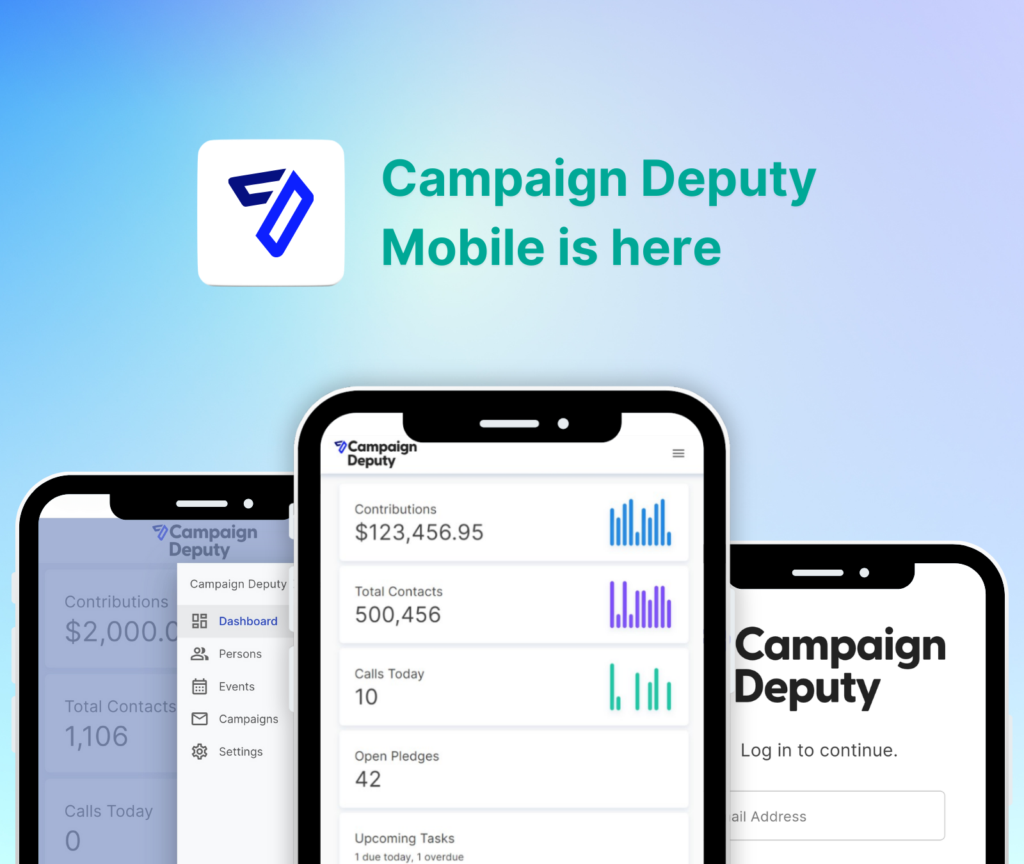
- Campaign Deputy’s donor CRM pairs bundler credit fields with campaign finance reporting so attribution data feeds straight into filings.
Why this matters
A bundler program is the highest-leverage fundraising channel most campaigns run, and it's also the easiest one to lose track of. One host who raised $15,000 through a single house party looks identical in a basic donor list to fifteen people who each wrote a $1,000 check on their own — until you tag the gift correctly, you can't tell the difference, and you can't manage the relationship that actually produced the money.
This is where general fundraising tools fall short. A donor CRM built for one-off online gifts doesn't naturally separate "who gave" from "who raised it," and that gap shows up fast once a campaign scales past its first few bundlers. Campaign Deputy approaches this as a donor CRM problem first — bundler credit is a data structure question before it's a software feature question.
Why bundler tracking matters for major donor programs specifically
Major donor programs run on relationship credit, not gift volume. A campaign with 2,000 small-dollar donors and a campaign with 20 bundlers can raise the same total, but the operational discipline required is completely different.
- Losing bundler attribution breaks the ask cycle — you can't re-engage a host for a second event if you don't know they hosted the first one.
- Federal law under the Honest Leadership and Open Government Act of 2007 requires disclosure of bundlers who are registered lobbyists once their cumulative bundled total crosses a threshold that's adjusted for inflation every two-year cycle.
- Compliance staff need bundler totals reconciled against filings, not estimated from memory the week before a report is due.
“If you can’t say who introduced a $2,500 check, you can’t say thank you to the right person.”
How to build bundler tracking into a major donor program
Build a bundler field structure in your donor database
Before any software decision, the data structure has to separate the donor from the credit. Most campaigns skip this in year one and pay for it in year two.
- Add a distinct "bundler" or "host" field, separate from "solicitor" or "staff contact"
- Assign each active bundler a short unique code, not just a name (names get misspelled, codes don't)
- Split hard credit (the bundler personally solicited the gift) from soft credit (the bundler's event drove it)
- Tag events — house parties, phone banks, meet-and-greets — to the bundler who organized them
- Keep a running cycle-to-date total field per bundler, not just per donor
Tag every gift with a bundler attribution ID at the point of entry
Attribution has to happen when the gift is entered, not reconstructed later from memory. A gift entered without a bundler tag is a gift you'll never correctly credit.
- Require a bundler field on every gift entry form tied to an event or referral
- Use dropdown lists of active bundler codes instead of free-text fields to kill typos
- Reconcile weekly against your bank deposit report to catch gifts entered without attribution
- In a donor CRM like Campaign Deputy, bundler tags live on the gift record itself, so the attribution travels with the donation into every report pulled later
Run bundler leaderboard reports weekly, not just at filing time
A leaderboard is a management tool, not a vanity metric. Staff who see it weekly catch attribution errors early instead of at the compliance deadline.
- Pull a bundler-by-total report every Monday, sorted highest to lowest
- Flag any bundler whose total jumped without a corresponding event on the calendar
- Compare current-cycle totals against last cycle for repeat bundlers
- Share the top-five list with the finance director, not just the treasurer
Flag lobbyist and registered-agent bundlers before they cross disclosure thresholds
Disclosure exposure is the single most expensive mistake a bundler program can make, because it's a compliance failure, not a fundraising one.
- Cross-reference active bundlers against lobbyist registration databases at the start of each cycle
- Set an internal alert at roughly 80% of the current disclosure threshold, not at 100%
- Recheck the threshold every two years — it adjusts for inflation and campaigns forget to update the number
- Route any flagged bundler to compliance staff before the next filing, not after
Score and prioritize bundler prospects before you ask
Not every potential host is worth the same call-time investment. Scoring existing donor and network data before an ask saves staff hours that would otherwise go to low-yield conversations.
- Rank prospects by past giving, network size, and prior hosting history
- Weight recent activity higher than a large gift from three cycles ago
- Cross-check prospects against existing bundler totals to avoid double-booking the same network
- Tools built for AI donor scoring can surface likely bundler candidates from donor history that a manual review would miss
Route call time and stewardship by bundler network, not by donor list
A bundler's network responds to the bundler, not to a generic campaign email. Stewardship built around the individual host converts better than a blanket list pull.
- Segment call time lists by bundler network instead of by geography or donor size alone
- Send bundler-specific thank-you notes signed by the candidate, not a mass acknowledgment
- Loop the bundler in on event recaps so they see the impact of their network
- Track re-ask timing per bundler separately from the general donor re-ask cadence
Reconcile bundler credit against your compliance filing before every report
The gap between what your CRM says and what your filing says is where audits start. Reconciliation is the last gate before a report goes out the door.
- Export bundler totals and match them line-by-line against the filing draft
- Confirm disclosed bundlers match the threshold check from earlier in the cycle
- Have a second staffer review the reconciliation, not the person who entered the gifts
- A PAC donor CRM that ties bundler fields directly to finance reporting removes one manual export step from this process
See bundler credit tied to compliance
Check how Campaign Deputy pairs donor CRM fields with finance reporting.
Bundler tracking options for major donor programs
| Option | Best For | Key Limitation |
|---|---|---|
| Spreadsheet with bundler columns | Campaigns just starting a bundler program with a handful of hosts | Breaks down past a dozen or so active bundlers; no audit trail between gift and credit |
| General-purpose CRM (sales-focused) | Teams already running every operation on one non-political platform | Built for pipelines, not gift attribution or compliance exports |
| Legacy political CRM | Established state party or PAC operations with dedicated data staff | Steep training curve; bundler scoring and compliance often live in separate add-on modules |
| Campaign Deputy donor CRM | Candidates and PACs that want bundler credit tied directly into compliance reporting | Newer platform than legacy vendors; check current integration list against your specific stack |
Common mistakes major donor programs make with bundler tracking
- Crediting the wrong person. Staff tag the donor's employer or spouse as the bundler because the field is free-text and nobody standardized codes.
- Waiting until filing week to reconcile. Attribution errors compound for months and surface only when the treasurer pulls the report.
- Treating soft credit like hard credit. A bundler who forwarded an email gets the same total as one who personally closed the gift, which distorts who actually deserves the next ask.
- Never rechecking disclosure thresholds. The lobbyist bundling threshold adjusts every two-year cycle, and campaigns that set the alert once in 2024 and never touch it again miss the update going into 2026.
- Running bundler stewardship through the general donor list. A host who raised $15,000 gets the same mass email as a $25 online donor, and the relationship goes cold.
FAQ
What is bundler tracking software for donors?
Bundler tracking software for donors is fundraising CRM functionality that credits a specific fundraiser, or bundler, for the gifts their network delivers, separate from the donor who wrote the check. It typically includes hard credit and soft credit fields, bundler-level totals, and reporting tied to compliance filings.
How is bundler tracking different from regular donor management software?
Regular donor management tracks who gave and how much; bundler tracking adds a layer that credits who raised it. Without a dedicated bundler field, a $15,000 event raised by one host looks identical in the system to fifteen unrelated $1,000 gifts.
Do federal candidates have to disclose bundlers?
Yes. The Honest Leadership and Open Government Act of 2007 requires federal candidates and committees to disclose bundlers who are registered lobbyists once their cumulative bundled total crosses a threshold that adjusts for inflation each two-year cycle.
Can I track bundlers in a spreadsheet before buying software?
Yes, and most campaigns start there. A spreadsheet with a bundler code column, hard/soft credit split, and a running total works fine below roughly a dozen active bundlers, then attribution errors start outpacing what manual review can catch.
What’s the difference between hard credit and soft credit for bundlers?
Hard credit means the bundler personally solicited and closed the gift. Soft credit means the bundler’s event or introduction contributed to the gift without them directly closing it. Mixing the two distorts who actually deserves priority for the next ask.
Is bundler tracking only for federal campaigns?
No. State and local candidates, PACs, and party committees run bundler programs too, even where disclosure rules differ from the federal threshold. The attribution problem — crediting the right person for the right gift — exists at every level.
How often should disclosure thresholds be rechecked?
Rechecked at the start of every two-year cycle, since the federal lobbyist bundling threshold is adjusted for inflation on that schedule. A campaign that sets the alert once and never updates it risks missing a disclosure trigger.
Does Campaign Deputy support bundler attribution reporting?
Campaign Deputy combines donor CRM with campaign finance reporting, so bundler credit fields tracked in the CRM can feed directly into a compliance filing instead of requiring a separate manual export.
One last thing
The lobbyist bundling disclosure threshold isn't a fixed number — it adjusts for inflation every two-year cycle, and the single most common compliance gap in 2026 bundler programs is a threshold alert nobody updated since the last cycle. Recheck it in January of every odd year, not when a filing deadline is already on the calendar.
Related guides
- Donor management software for political campaigns
- Predictive analytics software for political fundraising