
Building a campaign finance committee means naming a treasurer, opening a dedicated bank account, filing the right paperwork with the FEC or your state agency, and setting up a reporting system before a single dollar comes in the door. Skip any one of those steps in 2026 and you're raising money you can't legally spend.
- Building a campaign finance committee starts with one designated treasurer and a dedicated bank account before any money moves.
- Federal law requires committee registration once you raise or spend more than $1,000 in a calendar year.
- File FEC Form 1 within 10 days of hitting that threshold or announcing your candidacy in 2026.
- Candidate committees and PACs file different forms and answer to different rules, so pick the structure first.
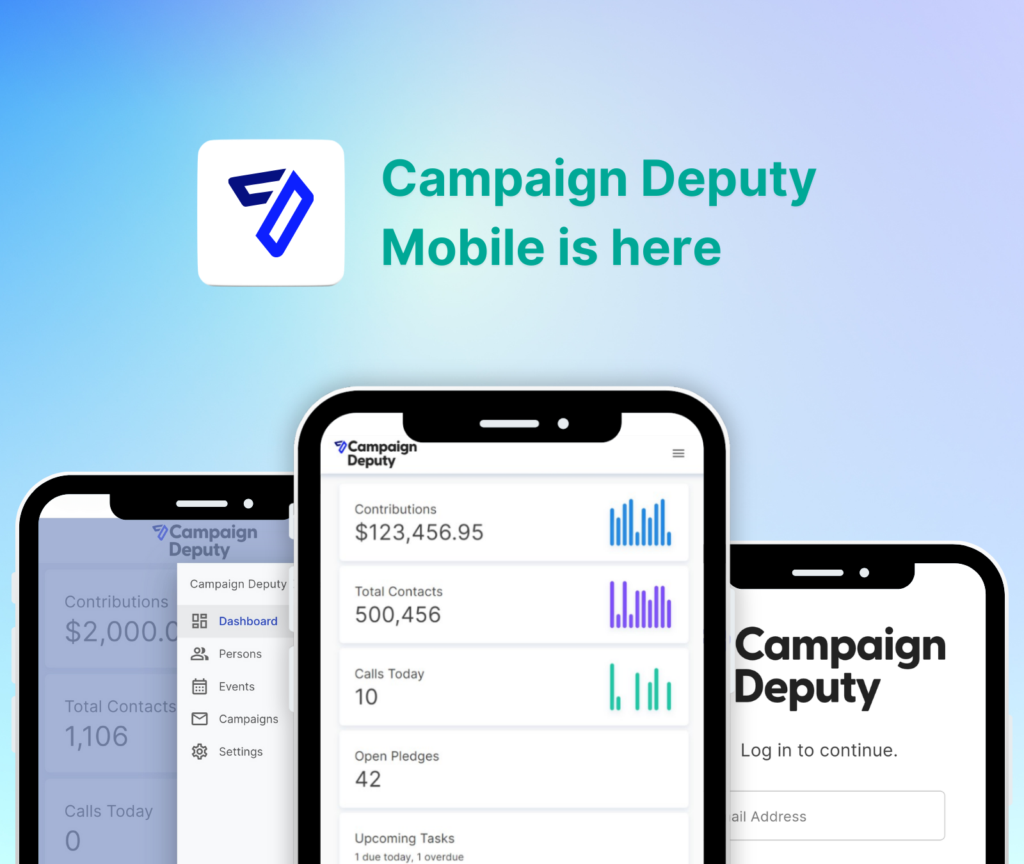
- Campaign Deputy tracks committee finances and filing deadlines in one dashboard once the paperwork clears.
Why this matters
A campaign finance committee isn't a formality you file and forget. It's the legal entity that owns every dollar raised, and the treasurer who signs its reports is personally accountable for what's in them.
Candidates who wait until money starts coming in to figure out the structure usually end up refunding contributions they took before registration cleared. Building the committee first, then fundraising, is the order that keeps you compliant in 2026 and every cycle after.
How do you build a campaign finance committee?
Follow this sequence in order — skipping ahead to fundraising before step 4 is the most common compliance mistake first-time campaigns make.
- Decide the committee type. A candidate committee, a connected PAC, or an independent-expenditure PAC each files different paperwork and answers to different rules — see the PAC formation guide if you're not running as a candidate yourself.
- Designate a treasurer. Federal and state law both require a named treasurer before the committee can accept a contribution or make an expenditure.
- Open a dedicated bank account. Committee funds never mix with personal or business accounts — this is the single most-cited violation in FEC audits.
- File your Statement of Organization. Federal committees file FEC Form 1 within 10 days of forming; state and local races file the equivalent form with their state agency.
- Set up bookkeeping before the first donation. Every contribution over $200 from a single donor has to be itemized by name, address, and employer — spreadsheets fall behind fast once volume picks up.
- Recruit the rest of the team. A deputy treasurer, a fundraising chair, and someone who reviews reports before they're filed are the three roles that keep a committee running past month one.
- Build your reporting calendar. Filing cadence depends on your jurisdiction and race — some states require monthly reports, others quarterly, and missing a deadline triggers automatic penalties in most states.
- Put a compliant donation form live. Contributions need to land directly in the committee's ledger, not in an inbox someone has to reconcile by hand later.
Candidate committee vs. PAC: which one do you need?
| Structure | Who forms it | Files with | Best for |
|---|---|---|---|
| Candidate committee | The candidate | FEC Form 1 (federal) or state equivalent | Candidates raising money for their own race |
| Connected PAC | A corporation, union, or trade group | FEC Form 1 | Groups raising from members or employees for multiple candidates |
| Independent-expenditure PAC | Any group not coordinating with a candidate | FEC Form 1 | Groups spending money independently, without contribution limits on what they raise |
Verdict: if you're the one on the ballot, you need a candidate committee — not a PAC. PACs exist to support candidates from the outside, and mixing the two structures is what gets campaigns flagged for coordination violations. Committees that expect to raise from a member base rather than a single candidate should look at donor CRM tools built for PACs instead of candidate-focused software.
Why campaign finance committee structure varies
- Office level — federal races answer to the FEC; state and local races answer to their own state's campaign finance agency, with different forms and thresholds.
- Filing cadence — some states require monthly reports during active election years, others stick to quarterly.
- Volunteer bandwidth — a treasurer role for a school board race looks nothing like a treasurer role for a congressional campaign pulling in six figures.
- Contribution volume — high-volume digital fundraising needs itemization automation; a low-dollar local race can run on a spreadsheet longer.
- Committee purpose — a candidate-only committee has simpler paperwork than a multi-candidate PAC that has to track allocations across several races.
Once the committee is registered, the real work is keeping every contribution logged correctly against the report deadline. Campaign Deputy's PAC treasurer software tracks committee finances alongside call time and email fundraising, so treasurers aren't reconciling three systems the week a report is due.
Get compliance and fundraising in one place
Track committee finances and FEC deadlines without a separate spreadsheet.
Who has to be on a campaign finance committee?
Every committee needs a named treasurer before it can legally accept a contribution or spend a dollar, and that person's name goes on every report filed in 2026. Beyond the treasurer, roles like deputy treasurer and fundraising chair aren't legally required but keep the committee from stalling once one person gets overloaded.
Does a small local campaign need to register a committee?
Yes — the $1,000 threshold applies regardless of office size. A school board or city council campaign that raises or spends more than $1,000 in a calendar year has to register as a political committee, the same rule that applies to a congressional race.
When do you have to file the paperwork after starting a committee?
Within 10 days of crossing the $1,000 threshold or declaring candidacy, whichever triggers first under federal rules; state deadlines vary, so check the filing rules for your specific state before you assume the federal timeline applies.
FAQ
How do you build a campaign finance committee from scratch?
Building a campaign finance committee from scratch starts with naming a treasurer, opening a dedicated bank account, and filing a Statement of Organization within 10 days of forming. Everything else — bookkeeping, reporting calendar, donation forms — gets built on top of that base.
Who can serve as campaign treasurer?
Anyone the candidate or committee designates can serve as treasurer, including the candidate in some jurisdictions, though most campaigns appoint a separate person to keep bookkeeping and campaign strategy decisions apart. The treasurer’s name and signature appear on every report the committee files.
Is a PAC the same as a candidate committee?
No — a PAC and a candidate committee are different structures with different rules. A candidate committee raises money for one person’s race; a PAC raises money to support or oppose multiple candidates or causes.
How much money triggers committee registration?
Raising or spending more than $1,000 in a calendar year triggers political committee registration under federal law. State thresholds for state and local races can differ, so confirm the number with your state’s campaign finance agency.
Can a campaign accept donations before the committee is registered?
Technically funds raised before registration often have to be reported once the committee files, but accepting contributions into a personal account before the committee and its bank account exist creates commingling problems that are hard to unwind. Registering first avoids the cleanup.
What happens if a committee misses its filing deadline?
Missing a filing deadline typically triggers an automatic late-filing notice and can carry fines depending on the jurisdiction and how late the report is. Repeated late filings draw more scrutiny in future audits.
Do local candidates need the same paperwork as federal candidates?
No — local and state candidates file with their state or county elections agency, not the FEC, though the underlying structure (treasurer, bank account, Statement of Organization) is similar. Check your state’s specific filing guide before assuming federal rules apply.
Does a campaign finance committee need software to track donations?
A committee doesn’t legally need software, but every contribution over $200 has to be itemized by name, address, and employer, which gets unmanageable in a spreadsheet once volume grows. Most committees move to dedicated tracking once they pass a few dozen donors.
One last thing
The treasurer is personally accountable for what's in every report, even when a compliance vendor or software handles the bookkeeping behind it. That single fact is why most campaigns build the committee structure and reporting system before they run a single fundraising email — not after the first check clears.
Related guides
- How to start a political action committee
- How to run for city council: a campaign guide
- How to research an opponent's FEC filings