Independent candidates build a website before they build a campaign committee, and the platform they pick either sets up the fundraising operation or boxes it in for the rest of the race.
- The best campaign website builder for independent candidates pairs a custom-built site with a donor CRM like Campaign Deputy. Buy.
- Design-first builders such as Squarespace or Wix launch fast but cannot export donor data for FEC compliance reports. Consider only, not final.
- All-in-one campaign suites fit staffed operations; a solo independent run in 2026 rarely needs that overhead. Skip for now.
- Taylor McGovern U’Sellis’s city council campaign built a $30,000 fundraising movement off a lean site with no party machine behind it.
Why this matters
Independent candidates do not inherit a party's donor list, a state party's website template, or a phone bank staffed by someone else's volunteers. The campaign site you pick has to do the job a party apparatus does for everyone else: collect donor information, capture emails and texts, and hand off clean records to whoever files your reports.
That last part trips up first-timers every cycle. The FEC's quarterly deadlines land on April 15, July 15, and October 15 in 2026, plus a January 31 year-end report, and a website that never asked a donor for their employer and occupation leaves you re-contacting people by hand right before a filing. Campaign Deputy exists because that gap between a pretty website and a compliant fundraising record is where independent campaigns lose weeks they do not have.
Taylor McGovern U'Sellis's city council campaign is the case worth studying here: a lean site, no party backing, and a $30,000 fundraising movement built almost entirely on small-dollar donors who filled out a form and kept coming back.
Who this is for
This guide is for independent and non-partisan candidates running for city council, county board, school board, state legislature, or a ballot-qualified independent bid for Congress — usually with one to three staff or volunteers, no party donor file to inherit, and a website that has to double as the entire donor acquisition engine.
What to look for in a campaign website builder for independent candidates
Donation forms that export clean donor data
A form that captures a name, card number, and nothing else is useless the moment you have to file. Compliance-grade forms collect employer, occupation, and address on the first ask, and the data has to leave the platform in a format someone can actually file with — that is the whole premise behind donor management and FEC compliance reporting tools built for candidates, not agencies.
Recurring donation support
Independent campaigns run on repeat small donors more than PAC checks. A builder without a working recurring-donation toggle kills the ask, raise, repeat cycle that keeps a $30,000 or $380,000 fundraising run compounding month over month instead of restarting from zero every time you send an email.
Mobile load speed under real conditions
Most traffic to a local or state independent campaign site comes from a text link or a social share, opened on a phone with a mediocre connection. If the donation page takes more than a few seconds to render, the donor closes the tab before the form even loads — you never see the drop-off, you just see a lower conversion rate on a report nobody is looking at closely enough.
Email and text capture built for growth
A contact form that dumps names into a spreadsheet is fine for a 200-person list. It is not fine once you are segmenting donors by giving history and sending targeted asks — the kind of volume that let one PAC's donor list and email campaign software push 5 million emails a month. Your race is smaller, but the segmentation logic you need is the same.
Compliance reporting hooks that do not require a developer
If pulling a report means exporting a CSV, reformatting it, and hoping the FEC's template still matches, that is a builder that was never designed for a candidate. Look for a direct hand-off between the web form and whatever system files your report — not a manual re-entry step every quarter.
Top picks for independent candidates
The design-first builder — Squarespace or Wix-style templates. The hook is speed: a functioning site in a day, clean design without a developer. The spec that matters is the checkout embed, which usually caps at a basic PayPal or Stripe button with no employer/occupation field baked in. That is fine for the bio page and press section, not for the compliance-grade donation form. Consider — for the front-end, not the fundraising engine.
The all-in-one campaign suite — NationBuilder-style platforms. The hook is one login for site, donor database, and volunteer tools. The number that matters: these are built around a paid finance or field director managing the extra modules, which is a mismatch for a two-person independent operation. Skip for a solo or lean run; Consider only once you have hired a finance director.
The custom build paired with a donor CRM — WordPress or Webflow plus a fundraising system. The hook is full control over messaging with none of the compliance blind spots. Sup. James Walkinshaw's re-election campaign ran exactly this split — a custom site routing traffic into forms that fed one fundraising system — and raised over $380,000 doing it. This is the model most campaign software for state and local elections is actually designed around. Buy for any independent candidate serious about the fundraising side.
The single-page landing tool — Carrd-style minimalist builders. The hook is a placeholder before you have officially filed: one page, no database, good for testing name recognition. The number that matters: it holds up fine for the weeks before you file with the FEC or your state board, then falls apart the moment you need a donor record past your first report. Consider pre-filing, Skip once you are actively raising money.
“If your website cannot export donor emails and mailing addresses in one file, you are building a list you do not own.”
What to avoid
- Free builders with no compliance fields on the donation form. You will spend your first filing week chasing donors by phone to fix an incomplete FEC report.
- Platforms that lock donor data inside their own dashboard. No CSV export, no API — your list is hostage right when you need to email it fastest.
- Templates without a working recurring-donation toggle. It looks fine on launch day and quietly caps your fundraising ceiling for the rest of 2026.
Pair Your Site With a Donor CRM
Route web forms straight into call time, email, texting, and FEC reporting.
Verdict comparison table
| Builder type | Mobile speed | Donation form flexibility | FEC-ready export | Verdict |
|---|---|---|---|---|
| Design-first (Squarespace/Wix style) | Fast out of the box | Basic embed only | No native export | Consider |
| All-in-one suite (NationBuilder style) | Moderate, template-dependent | Built-in donation pages | Partial export tools | Consider if staffed |
| Custom build + donor CRM | Depends on build quality | Fully custom, syncs to CRM | Yes, one clean export | Buy |
| Single-page landing tool | Very fast | Minimal, no recurring option | None | Skip once fundraising starts |
FAQ
What is the best campaign website builder for independent candidates in 2026?
A custom-built site paired with a donor CRM is the best setup for independent candidates in 2026, because it is the only combination that handles both design and FEC-compliant data export. Standalone design-first builders look better on launch day but cannot produce a clean donor report.
Is Squarespace or Wix good enough for a campaign website?
Squarespace and Wix work fine for the public-facing bio and press pages, but their donation forms rarely capture the employer and occupation fields FEC reports require. Pair them with a separate donor tool if you are actively fundraising.
How much does a campaign website builder cost?
Cost varies widely by builder and template tier, so check current pricing directly on each platform before committing. The bigger cost driver for independent candidates is usually staff time spent re-entering donor data a builder cannot export.
Do independent candidates need FEC compliance software separate from their website?
Most website builders are not built to produce an FEC-ready report, so yes, a separate donor management and compliance tool is usually necessary. The website’s job is to capture the donation; the compliance tool’s job is to turn it into a filing.
Can donations be collected directly on a campaign website?
Yes, most builders support an embedded donation form or a link to a processor. The question is not whether you can collect the donation, it is whether the platform captures the employer, occupation, and address fields your report will need later.
What information must a donation form collect for FEC compliance?
A compliant donation form collects the donor’s name, address, occupation, and employer, along with the amount and date given. Missing any of these fields means manual follow-up before your next quarterly report.
How is Campaign Deputy different from a website builder?
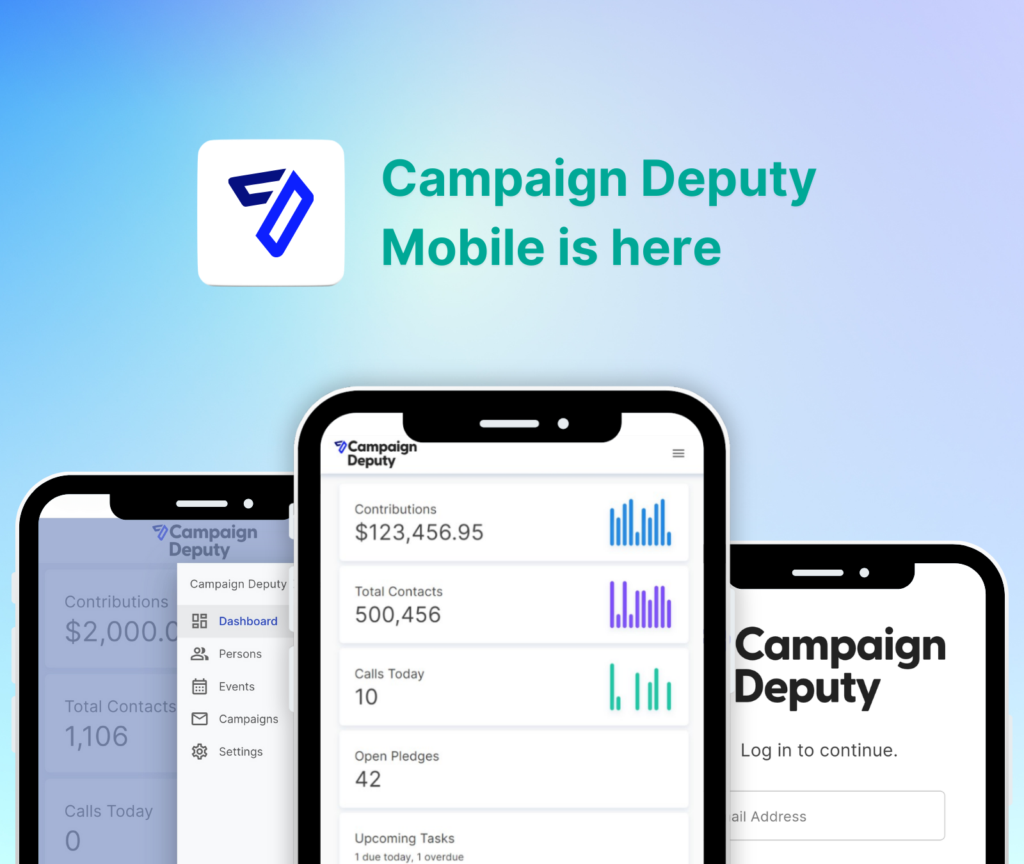
Campaign Deputy is a fundraising CRM, not a website builder — it handles call time, email, texting, web forms, and FEC compliance reporting, and it connects to whatever site a candidate already built. It is the layer that turns a website’s donation form into a compliant, organized donor record.
Should a first-time independent candidate build their own site or hire someone?
A first-time candidate with a tight budget can build the site themselves on a design-first builder, then connect a donor CRM for the fundraising and compliance side. Hiring a developer makes more sense once the campaign has raised enough to justify custom form logic.
One last thing
Most first-time independent candidates miss their first FEC deadline for one reason: their website never asked donors for employer and occupation on the way in. Fix that field before you fix your homepage design — the 2026 quarterly deadlines (April 15, July 15, October 15) do not move for a candidate who is still re-entering donor data by hand.
Related guides