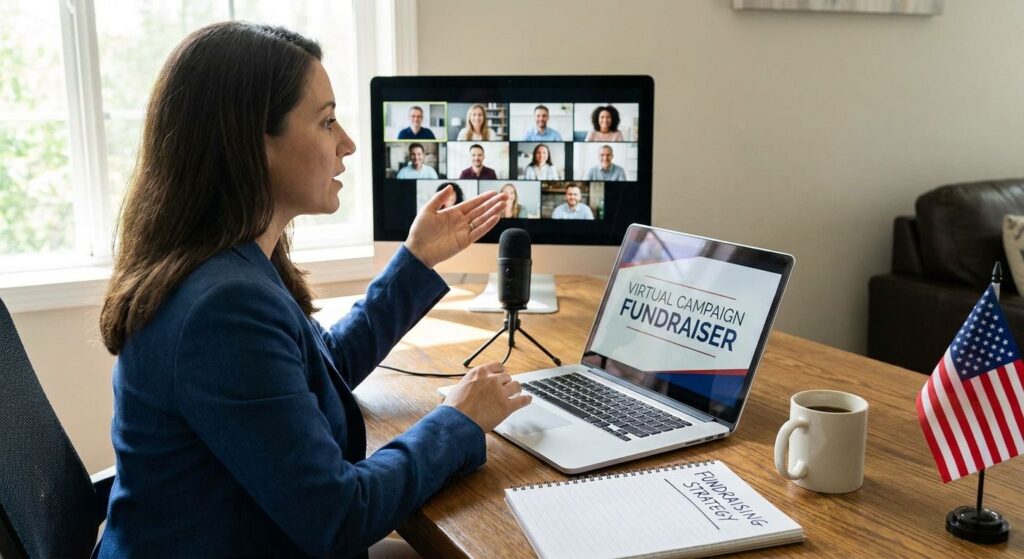
A virtual political fundraiser works when you pair a live or livestreamed program with a donation page that's already open in the browser, a script that names a specific dollar ask, and a follow-up sequence that catches everyone who didn't give on the call. Skip any one of those three pieces and the event turns into a webinar nobody pays for. The hidden cost campaigns miss: staff time to build the invite list, test the tech, and chase pledges afterward usually runs longer than the event itself.
- A virtual political fundraiser needs a live program, an open donation page, and a follow-up sequence to convert pledges into actual gifts.
- Campaigns that skip a dedicated web form during the event lose donors who close the tab before giving.
- Follow-up email and text within 24 hours recovers pledges that stall mid-event.
- Campaign Deputy’s web forms and email tools run the donation page and the follow-up sequence from one system.
Why this matters
Down-ballot and first-time candidates run virtual fundraisers because they cost less staff time than a venue event and reach donors outside the district. The tradeoff: attention on a screen drops fast, so the entire event has to be built around getting people to click "donate" within the first 15 minutes, not at the end.
Campaigns that treat a virtual fundraiser like an in-person gala with a Zoom link attached usually underperform. The ones that treat it like a call-time session with an audience script consistently outraise them, because every minute on screen maps to a specific ask.
How to run a virtual political fundraiser
Here's the sequence that works for a 2026 virtual fundraiser, in order:
- Pick a narrow ask window. 30 to 45 minutes total, with the donation pitch inside the first 15 minutes, not saved for the end.
- Build the donation page before you build the invite. The link goes in the calendar invite, the chat, and the follow-up email — never buried behind a "visit our website" click. A dedicated fundraising web form built for the event keeps the ask and the gift on the same screen.
- Send the invite from a real person, not a campaign address. Candidate-signed invites outperform staff-signed ones for open rate.
- Track RSVPs separately from donors. You need to know who showed up and didn't give so you can follow up with a different message than the no-shows. Event RSVP tracking built for fundraisers separates these two lists automatically.
- Name the number on screen. "We need $12,000 tonight to hit our quarterly goal" converts better than "please consider supporting the campaign." Set that number using a documented fundraising goal before the invite goes out, not during the event.
- Have a co-host read the chat. The candidate should never be watching for donation confirmations while talking — a second staffer or volunteer calls out gifts in real time ("just got $250 from Springfield") to build momentum.
- Follow up within 24 hours, twice. One email to everyone who attended but didn't give, one text to pledgers who said yes verbally but haven't completed the form. Email marketing built for political fundraising automates that first follow-up so it goes out the same night, not three days later.
- Send a thank-you and a receipt within an hour of the gift. Delayed thank-yous are the single most common reason repeat donors stop giving.
Comparing the two most common virtual fundraiser formats
| Format | Best for | Typical length | Main risk |
|---|---|---|---|
| Live Zoom program with candidate remarks | State and local candidates with an existing donor base | 30-45 minutes | Attention drops after minute 20 |
| Peer-to-peer text-and-give push (no live event) | Down-ballot and first-time candidates with a smaller list | 24-48 hour window | Low response without a hard deadline |
Both formats work. Live-program events raise more per gift; text-and-give pushes reach more people per dollar of staff time spent. Pick based on whether your list is warm (live event) or cold (text push).
Why virtual fundraiser results vary so widely
- List quality — a warm donor list from prior call time outraises a cold rented list every time.
- Ask specificity — a named dollar figure on screen beats a vague "support the campaign" pitch.
- Follow-up speed — pledges not converted within 24 hours drop off fast.
- Candidate presence — remarks delivered live convert better than pre-recorded video.
- Donation page friction — a form that requires creating an account or re-typing card info loses donors mid-click.
- Timing against the FEC or state reporting calendar — events scheduled right before a quarterly deadline convert urgency into gifts.
How much should you ask for at a virtual fundraiser?
The ask should be a specific number tied to a specific goal, not a general range — "$12,000 to hit our July filing deadline" outperforms "whatever you can give." Set that number against your actual fundraising goal for the reporting period, not an arbitrary round figure.
What platform should a campaign use to host a virtual fundraiser?
Any video platform works for the event itself — Zoom is the most common choice for candidate fundraisers in 2026 because donors already know how to join a call. The platform matters less than the donation page linked in the invite and chat, since that's where the gift actually happens.
How long should a virtual political fundraiser last?
Keep it to 30 to 45 minutes, with the ask made in the first 15. Longer events don't raise more money — they just give donors more time to close the tab before giving.
Where a donation letter and email sequence fit in
The invite for a virtual fundraiser is a fundraising ask on its own, and it should follow the same structure as any political fundraising donation letter: a specific reason for the ask, a specific number, and a specific deadline. Reuse that structure across the invite, the day-of reminder, and the post-event follow-up so the message stays consistent.
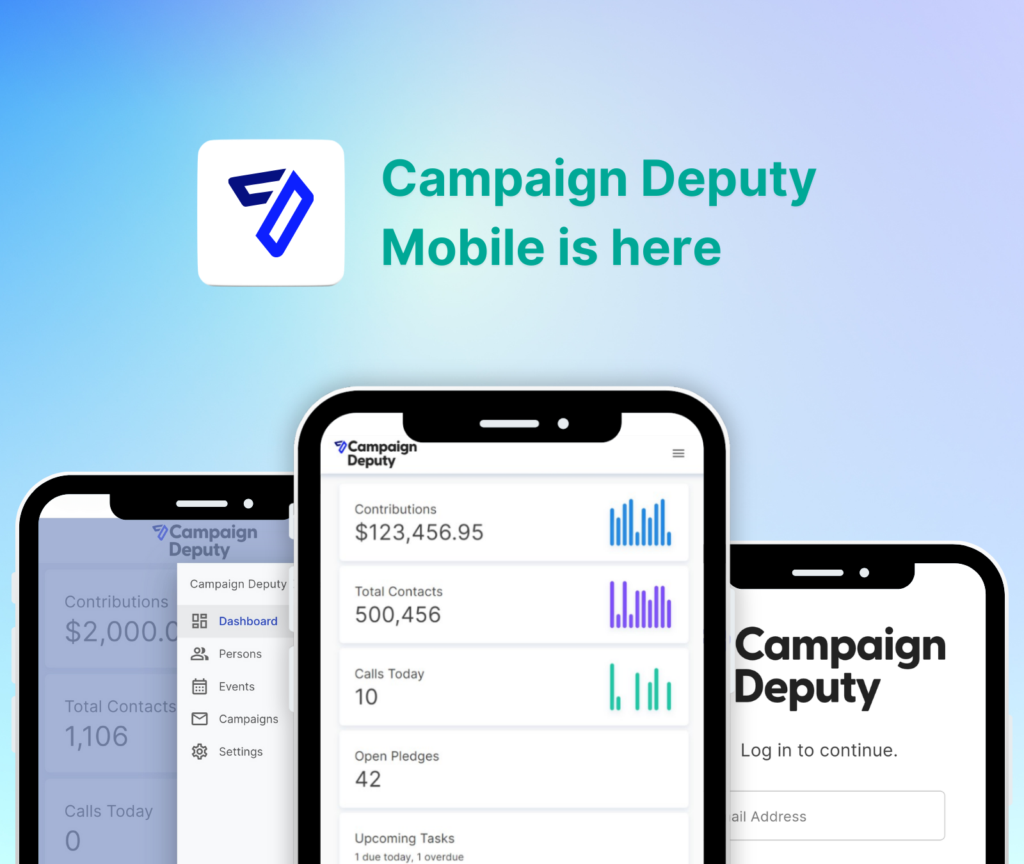
Campaign Deputy's fundraising CRM connects the web form, the email sequence, and the donor record so a gift made during the event shows up immediately in the donor's history — no manual export from Zoom chat logs into a spreadsheet after the fact. That matters most for the follow-up step: staff can filter by "attended, didn't give" and send a targeted ask instead of a generic blast.
Set up your event donation page
Build the web form your virtual fundraiser links to before the invite goes out.
FAQ
How much does a virtual political fundraiser cost to run?
A virtual fundraiser costs far less than an in-person event because there’s no venue or catering — the main expense is staff time building the invite list, donation page, and follow-up. Most of that cost is time, not cash.
How long should a virtual fundraiser run?
Keep it to 30 to 45 minutes with the ask made in the first 15. Longer programs lose viewer attention without raising more money.
Is a live Zoom event better than a text-to-give push?
A live event raises more per gift with a warm donor list; a text-to-give push reaches more people faster with a cold list. Pick based on list temperature, not preference.
When should follow-up emails go out after a virtual fundraiser?
Send the first follow-up within 24 hours to attendees who didn’t give, and a second reminder to anyone who pledged verbally but hasn’t completed the donation form.
What’s the biggest mistake campaigns make with virtual fundraisers?
Burying the donation link instead of putting it in the invite, the chat, and the follow-up email. If the link takes more than one click to find, donors close the tab.
Do virtual fundraisers work for first-time candidates?
Yes — first-time and down-ballot candidates often see stronger results from virtual fundraisers than venue events because the format doesn’t require an existing donor base large enough to fill a room.
Should the candidate host the event personally?
Yes. Candidate-signed invites and live remarks convert better than staff-hosted or pre-recorded versions across every campaign size.
One last thing
Supervisor James Walkinshaw's re-election campaign raised over $380,000 using Campaign Deputy — proof that the fundraising math for a virtual event isn't about the platform, it's about how fast a donor can move from watching to giving. The single biggest lever most campaigns leave unused: a same-night follow-up text to everyone who said "yes" out loud but never touched the form. That group converts at a higher rate than any cold outreach you'll do all cycle.
Related guides
- How to organize a campaign kickoff event
- How to set up call time blocks for a political campaign
- Recurring donation software for political campaigns
- Best call time software for candidates and campaign staff