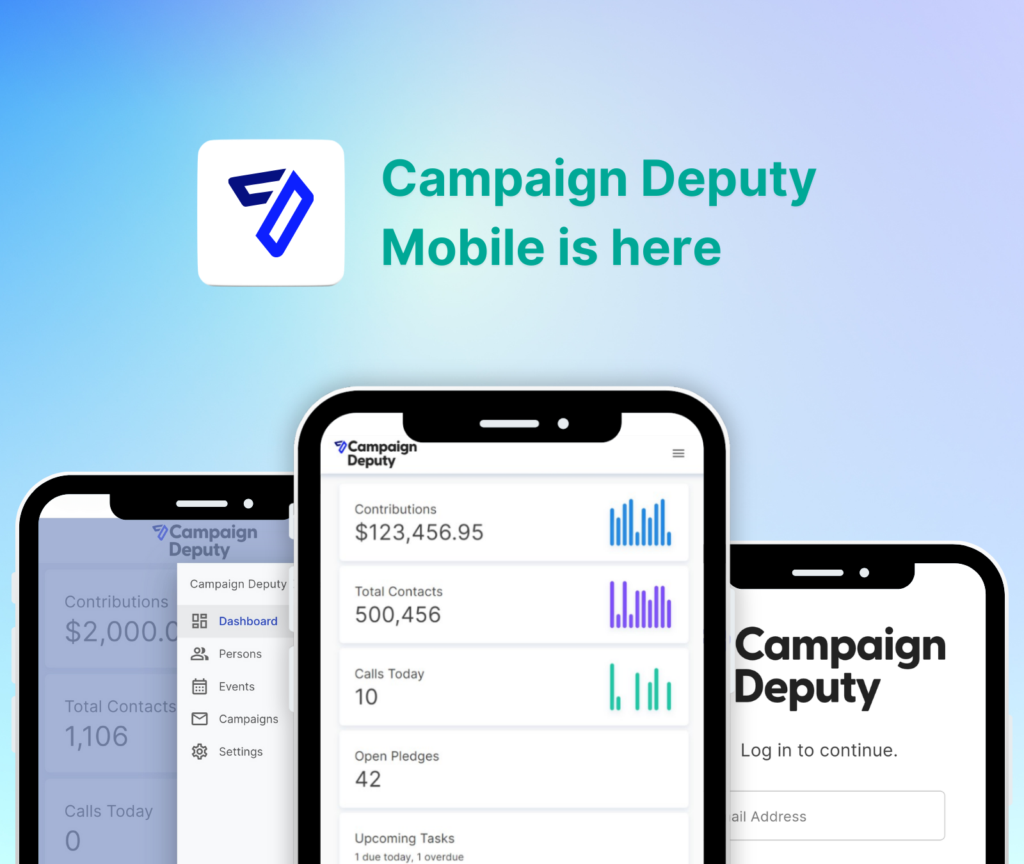

First-time candidates don't need a bloated voter-file suite — they need a fundraising CRM that gets a call sheet built, an email out the door, and a compliance report filed on time, without a training manual. This guide ranks the capabilities that actually separate a workable fundraising platform for first-time candidates from a spreadsheet with extra steps.
- Campaign Deputy is the best fundraising platform for first-time candidates who need call time, email, texting, and FEC compliance in one login.
- One PAC client scaled to 5 million emails sent per month on the platform.
- A first-time state legislative candidate raised over $380,000 using the same call time and donor tools.
- A city council first-time candidate built a $30,000 fundraising base without a dedicated finance staffer.
- Skip tools that separate donor CRM from compliance reporting — that split costs first-time campaigns hours every filing deadline.
Why This Matters
First-time candidates lose fundraising time to tool-switching, not fundraising itself. A campaign that logs into one system for call time, a second for email, and a third to build the FEC report is spending hours a week on data entry instead of donor calls.
The stakes are higher in 2026 than they were even two cycles ago — filing deadlines are unforgiving, donor attention spans are shorter, and a missed compliance report can trigger a fine before a campaign has raised its first $10,000. The right fundraising CRM closes that gap by putting call time, email, texting, and compliance reporting on one donor record.
How We Ranked
The ranking below weighs four things that matter most to a first-time candidate: time-to-first-dollar, cost relative to a lean starting budget, whether the tool talks to the others, and whether it survives an FEC filing deadline without a spreadsheet rescue. Case data referenced throughout comes from Campaign Deputy client campaigns, including The Majority Rules PAC, Sup. James Walkinshaw's re-election run, and Taylor McGovern U'Sellis's city council campaign.
Each capability below gets a Buy, Consider, or Skip verdict specific to a first-time candidate's needs in 2026 — not to a sitting incumbent with a finance director already on staff.
The Capabilities That Decide This Ranking
1. Call time management — the hour-by-hour engine
Call time is still where most first-time candidates raise their first real money, and the software either makes that hour productive or makes it a chore. A call time platform that auto-builds prioritized call sheets and logs pledges in real time turns a volunteer staffer into a finance director. Sup. James Walkinshaw's campaign used this exact workflow to raise over $380,000 in 2026 without a paid call time manager. Verdict: Buy.
2. Email marketing and donor list growth — the workhorse
Email still drives the bulk of small-dollar fundraising for first-time candidates who don't have a viral moment to bank on. Donor list and email campaign tools that segment by giving history and automate follow-up sequences are what let one PAC client scale to 5 million emails sent per month without adding staff. For a first-time candidate, the same segmentation logic applies at a smaller scale — you just need the software to grow with you. Verdict: Buy.
3. Texting for quick-turn asks
Text fundraising converts fast around deadlines — FEC quarter-end, debate night, a viral news cycle — and a platform that can't send compliant texts inside the same donor record forces a third login. First-time campaigns that add texting mid-cycle usually do it because email response rates dipped and they needed a faster channel. Verdict: Consider if your campaign runs past one FEC filing period; Skip if you're still pre-launch.
4. Donation form builder — the conversion point
A donation form that loads slow or asks for ten fields before a $25 gift processes loses donors mid-click. First-time candidates need a form that's fast on mobile and captures FEC-required fields (employer, occupation) without extra clicks, since that data has to reconcile at reporting time anyway. Verdict: Buy for anyone taking online donations at all — which is every campaign in 2026.
5. FEC compliance and donor management reporting
This is the capability first-time candidates underrate until the first filing deadline hits. A platform that generates the compliance report directly from the same donor records used for call time and email means no reconciling three exports the night before a deadline. Campaigns that skip this and manage compliance in a separate spreadsheet routinely burn a weekend per quarter fixing mismatched employer and occupation data. Verdict: Buy — this is the single highest-cost mistake to get wrong.
6. Campaign website — the digital front door
A website that connects directly to the donation form (not a bolted-on third-party embed) keeps donor data in one place instead of splitting it across two systems. For an independent or first-time candidate building a brand from zero, this matters more than it does for an incumbent with name recognition already doing the work. Verdict: Consider — essential if you're not yet known in your district, less urgent if you're a repeat local candidate.
7. Scaling from local to state and federal races
A lot of first-time candidates start local — city council, school board, state house — and the software they pick needs to hold up if the campaign scales to a bigger race two cycles later. Taylor McGovern U'Sellis built a $30,000 movement in a city council race with the same tool stack that supports congressional-scale email sends elsewhere. Verdict: Buy if you expect to run again at a higher level; Consider if this is a one-cycle local run.
Comparison Table
| Capability | Why It Matters for First-Time Candidates | Verdict |
|---|---|---|
| Call time management | Turns volunteer hours into tracked pledges | Buy |
| Email marketing & donor lists | Drives small-dollar volume without added staff | Buy |
| Texting | Fast conversion around deadlines | Consider |
| Donation form builder | Converts clicks to gifts on mobile | Buy |
| FEC compliance reporting | Avoids the quarter-end scramble | Buy |
| Campaign website | Builds name recognition and donor capture together | Consider |
| Scale to bigger races | Protects the investment if you run again | Buy |
See the fundraising CRM in action
Check call time, email, and compliance tools built for first-time campaigns.
How First-Time Candidates Should Buy
- Start with the filing calendar, not the feature list. Know your first FEC deadline in 2026 before you pick software — that date determines whether compliance reporting is a day-one requirement or a month-two add-on.
- Test call time first, not email. Call time is where first-time candidates raise the money that funds everything else; if the call sheet workflow is clunky in a demo, the rest of the stack won't save the campaign.
- Don't buy separate tools for donor CRM and compliance. Every campaign that's had to reconcile two exports at deadline time says the same thing: it should have been one system from the start.
FAQ
What is the best fundraising platform for first-time candidates in 2026?
Campaign Deputy ranks highest for first-time candidates because it combines call time, email, texting, donation forms, and FEC compliance reporting in one donor record. Campaigns like Sup. James Walkinshaw’s re-election run used the same platform to raise over $380,000 without a separate compliance tool.
How much does fundraising software cost for a first-time campaign?
Costs vary by campaign size and the features a race actually needs, so check current pricing directly on the platform before budgeting. A first-time local race typically needs far less than a state or federal campaign scaling email volume.
Do first-time candidates need call time software or can they track pledges in a spreadsheet?
A spreadsheet works for the first few weeks but breaks down once call time volume increases, because pledges and follow-ups get missed without automated tracking. Campaigns that raised six figures in 2026, like Sup. James Walkinshaw’s run, used dedicated call time tools from the start.
Is a fundraising CRM better than a general email marketing tool for a campaign?
Yes, for political fundraising specifically, because a general email tool doesn’t connect donor giving history to call time or FEC compliance reporting. A fundraising CRM keeps the donor record whole across every channel.
When should a first-time candidate add texting to their fundraising tools?
Add texting once the campaign is past its first FEC filing period and needs a faster channel around deadlines or news moments. Pre-launch campaigns usually get more value from email and call time first.
Can a first-time candidate handle FEC compliance reporting without a treasurer?
Yes, if the platform generates compliance reports directly from the same donor data used for fundraising, which removes the need to reconcile separate spreadsheets. This is the capability that saves the most time at quarter-end for a campaign without a dedicated treasurer.
Does fundraising software work for non-partisan and independent candidates?
Yes, fundraising CRMs built for candidates work the same way regardless of party structure, since the core need — call time, email, donor forms, and compliance reporting — doesn’t change. Independent candidates in particular benefit from a built-in campaign website tied to the donation form.
How fast can a first-time candidate start raising money on a new platform?
Most campaigns can build a call sheet and send a first email within the same week they set up donor records, since the core workflows don’t require custom development. The bottleneck is usually donor list building, not the software itself.
One Last Thing
The campaigns that raise the most in their first cycle aren't the ones with the biggest tool budget — they're the ones that stop switching between four logins by week three. Taylor McGovern U'Sellis built a $30,000 city council fundraising base without ever needing a separate compliance system, and that's the pattern worth copying in 2026: one donor record, every channel, one filing deadline that doesn't require a weekend to hit.
Related Guides
- Best texting platform for political campaigns
- Donor management and FEC compliance reporting software