
Judicial candidate compliance software tracks contribution limits, donor aggregates, and filing deadlines that run on a separate track from every other race on the ballot — because in many states, the candidate is barred from personally asking for money at all. Judicial ethics canons route solicitation through a campaign committee, which means the compliance problem isn't just "stay under the limit," it's "prove someone other than the candidate asked, tracked, and reported it."
- Compliance software for judicial candidates has to enforce committee-based solicitation, not just dollar limits.
- Campaign Deputy tracks per-donor aggregates and flags over-limit contributions before deposit, not after a report is due.
- Manual spreadsheets work for a $15,000 school board race; they break down once a judicial campaign passes a few hundred donors.
- Judicial races often carry lower, separately-scheduled contribution limits than legislative or executive races in the same state.
- Attorney and law-firm donations need a recusal-tracking layer most general campaign CRMs don’t build for.
Why compliance software matters for judicial candidates
Judicial campaigns run into a rule most other candidates never face: the person on the ballot often can't ask for the check. The ABA Model Code of Judicial Conduct and most state adaptations of it push direct solicitation onto a campaign committee, which means your compliance system has to track who asked, not just who gave.
That single structural difference cascades into everything else. Contribution limits for judicial races are frequently set on a separate schedule from state legislative or executive races, sometimes lower, sometimes tied to a different election cycle definition (primary vs. general vs. retention). A donor tracking system built for a city council race won't flag that a judicial-race limit kicked in at a different number, and a spreadsheet won't remind you that a $500 check from an attorney who might argue in front of you in 2027 needs a note for recusal purposes, not just a compliance filing in 2026.
Candidates who treat judicial fundraising like any other down-ballot race end up re-doing donor records by hand right before a filing deadline. The fix isn't more spreadsheet columns — it's a system built around the committee model from day one.
Update your contribution limit map
Start here before you touch a donor list. Judicial contribution limit tables live in a different part of the state code than legislative limits, and missing that distinction is the single most common early mistake.
- Pull your state's judicial-race contribution limit schedule directly from the elections board, not a general campaign finance summary
- Confirm whether the limit applies per election (primary, general, retention) or per cycle
- Check whether attorneys, law firms, or parties with pending litigation face a lower cap or a disclosure trigger
- Note the aggregate limit from a single source (PAC plus individual, if the state combines them)
- Flag any "soft money" carve-outs for judicial campaign committees that don't apply to your legislative counterparts
Build a campaign committee that can legally solicit
If your state routes solicitation through a committee, this structure has to exist before the first ask goes out — not as a formality, but as the legal basis for every dollar that comes in.
- Name a committee treasurer separate from the candidate
- Open a dedicated committee bank account tied to the campaign's FEC or state filer ID
- Write a one-page solicitation policy: who can ask, what they can say, what they can't promise
- Draft a committee authorization script for call time volunteers so no one implies the candidate personally requested the gift
- Keep a signed authorization letter on file naming who is permitted to solicit on the committee's behalf
Track donor aggregates before the check clears
This is where a spreadsheet starts to lose. Manually running a per-donor total across a call sheet, a web form, and a mailed check means someone has to reconcile three sources by hand, and judicial races don't get a grace period for an over-limit deposit that slipped through.
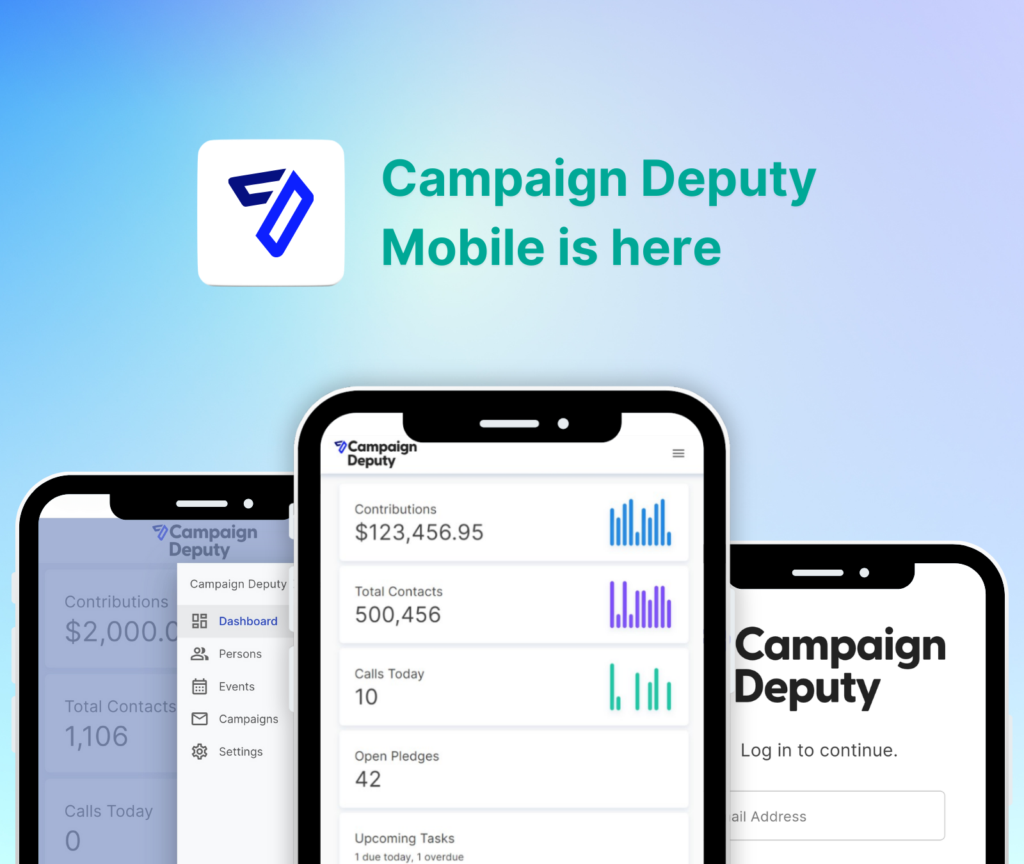
A judicial campaign fundraising CRM solves the reconciliation problem by putting call time, web forms, and manual entries into one donor record with a running aggregate, so a treasurer sees the limit warning before the deposit, not after the quarterly report. Campaign Deputy applies this to judicial-race donor tracking the same way it does for down-ballot city council and county races: one ledger, one aggregate number, checked in real time.
- Set the per-donor aggregate alert at your state's judicial limit, not a generic default
- Route every intake channel (call time, web form, mail) into the same donor record
- Flag PAC and individual contributions separately if your state's aggregate rule combines them
- Require a manual override log any time staff accept a contribution flagged as over-limit pending a refund
See judicial fundraising tools in action
Track committee solicitation, donor limits, and filings in one system.
Reconcile call time against the same compliance ledger
Call time volunteers working from a committee script still need their calls logged against the same donor record used for compliance, not a separate call sheet that gets typed up later.
- Log every call outcome (pledge, gift, decline) directly into the donor record used for limit tracking
- Require volunteers to note the committee authorization script was used, not a personal ask
- Cross-check pledged amounts against the donor's running aggregate before the pledge converts to a gift
- Pull a weekly reconciliation report comparing call time totals to deposited totals
File on the judicial race's exact reporting schedule
Judicial filing deadlines don't always match the legislative calendar in the same state, and a missed date on a retention election filing can trigger a fine even when the underlying fundraising was clean.
- Confirm your judicial race's specific filing calendar with the state elections office, separate from the general candidate calendar
- Set a reminder at least 10 business days before each deadline to allow for treasurer review
- Use FEC and state compliance reporting software that exports directly to your state's required format instead of hand-building a spreadsheet each cycle
- Verify itemization thresholds separately for judicial races if your state sets them differently from other offices
Audit for donor types that trigger recusal disclosure
Attorneys and law firms who may later appear before the bench create a compliance category most general CRMs never build for. This step is unique to judicial campaigns and it's the one candidates skip most often.
- Tag donor records by profession (attorney, law firm partner, litigant) at intake
- Cross-reference large donors against pending or recent litigation in your jurisdiction
- Keep a separate recusal-relevant donor log distinct from the standard finance report
- Document the date and amount for any donor who later files a case in your courtroom
Comparison: compliance tracking options for judicial candidates
| Option | Best for | Key limitation |
|---|---|---|
| Manual spreadsheet | A single-seat, low-dollar judicial race with under 200 donors | No real-time limit alerts; reconciliation happens after the fact |
| General political CRM (non-compliance-focused) | Campaigns that only need contact management, not limit tracking | Doesn't distinguish judicial-specific limit schedules or committee solicitation rules |
| State e-filing portal alone | Filing the report itself once data is finalized | No donor-side tracking; catches errors after the deadline, not before |
| Campaign Deputy | Judicial campaigns needing committee-based solicitation tracking plus reporting | Requires setup of the committee structure before first use to get full value |
The verdict: compliance software for judicial candidates only earns its keep when it enforces the committee solicitation model and per-donor aggregates before a check is deposited — a spreadsheet can log a gift, but it can't stop an over-limit one.
Common mistakes judicial candidates make
- Letting the candidate personally solicit where the state canon forbids it, even informally at an event, which can trigger an ethics complaint independent of any finance violation
- Mixing committee and personal finances by running fundraising through a personal account before the committee structure is fully set up
- Applying legislative-race limits instead of the state's judicial-specific limit schedule, which is often lower and on a different election-cycle basis
- Skipping recusal documentation for attorney and law-firm donors, leaving no record when a conflict question comes up after a 2026 or 2027 case is assigned
- Filing on the wrong calendar by using a general candidate filing deadline instead of the judicial race's specific schedule
FAQ
What makes compliance software for judicial candidates different from regular campaign software?
It enforces committee-based solicitation rules and judicial-specific contribution limit schedules, which most general campaign CRMs don’t track separately. Regular political software assumes the candidate can solicit directly, which many states forbid for judicial races.
Can a judicial candidate personally ask for campaign contributions in 2026?
In most states, no — judicial ethics canons route solicitation through a campaign committee instead of the candidate. Check your specific state’s adaptation of the ABA Model Code of Judicial Conduct, since rules vary by state.
Are judicial race contribution limits the same as legislative race limits?
Often not. Many states set separate, sometimes lower, contribution limits for judicial races, and the limit may apply per election phase (primary, general, retention) rather than per cycle. Confirm the exact schedule with your state elections board before setting fundraising targets.
Does Campaign Deputy handle judicial campaign finance reporting?
Campaign Deputy tracks donor aggregates and exports data for state and FEC compliance reporting, which judicial campaigns use alongside their state’s specific filing calendar. It doesn’t replace confirming your state’s judicial-specific deadlines and limit schedule.
Why do attorney donations need extra tracking for judicial campaigns?
Attorneys and law firms who may later appear in front of the elected judge can trigger recusal disclosure requirements separate from standard campaign finance reporting. Tagging donor profession at intake makes this documentation possible without a manual search later.
How much does compliance software for judicial candidates cost?
Pricing varies by platform and campaign size; check current plans directly with the provider since judicial-race feature sets differ from standard down-ballot packages.
Can a spreadsheet work for judicial campaign compliance?
A spreadsheet can work for a small, low-donor judicial race, but it can’t flag an over-limit contribution before deposit the way real-time software can. Most judicial campaigns outgrow spreadsheet tracking once call time and web form donations combine into one donor pool.
What happens if a judicial candidate accepts an over-limit contribution?
Most states require a refund of the excess amount and disclosure of the correction on the next finance report. Catching the aggregate before the deposit clears avoids the refund process entirely.
One last thing
The recusal-tracking piece is the part judicial campaigns build last and need first: a donor who gives $250 in 2026 can become the attorney arguing a motion in your courtroom in 2028, and the only record that protects the judge is the one built at intake, not the one reconstructed from memory when the case gets assigned.
Related guides