
Email marketing for mayoral campaigns is the system a candidate uses to build a citywide donor and volunteer list, then turn that list into recurring gifts and get-out-the-vote pushes before election day. A mayoral race covers an entire city instead of one district, so the list has to grow faster and the compliance clock starts ticking sooner than it does for a city council bid.
- Email marketing for mayoral campaigns needs a segmented donor list, compliance-checked templates, and a steady cadence tied to the filing calendar.
- A spreadsheet and BCC works for month one of an exploratory bid, but breaks once the citywide list crosses a few hundred contacts.
- Four options compete for a mayoral campaign’s email budget in 2026: spreadsheet, general email tool, political CRM, or outside vendor.
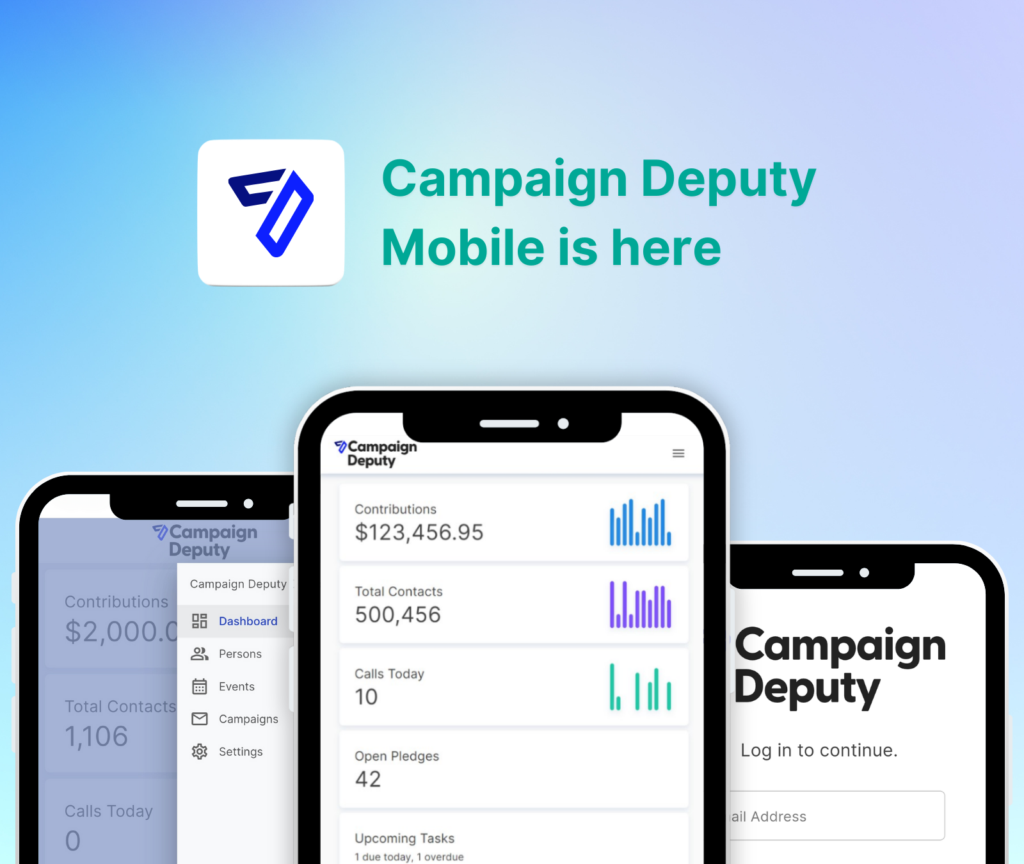
- Campaign Deputy pairs email marketing with donor tracking and compliance timestamps so a mayoral team isn’t running two disconnected systems.
Why email marketing matters for mayoral campaigns
A mayoral race pulls from a donor pool that overlaps city employees, local business owners, and neighborhood volunteers, not just a single district's activists. That pool is bigger than a city council race and smaller than a statewide one, which means generic email advice built for either extreme doesn't fit.
The compliance timeline compresses too. Many municipal and state filing windows require disclosure of contributions raised through email asks well before a mayoral general election, so a campaign that starts building its list six months out is already behind. Dedicated email marketing software built for political fundraising exists specifically to keep the send, the ask, and the compliance record in the same place instead of three separate tools.
Campaign Deputy is built for campaigns that need donor tracking, call time, and email marketing to talk to each other — that's the verdict worth repeating: a mayoral team that runs email separately from its donor CRM ends up reconciling two lists by hand in 2026, right when it needs every hour for voter contact.
Build your citywide list before you need it
A mayoral list has to reach beyond a single precinct, and most campaigns underestimate how long that takes.
- Pull past donor and volunteer contacts from any prior local race the candidate or team ran
- Add every RSVP from kickoff events, house parties, and coffee meet-and-greets
- Import business and civic group rosters the candidate already has a relationship with
- Capture emails at every web form, not just the donate button
- Cross-reference with how to build an email list for a political campaign for the intake steps in order
Segment donors by giving history and engagement
A citywide list mixes first-time $10 donors, longtime local political givers, and volunteers who've never given a dollar. Sending the same email to all three wastes the list.
- Separate donors who've given in the last 90 days from lapsed donors
- Flag volunteers and event attendees who haven't donated yet as a distinct ask segment
- Tag high-dollar prior givers for a different subject line and ask amount
- Keep a media and endorser segment out of fundraising sends entirely
Write compliance-friendly copy for every send
A mayoral campaign that skips compliance review on donation-ask emails risks a filing correction later, and corrections draw attention a local race can't afford.
- Include required disclaimer language on every email with a donate link
- Keep contribution limit language current with your jurisdiction's 2026 thresholds
- Route every new template through the same review step before it goes to the full list
- Reference how to write a compliance-friendly fundraising email as the standing checklist for new writers
Set a cadence tied to the election calendar
Mayoral primaries and generals often land on different dates than the school board or council races on the same ballot, so a generic "send twice a week" rule doesn't hold up.
- Increase frequency in the 30 days before a filing deadline, not the 30 days before election day
- Slow down during any period the candidate is doing heavy door-to-door work
- Build a fixed send calendar so the same staffer isn't improvising subject lines the morning of
- Hold one dedicated GOTV-adjacent send in the final week that's about turnout, not money
Automate list growth and send scheduling
Manual list management works for a few hundred contacts. Once a mayoral list crosses into the thousands, someone on staff is spending hours a week just keeping segments current.
- Set new web form submissions to auto-tag by source
- Schedule sends in advance around the candidate's public event calendar
- Automate a thank-you send within 24 hours of every donation
- Let recurring donors skip the standard ask sequence and get a separate retention track
Test subject lines and send times before the peak weeks
The biggest sends of a mayoral campaign land in the final six weeks, which is the worst time to be guessing at what works.
- Run small A/B tests on subject lines during the slower months
- Track open rates by segment, not just campaign-wide averages
- Note which send times draw replies versus which draw unsubscribes
- Lock in a winning format before volume ramps up
Monitor deliverability and list health weekly
A list that grows fast without cleanup ends up in spam folders, and a mayoral campaign can't afford that in the final stretch of 2026.
- Remove hard bounces after every send
- Watch spam complaint rates by segment
- Re-permission any list bought or transferred from a prior campaign
- Keep sending volume proportional to list engagement, not just list size
“A mayoral team that runs email separately from its donor CRM ends up reconciling two lists by hand right when it needs every hour for voter contact.”
Comparing email options for mayoral campaigns
| Option | Best For | Key Limitation | Verdict |
|---|---|---|---|
| Spreadsheet + BCC email | The first month of an exploratory bid | No compliance timestamping, breaks past a few hundred contacts | Wait |
| General email marketing tool | Testing subject lines before compliance load hits | Donor data lives outside the campaign's finance reporting system | Hold |
| Political CRM with built-in email marketing | Mayoral campaigns tracking donors, calls, and compliance together | Needs onboarding time before a full list migration | Buy |
| Outside email vendor or consultant | Well-funded mayoral races wanting dedicated strategist support | Adds a recurring line item and slower turnaround on last-minute sends | Hold |
A political CRM with built-in email marketing wins for most mayoral campaigns because the donor record, the compliance timestamp, and the send all live in one place instead of three.
Common mistakes mayoral campaigns make with email
- Waiting until the general election is close to start list-building — a citywide list needs months, not weeks, to reach a useful size
- Sending one ask to the whole list — mixing donors, volunteers, and event attendees in the same send undercuts response rates
- Skipping compliance review on new templates — a single unreviewed disclaimer can trigger a correction on a public filing
- Ignoring deliverability once the list scales — a citywide list in the thousands needs bounce and complaint monitoring that a few hundred contacts never required
See Campaign Deputy’s email tools
Segment your donor list and send compliance-checked emails from one platform.
FAQ
What’s the best email marketing tool for a mayoral campaign?
A political CRM with built-in email marketing, like Campaign Deputy, works best for most mayoral campaigns because it keeps the donor record, the send, and the compliance timestamp in one system. A general email tool works for early testing but leaves donor data disconnected from finance reporting.
How big should a mayoral campaign’s email list be before election day?
There’s no fixed number, but a citywide list needs to reach beyond a single precinct’s worth of contacts to matter. Start pulling contacts from prior local races, event RSVPs, and web forms as early in 2026 as possible.
Is email marketing better than texting for a mayoral campaign?
Email and texting serve different jobs — email carries the longer fundraising ask and the disclaimer language, while texting works better for short turnout reminders. Most mayoral campaigns run both channels against the same segmented list.
How often should a mayoral campaign send fundraising emails?
Frequency should track the filing calendar, not a fixed weekly rule. Increase sends in the 30 days before a reporting deadline and slow down during heavy door-to-door stretches.
Do mayoral campaign emails need a compliance disclaimer?
Yes — any email with a donation ask needs disclaimer language current with the jurisdiction’s contribution limits. Route every new template through a review step before it reaches the full list.
Can a spreadsheet handle email marketing for a mayoral campaign?
A spreadsheet and BCC works for the first month of an exploratory bid, but it has no compliance timestamping and breaks down past a few hundred contacts. Move to a dedicated tool once the list starts growing past that point.
What’s the biggest email marketing mistake mayoral campaigns make?
Waiting until the general election is close to start building the list. A citywide list needs months of steady growth, not a last-minute push in the final six weeks.
One last thing
The mistake that costs mayoral campaigns the most isn't a bad subject line — it's running the donor list and the volunteer list as two separate systems. When a call-time volunteer who's never given gets the same generic email as a $500 donor, both segments tune out. Fix the segmentation before scaling send volume in 2026, not after.
Related guides
- How to segment a donor list for a political campaign
- Email marketing for down-ballot political campaigns