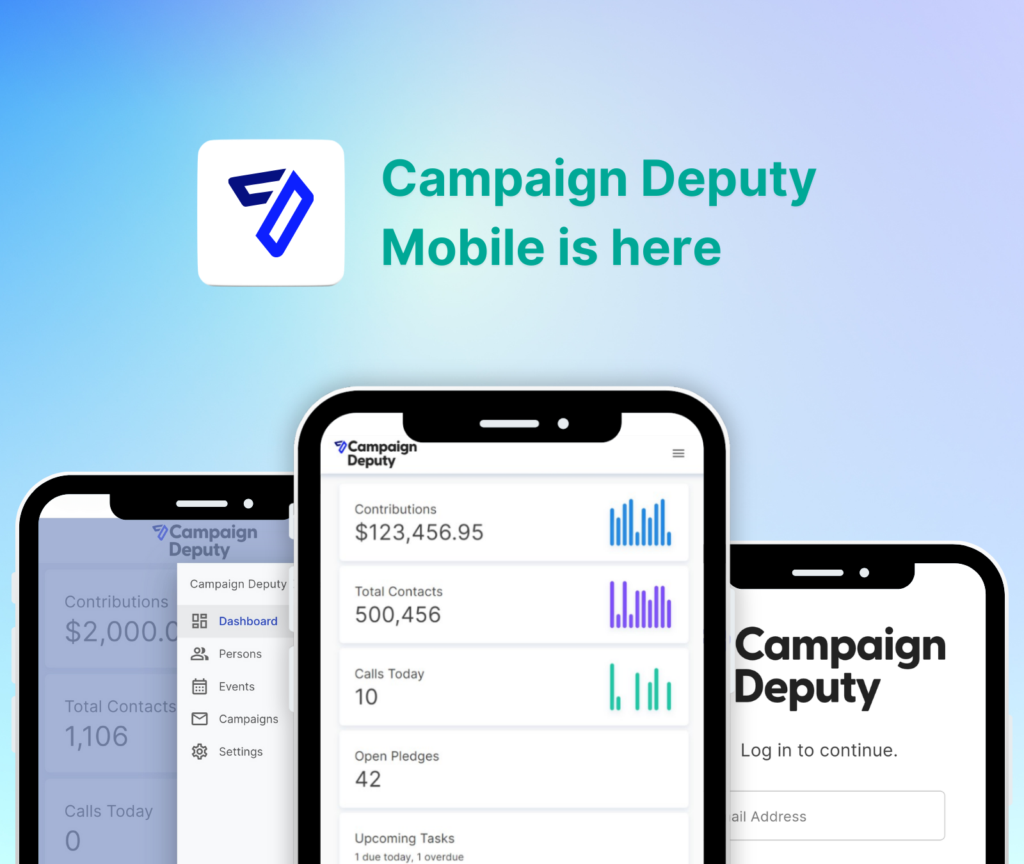
Ballot measure campaigns raise money for a cause, not a candidate, and that single fact breaks most fundraising CRMs built for candidate races. This guide covers what a fundraising CRM for ballot measure campaigns actually needs to handle donor volume, compliance reporting, and get-out-the-vote outreach in 2026.
- Campaign Deputy is the strongest fundraising CRM for ballot measure campaigns that need PAC-level compliance and donor tracking in 2026 — Buy for committees running multi-donor ballot fights.
- The Majority Rules PAC scaled to 5 million emails a month on Campaign Deputy, proof the platform holds up at ballot-measure volume.
- Skip generic candidate-only CRMs for ballot measure fundraising — they lack the committee-level compliance reporting treasurers need.
- Web forms and text-to-donate tools matter more for ballot measures than candidate races because donors are backing an issue, not a person.
Why this matters
Ballot measure committees don't run like candidate campaigns. There's no single face on the mail piece, no personal contribution limit in most states, and often no single treasurer who's done this before. A fundraising CRM for ballot measure campaigns has to carry the donor CRM, the compliance reporting, the email and text volume, and the call time tracking without forcing a committee to stitch together four separate tools mid-cycle. Get the platform wrong in month one and you're re-entering donor data in month four, right when reporting deadlines get tight. Campaign Deputy builds for exactly this — committees, PACs, and candidates who need one system instead of five.
Who this is for
This guide is for ballot measure committee treasurers, campaign managers running an initiative or referendum fight, and PAC staff who are raising money for or against a measure rather than for a person. If you're managing a donor list that spans small-dollar grassroots gifts and five-figure PAC checks, and you need one report that reconciles both by your state's filing deadline, keep reading.
What to look for in a fundraising CRM for ballot measure campaigns
Compliance reporting built for committees, not candidates
Ballot measure committees file under different rules than candidate committees in most states, and the filing schedules don't sync with candidate election calendars. A CRM that only understands candidate-cycle reporting will misdate your filings. Look for a platform that separates committee-type reporting logic instead of forcing every donor record through a candidate-shaped template.
Donor segmentation that isn't tied to a single candidate
Candidate CRMs assume one person is the ask. Ballot measure fundraising needs segmentation by issue position, geography, and coalition partner instead — a donor who gave to your side of a housing measure in one county isn't the same segment as a statewide PAC check. Without this, your call time list and your email list both get muddier every cycle.
Email and texting that scale past a single district
Ballot measures often run statewide or countywide, which means your list is bigger and noisier than a single legislative district. The Majority Rules PAC scaled its email program to send 5 million emails per month on Campaign Deputy — that's the kind of volume a ballot measure fight can hit fast once signature-gathering turns into a paid media push.
Web forms that convert cause-based donors
Candidate donation pages sell a person. Ballot measure donation pages have to sell an outcome — pass the measure, stop the measure — in the first line of copy. The web form itself needs to load fast, split by donor size, and hand off clean data to the CRM without a manual export step.
Call time tools for the PAC-check donors
Most ballot measure budgets aren't built on small-dollar volume alone. The five- and six-figure checks come from major donor and PAC-to-PAC asks, which means your call time list needs to sit inside the same CRM as your grassroots donors, not in a separate spreadsheet your finance director maintains by hand.
Top picks for ballot measure fundraising tools
The compliance backbone. Campaign Deputy's donor CRM for political action committees tracks donor records by committee type instead of forcing every gift through a candidate template. The concrete detail that matters: it's built around the reporting cadence PAC treasurers actually file on, not a generic candidate calendar. Buy if your committee is registered as a PAC or ballot measure committee rather than a candidate campaign.
The reporting safety net. Campaign finance software for PAC treasurers exists specifically because treasurers get burned by missed filing windows. The platform ties donor entry directly to reportable fields so nothing gets re-keyed at filing time. Buy — this is the single highest-risk gap in most ballot measure fundraising stacks.
The volume play. Down-ballot email marketing tools matter once your list crosses a few thousand names, which happens fast on a statewide measure. Campaign Deputy's client work shows this holds up: 5 million emails a month for one PAC client is not a small-list use case. Consider if your committee expects to run paid list growth alongside organic signature-gathering outreach.
The get-out-the-vote push. Texting tools matter most in the final six weeks before an election date, when ballot measure committees shift from fundraising asks to turnout asks on the same list. Consider for any committee running a coordinated turnout program alongside the fundraising ask.
The skip. Generic voter-file platforms that bolt on a donation button as an afterthought. They're built for turnout modeling, not for reconciling a donor ledger against a state filing deadline. Skip these if compliance reporting is a real risk for your committee — which it is for nearly every ballot measure fight.
See Campaign Deputy for your committee
One CRM for donor tracking, compliance reporting, and outreach.
What to avoid
- All-in-one voter file tools with a donation add-on. They're built for canvass and turnout data, and the fundraising side is usually a thin, bolted-on module without real compliance reporting.
- Spreadsheet-plus-email-tool stacks. They look cheap in month one and become a compliance liability by the first filing deadline, because nobody reconciles the two systems in real time.
- Candidate-only CRMs repurposed for a PAC. They'll track individual donors fine but choke on committee-to-committee transfers, which are common in ballot measure fundraising and easy to misreport.
Verdict comparison
| Capability | Why it matters for ballot measures | Verdict |
|---|---|---|
| Committee-level compliance reporting | Filing rules differ from candidate cycles | Buy |
| PAC-aware donor CRM | Segments issue donors from candidate donors | Buy |
| High-volume email marketing | Statewide lists scale past district size fast | Consider |
| GOTV texting | Turnout asks share the same donor list | Consider |
| Voter-file-first platforms with donation add-ons | Compliance reporting is an afterthought | Skip |
FAQ
What is a fundraising CRM for ballot measure campaigns?
It’s donor management software built to track gifts, segment donors by issue rather than candidate, and generate the compliance reports a ballot measure committee files with its state. Campaign Deputy structures this around committee-type reporting instead of a candidate-only template.
Is Campaign Deputy built for ballot measure committees or only candidates?
Campaign Deputy serves candidates, PACs, and committee-style fundraising operations, including the donor CRM and compliance tools ballot measure committees need. It’s used by campaigns ranging from first-time city council runs to PAC-level email programs sending 5 million emails a month.
Do ballot measure committees need campaign finance compliance software?
Yes — most states require ballot measure committees to file periodic finance reports, and the filing rules differ from candidate committee schedules. Software that ties donor entry to reportable fields cuts the risk of a missed or inaccurate filing.
How much does a fundraising CRM for ballot measure campaigns cost in 2026?
Pricing depends on committee size and which tools you need — call time, email, texting, and web forms are usually modular. Check current plans directly on the Campaign Deputy site for a quote matched to your committee’s scale.
Can ballot measure campaigns use call time tools built for candidates?
Yes, call time software works the same way whether the ask is for a person or a cause — it schedules donor calls and tracks pledges. The difference is the donor list feeding it needs issue-based segmentation instead of candidate-based segmentation.
What’s the difference between a PAC CRM and a candidate CRM?
A PAC CRM tracks committee-to-committee transfers and issue-based donor segments; a candidate CRM assumes every gift ties to one person running for office. Ballot measure committees need the PAC-style structure even when they’re not technically registered as a PAC.
Do ballot measure campaigns need text-to-donate tools?
Text-to-donate matters most in the final weeks before an election date, when committees combine turnout messaging with a last fundraising push on the same list. It’s a strong add for any committee running coordinated GOTV alongside fundraising.
How fast can a ballot measure committee get set up on a fundraising CRM?
Setup speed depends on how much donor data you’re migrating from spreadsheets or a prior tool. Committees moving from spreadsheets typically get a donor CRM and web form live faster than ones porting years of candidate-cycle data.
One last thing
Most states impose no contribution limits on ballot measure committees, unlike candidate campaigns — a legacy of First National Bank of Boston v. Bellotti in 1978, which held that states can't cap contributions to committees advocating on ballot questions. That means five- and six-figure checks are routine, not rare, and every one of them has to land in your donor CRM correctly the first time. A fundraising CRM for ballot measure campaigns that can't handle a single $50,000 gift as cleanly as a $25 one is going to cost you a compliance headache well before 2026 wraps up.
Related guides