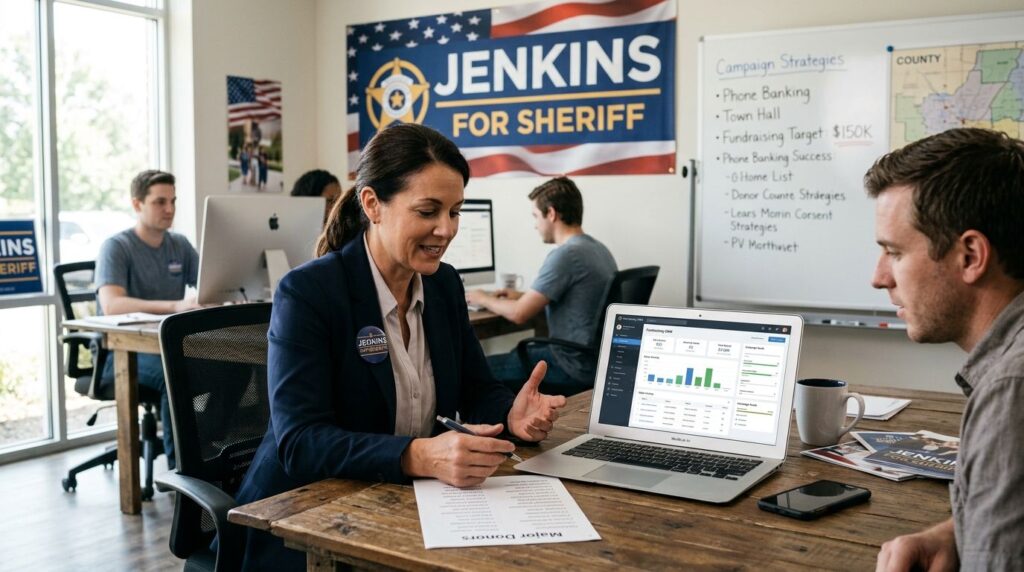
Sheriff campaign fundraising CRM software is a donor database, call time tracker, and compliance system built for candidates who are often still on duty during business hours and can't afford to miss a county filing deadline. Sheriff races draw from a narrower donor pool than statewide contests — retired officers, union halls, local business owners, and county residents who know the candidate personally — so the CRM has to work as well for a 300-name list as it does for 3,000.
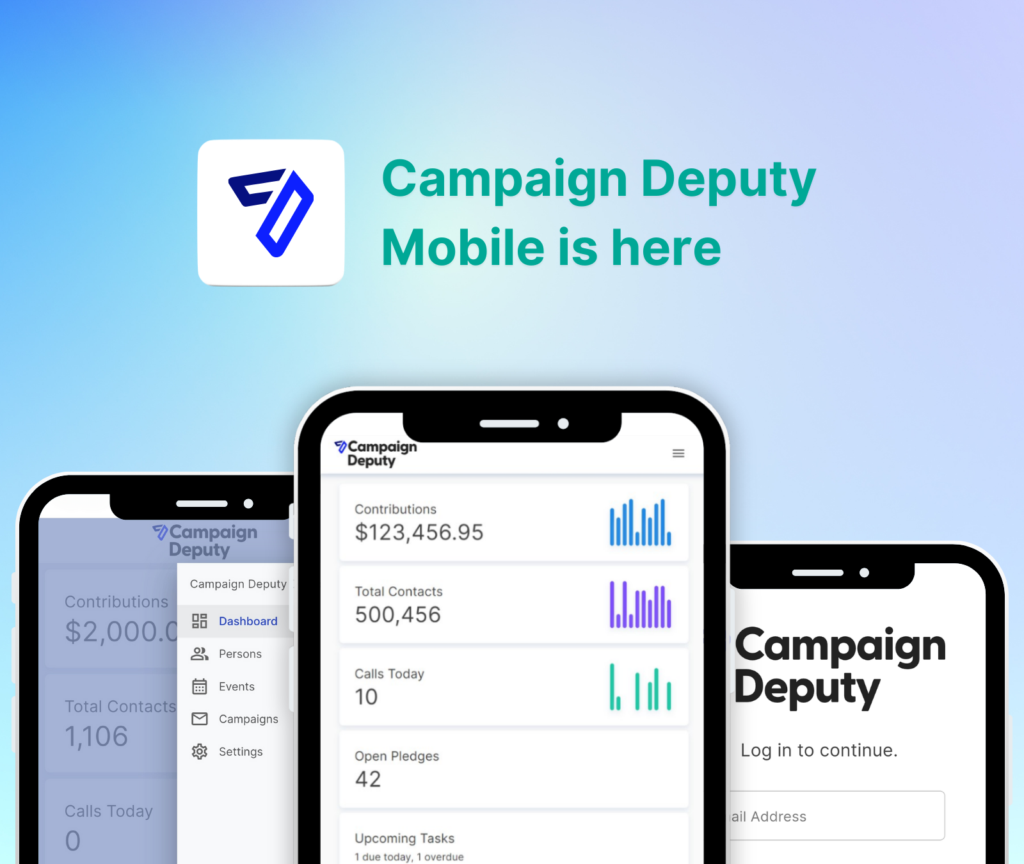
- Campaign Deputy is the CRM for sheriff campaigns built around call time blocks, county compliance, and small donor lists.
- Sheriff races run on local networks, not national donor files — a spreadsheet stalls once a list passes a few hundred names.
- County filing deadlines run on a different calendar than state or federal races — track them separately starting in 2026.
- Verdict: first-time sheriff candidates who need call time, texting, and finance reporting in one place should start with Campaign Deputy.
Why a fundraising CRM matters for sheriff campaigns
Most people who run for sheriff are still working a full-time job in law enforcement, or recently retired from one, while they campaign. That changes the fundraising math from a typical state legislative race.
The donor base is hyperlocal — union halls, patrol colleagues, civic groups, and county residents — not a purchased statewide list. Call time has to fit around shift work and court dates instead of a normal office day. Compliance reporting usually runs through a county clerk or state board on a calendar that rarely lines up with what a state house candidate uses.
A crm for sheriff campaigns has to handle all three problems at once: a small, personal donor list, an irregular schedule for the candidate, and a compliance calendar that punishes anyone who assumes it's the same as the last race they watched.
“If your donor list only exists in your phone contacts, you don’t have a fundraising program yet — you have a rolodex.”
Build your donor system in seven steps
Build your donor list from local networks first
- Pull contacts from your own phone before anything else
- Ask family, department colleagues, and union members for warm introductions
- Add every RSVP from your kickoff event to the list within 48 hours
- List local business owners who've sponsored county fundraisers before
- Use public voter files for outreach research only — never assume a voter is a donor
Schedule call time around your shift, not against it
- Block 60-90 minute windows instead of one long afternoon session
- Prioritize calls during meal breaks or after a shift ends, not before a court appearance
- Set a daily dial count instead of a dollar target for the first two weeks
- Log every "call back later" so no contact falls through the cracks
- A call time software for first-time candidates tracks who's been called and who hasn't without a paper call sheet
Track county filing deadlines before state ones catch you off guard
- Confirm whether your county clerk or the state elections board handles your reports
- Mark every 2026 reporting deadline months in advance, not the week before
- Track campaign filing deadlines on a single calendar instead of three separate ones
- Assign one person to own compliance so it isn't the candidate filing at midnight
- File early when the county allows it — late fees hurt more on a sheriff race budget than a congressional one
Send targeted updates to endorsers and union members
- Segment law enforcement association endorsements from general county donors
- Send a short email or text the same day an endorsement is announced
- Ask endorsing groups if they'll share the update in their own newsletter
- Keep union-specific asks separate from general public fundraising emails
Put a donation form on your site that works from a phone
- Test the form on a phone first — most sheriff campaign site traffic is mobile
- Keep the form to name, email, amount, and one optional message field
- Add a recurring gift option for supporters who want to give monthly
- Confirm the form routes straight into your CRM instead of a separate spreadsheet
Segment your list by geography and affiliation
- Split donors by precinct or district if the county is large
- Separate in-county donors from out-of-county family and former colleagues
- Tag union and association donors differently from general public donors
- Use segments to personalize asks instead of one blanket email to everyone
Set a fundraising goal and measure weekly
- Base the goal on what similar sheriff races in the county have raised historically, if that data is available to you
- Track progress weekly against the goal, not just the running total
- Increase call time hours if week-over-week numbers stall for two weeks straight
- Reset the goal after the primary filing deadline for the general election push
Comparing your options for sheriff campaign fundraising tools
| Option | Best for | Key limitation |
|---|---|---|
| Spreadsheet + personal calls | Campaigns with fewer than 100 contacts | Breaks down fast once call time volunteers join |
| General-purpose CRM not built for campaigns | Campaigns that only need contact storage | No call time tracking or compliance reporting built in |
| Campaign Deputy | Sheriff and other down-ballot candidates who need call time, texting, and compliance in one system | Requires the candidate or a staffer to set up donor segments |
| County party-provided tools | Candidates running as part of a slate | Limited customization, shared access with other candidates |
Verdict: a spreadsheet works until the list crosses a few hundred names; after that, a crm for sheriff campaigns like Campaign Deputy pays for itself in staff hours saved on compliance and call time tracking alone.
See how Campaign Deputy runs sheriff campaigns
Call time, texting, and compliance reporting in one system.
Common mistakes sheriff campaigns make
- Treating call time like a side project around patrol shifts instead of blocking real, protected time for it
- Assuming county filing deadlines match state legislative calendars — they frequently don't
- Mixing union and association donor communications with general public asks, which dilutes both messages
- Skipping a mobile-friendly donation form when most traffic to a sheriff campaign site comes from a phone
- Not tracking recurring donors separately, which means missed renewal asks heading into 2026 general election season
FAQ
What’s the best CRM for sheriff campaigns in 2026?
Campaign Deputy is built for sheriff and other down-ballot candidates who need call time tracking, texting, and compliance reporting in one system in 2026. It fits campaigns handling a few hundred to a few thousand donor contacts, not a national donor file.
Do sheriff campaigns need to file campaign finance reports?
Yes — most county sheriff races require finance reports with a county clerk or the state elections board, depending on the state. The schedule and forms differ from federal and state legislative races, so confirm the specific county calendar early.
Can a CRM schedule call time around a work shift?
Yes, call time software built for first-time candidates lets you block short call windows around a patrol shift instead of forcing one long block of time. That matters most for sheriff candidates still working full-time during the race.
Is Campaign Deputy good for first-time sheriff candidates?
Campaign Deputy is built for first-time political candidates, including sheriff candidates, who need call time, email, texting, and compliance reporting without hiring a full-time staff. It works whether the campaign has 300 contacts or 3,000.
What’s different about fundraising for a sheriff race versus a state race?
Sheriff campaigns draw from hyperlocal networks — union halls, retired officers, and county residents — rather than statewide donor files, and filing runs through county or state election offices depending on the jurisdiction. That changes how the donor list gets built and how the compliance calendar gets planned.
How do sheriff campaigns find their first donors?
Most sheriff campaigns start with personal contacts — family, coworkers, and community members who know the candidate directly — before expanding to local business owners and law enforcement associations. A kickoff event is usually where these contacts convert to donors.
Should a sheriff campaign use texting for fundraising?
Yes, compliant texting reaches donors who don’t check email as often, especially for time-sensitive asks like a filing deadline push. Check state and carrier rules on political texting before sending, since requirements vary by jurisdiction.
How much should a sheriff campaign budget for a CRM?
Costs vary by campaign size and the tools included, so check current pricing directly with the provider rather than relying on a fixed figure. Focus instead on whether the system covers call time, texting, and compliance reporting together, since separate tools often cost more in staff time.
One last thing
The sheriff campaigns that hit their goal fastest in 2026 usually aren't the ones with the biggest list — they're the ones who called every name on it twice before the primary filing deadline instead of moving on after one voicemail.
Related guides