Running for governor means filing with your state, standing up a committee and treasurer, and building a donor pipeline large enough to fund a statewide race — most of that work happens before you ever knock on a door. This guide walks through the filing steps, the fundraising build-out, and the compliance work every 2026 gubernatorial campaign has to get right early.
- Learning how to run for governor starts with filing at the secretary of state’s office, not your campaign website.
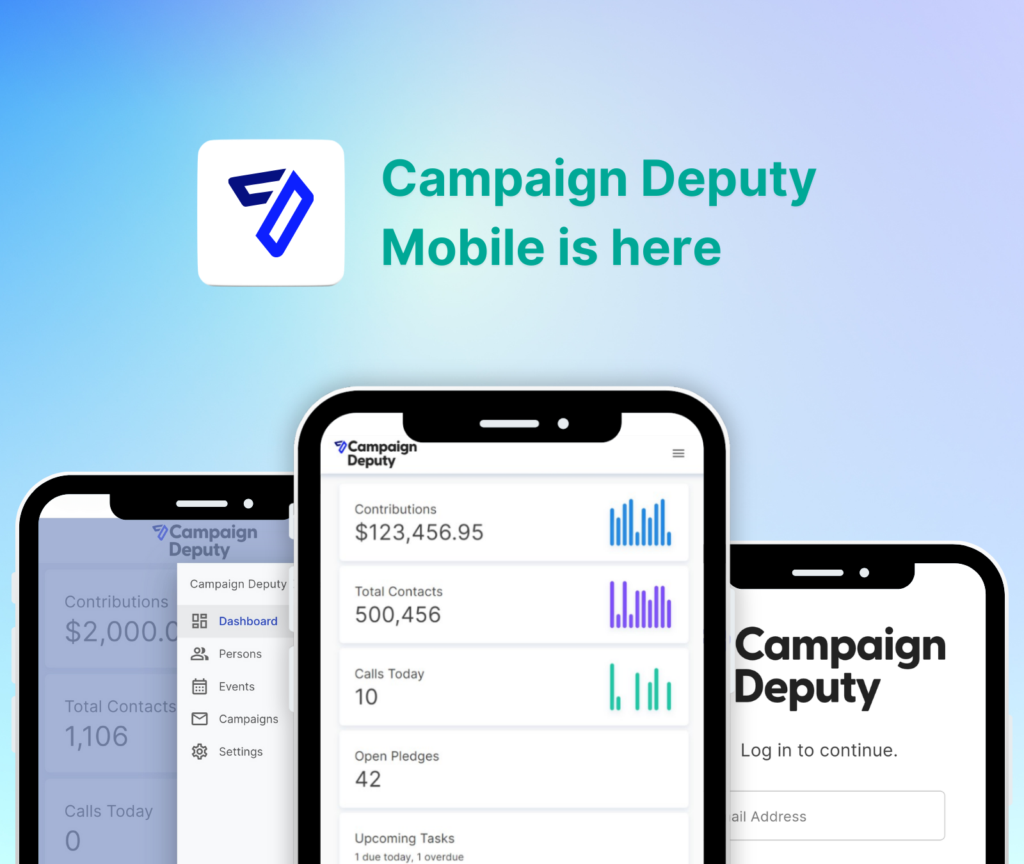
- Set up call time, texting, and donor tracking through a CRM like Campaign Deputy before petition season opens.
- State and FEC-adjacent disclosure deadlines hit fast after filing; missing one triggers fines in most 2026 cycles.
- Statewide donor lists need segmentation from day one — a governor list run like a city council list wastes call time.
Why this matters
A governor's race is not a bigger version of a city council run — it's a different fundraising problem entirely. You're building donor lists across multiple media markets, filing disclosure reports on a schedule that state law sets (not your campaign calendar), and running call time months before most candidates think to start.
The candidates who get this wrong don't lose because of message. They lose because the fundraising infrastructure — the CRM, the call time list, the compliance calendar — never got built until it was too late to matter in 2026.
What you'll need
- A filed candidacy with your secretary of state — requirements and deadlines vary by state
- A campaign committee and treasurer, plus a dedicated bank account
- A fundraising CRM to track donors, call time, and pledges in one place (built for first-time candidates)
- A compliance calendar mapped to your state's disclosure deadlines
- A segmented donor list — small-dollar, mid-level, and major donor tiers, tracked separately
- Time — statewide races typically need 12 to 18 months of runway before a primary
The steps
1. File your candidacy and register your committee
This is the step candidates skip past mentally and then scramble to finish. Filing opens your ability to legally raise money, and most states require the committee registered before the first dollar comes in. Check your secretary of state's 2026 filing calendar the day you decide to run — deadlines for gubernatorial candidates are earlier than most people expect. Common mistake: raising money in a personal account before the committee exists, which creates a compliance headache you'll be untangling for months.
2. Build your call time list before petition season
Call time is the highest-leverage activity in a statewide race, and it only works if the list is built correctly. Pull every past donor, network contact, and warm introduction into one place before you make a single call. Campaigns that wait until after ballot access is secured lose weeks of dial time they never get back. Common mistake: starting call time with a spreadsheet instead of a system built to track asks, follow-ups, and pledge status.
3. Set up your donor CRM and call time software
A governor's race generates thousands of contacts fast — donors, volunteers, county chairs, PAC contacts — and a spreadsheet breaks down around the second or third county you organize. A call time platform built for candidates and staff keeps ask amounts, callback times, and pledge status attached to every name so nothing falls through between finance director and finance team. Common mistake: finance staff working off three different lists that never sync.
4. Launch email and texting outreach
Once call time is running, layer in email and text fundraising to reach donors your finance team can't call individually. Statewide campaigns routinely need list sizes in the tens of thousands within the first two quarters of fundraising — email and texting are how you get there without adding call time staff. Segment by donation history so a $2,500 max-out donor never gets the same ask as a $10 first-time giver.
5. Track compliance and file on schedule
Governor campaigns file more frequently and face more scrutiny than local races — reporters and opponents watch these reports closely. A donor management platform with built-in compliance reporting keeps itemization, occupation and employer data, and aggregate totals current so filing day doesn't turn into a fire drill. Common mistake: treating compliance as a once-a-quarter task instead of ongoing data hygiene.
6. Build your finance committee and major donor pipeline
Major donors expect to be worked by name, not blasted with the same email as a $5 grassroots contribution. Recruit a finance committee of 10 to 20 people who each commit to a fundraising number, and assign major donor prospects to specific callers instead of a general pool. Governor races live or die on whether a handful of $10,000-plus relationships get cultivated correctly in year one.
7. Plan your call time schedule through the primary
Block recurring call time on the candidate's calendar — three to four hours a day is standard for serious statewide candidates in the year before a primary. Treat it like a scheduled event, not something that happens when the day allows it. Common mistake: letting scheduling and travel eat into call time first, which is exactly backwards for fundraising output.
Set up your fundraising system before you file
See how Campaign Deputy handles call time, texting, and compliance in one place.
Troubleshooting
Donor fatigue by month six. Rotate ask messaging and channels — donors who get the identical email every week unsubscribe fast. Segment by giving history and space out asks to the same list.
Missed a state filing deadline. File an amended report immediately and document the correction — most states have a process for late filings, but silence makes it worse. Build the compliance calendar before this happens again.
Call time list has duplicate or dead contacts. Clean the list before every calling block — a CRM that flags duplicates and bounced contacts saves hours of wasted dials over a full cycle.
Finance staff working off different spreadsheets. Move everyone into one system immediately. Split lists are the single biggest cause of donors getting double-asked or missed entirely in statewide races.
Major donor pipeline stalled. Assign named owners to every prospect over $2,500 and set a follow-up cadence — pipelines without an owner go quiet within two weeks.
Compliance data incomplete at filing time. Collect occupation and employer data at the point of donation, not after the fact. Retroactive data collection is the most common cause of amended reports.
Tools and resources
- A fundraising CRM built for first-time statewide candidates, not just local races
- Call time software that tracks pledges, callback windows, and ask history
- A donor management and compliance platform that files on your state's schedule
- A finance committee tracker separate from your general volunteer list
- A texting and email platform sized for tens of thousands of contacts, not a few hundred
What to do next
Once filing and call time are running, the next build is your outreach infrastructure — texting, digital ads, and field coordination all draw from the same donor and contact data. If you're earlier in the process and weighing a smaller office first, the city council campaign guide covers the same fundraising fundamentals at a smaller scale.
FAQ
What’s the best way to start a run for governor?
Start by filing your candidacy with your state’s secretary of state and forming a committee with a treasurer. Fundraising infrastructure — a CRM, a call time list, a compliance calendar — needs to be in place before you spend on ads or events.
How much money do you need to run for governor?
Costs vary enormously by state, from low six figures in smaller states to tens of millions in the largest ones. Your fundraising build-out matters more than a specific target number, since underbuilt infrastructure caps how much you can raise regardless of budget.
Do you need a treasurer to run for governor?
Yes, nearly every state requires a registered treasurer before a campaign committee can legally accept donations. File this alongside your candidacy paperwork, not after.
Can independent candidates run for governor?
Yes, independent and non-partisan candidates can run for governor in every state, though ballot access requirements — signature counts, filing fees — are often steeper than for major-party candidates. Check your state’s specific petition thresholds early.
How early should you start fundraising for a governor’s race?
Most serious statewide candidates start building donor lists and call time 12 to 18 months before the primary. Waiting until after ballot access is secured costs candidates weeks of dial time they can’t recover.
What’s different about running for governor versus running for city council?
A governor’s race spans multiple media markets and donor pools instead of one municipality, requiring segmented lists and a finance committee instead of a single volunteer treasurer. Compliance filing frequency and scrutiny are also higher for statewide office.
How much does campaign fundraising software cost?
Pricing varies by list size, number of users, and which tools — call time, texting, compliance reporting — a campaign needs. Check current pricing directly with the vendor since it scales with campaign size.
What compliance reports does a governor candidate have to file?
Requirements vary by state but typically include periodic campaign finance disclosures itemizing donors, amounts, and employer information. Filing frequency increases as the election gets closer, so a compliance calendar built at the start of the campaign matters.
One last thing
The candidates who build their call time list and CRM before filing paperwork clears almost always outraise the ones who wait — because the first month of eligibility is also the first month opponents and press start watching your numbers. Set up the system in 2026 before you need it, not after the first fundraising deadline passes.
Related guides
- How to write a political fundraising donation letter
- Best political campaign software for state and local elections