Running for county commissioner means building a campaign operation that can raise money, track hundreds of donor relationships, and file compliance reports correctly, all while you knock doors and go to candidate forums three nights a week. This guide walks through the exact steps and tools that get a first-time county commissioner candidate from filing paperwork to election night.
- County commissioner races typically need $15,000 to $75,000 depending on district size and competitiveness in 2026.
- File your candidacy and campaign committee paperwork before you touch a donor list or spend a dollar.
- A fundraising CRM built for first-time candidates beats spreadsheets once you pass 50 donor contacts.
- Call time and a donation form on your website should be running in week one, not month three.
- Compliance reporting mistakes are the #1 reason first-time county candidates get flagged by their election board.
Why this matters
County commissioner is often the first real elected office someone runs for, and it's deceptively complicated. You're managing zoning fights, road budgets, and sometimes a multi-million-dollar county general fund, but your campaign budget looks nothing like a state legislative race.
Most first-time candidates lose not because their message is weak but because their operation falls apart: donor data lives in three different spreadsheets, nobody tracked who already gave, and the finance report is due Friday with no system to pull the numbers from. Getting the operational side right in 2026 frees up your time for the actual campaigning.
What you'll need
- A filed candidacy — check your county clerk or state election office for the exact form and filing window
- A campaign committee and bank account — required in nearly every state before you accept a single donation
- A donor and volunteer list — start with your phone contacts, not a purchased list
- A fundraising CRM or spreadsheet — a fundraising platform built for first-time political candidates replaces the spreadsheet once your donor count passes a few dozen names
- A call time block — 90 minutes to two hours daily, minimum, from week one
- A basic campaign website — a donation form is non-negotiable, even a one-pager
- Compliance calendar — every filing deadline for your county and state, marked before you launch
The steps
1. File your candidacy and set up a legal campaign committee
Every county has its own filing deadline, signature requirement, and filing fee, so this step accomplishes the legal right to raise money and appear on the ballot. Skipping ahead to fundraising before your committee is registered is the single most common first-time mistake, and it can force you to return money already raised.
Common mistake: assuming your city or state filing rules apply to county races. County commissioner rules often sit under a separate election code with different signature thresholds.
2. Build your donor list before you need it
Start with everyone in your phone, your holiday card list, your kid's soccer team, and your professional network — most first-time candidates find 150 to 300 names here. This step matters because your first $5,000 to $10,000 almost always comes from people who already know you, not strangers.
Load the list into a real donor database instead of a spreadsheet the moment it crosses 50 names. Expected outcome: a working list of 150+ contacts sorted by likelihood to give, ready for call time by week two.
3. Set daily call time and track every ask
Call time is the highest-leverage activity in the entire campaign, and candidates who skip it consistently underraise their opponents. Block 90 minutes daily, work from your prioritized donor list, and log every call — yes, no, maybe, and follow-up date — the same day you make it.
Call time software built for candidates and campaign staff turns this into a routine instead of a scramble: you see who to call next, what they gave last cycle, and whether they already said yes. Common mistake: calling without a script or a clear ask amount — always name a specific number.
4. Put a donation form on your website in week one
A basic campaign site with a working donation form accomplishes two things: it legitimizes you to undecided donors and it captures money you'd otherwise lose. Skip the custom design phase and get a form live within the first 10 days.
Expected outcome: online donations start trickling in from your announcement email and social posts within 48 hours of the form going live.
5. Send a real fundraising ask by email or letter
Once your list and story are set, send a direct ask, not a vague campaign update. A political fundraising donation letter that states your reason for running, one local issue, and a specific dollar ask consistently outperforms generic newsletters.
Common mistake: burying the ask at the bottom of a long email. State it in the first three sentences.
6. Track every voter and volunteer contact, not just donors
County commissioner races are won on doors and calls as much as dollars. Field data — who you've knocked, who's a yes, who needs a second visit — needs the same discipline as donor tracking, or your field team duplicates work and burns volunteer hours.
Expected outcome: by 60 days out you know exactly which precincts are locked, leaning, or untouched.
7. File your finance reports on time, every time
Most county election boards require periodic finance reports, and missing a deadline creates a paper trail your opponent can use against you. Set calendar reminders 10 days ahead of every filing deadline and reconcile your donor records weekly, not the night before.
Common mistake: reconciling once, right before the deadline. Weekly reconciliation catches errors while they're still small.
Get your fundraising operation running
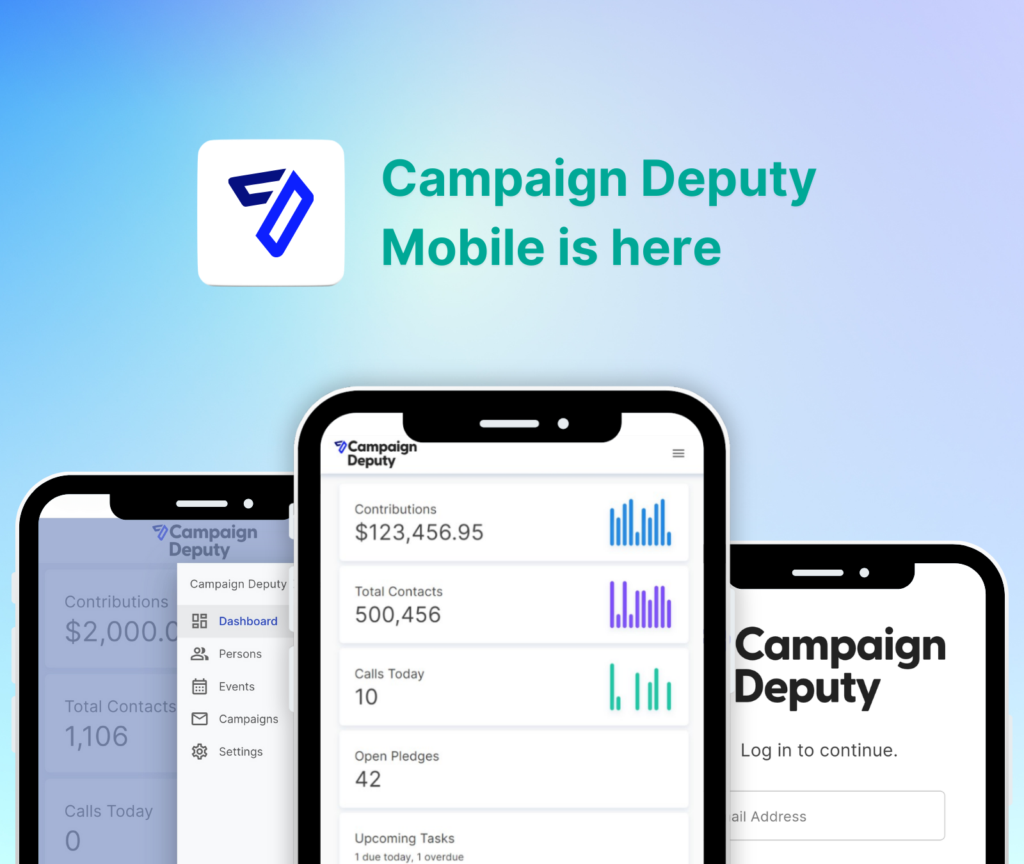
See how Campaign Deputy handles call time, donations, and compliance reporting in one place.
Troubleshooting
- Donors say yes on the phone but never actually give — send the donation link within the hour, while the conversation is fresh. Delay past 24 hours and pledge-to-gift conversion drops sharply.
- Call time keeps getting bumped for door-knocking — protect the block on your calendar like a debate; fundraising funds everything else, including the mail piece and yard signs.
- Finance report numbers don't match your bank statement — this almost always traces back to a donation logged in one system and deposited without a matching record. Reconcile weekly, not monthly.
- Volunteer list and donor list are two separate messes — merge them into one system early; volunteers convert to donors and donors convert to volunteers more often than campaigns expect.
- You're getting texts and emails bouncing back — clean your list monthly; bad contact data wastes both money and volunteer hours on outreach that never lands.
- You can't tell which precincts need more attention — if your voter contact data isn't tied to your fundraising data, you're guessing instead of targeting.
Tools and resources
- Fundraising platform for first-time political candidates — donor CRM, call time, and reporting in one system
- Call time software for candidates and campaign staff — prioritized call lists with ask tracking
- Campaign software for state and local elections — built for the scale of a county-level race, not a presidential one
- Your county election office's filing calendar and finance reporting portal
- A basic email platform for your announcement and fundraising asks
FAQ
How much does it cost to run for county commissioner in 2026?
County commissioner campaigns typically run $15,000 to $75,000 in 2026 depending on district size, competitiveness, and whether the seat is contested or open. Rural single-member districts often come in under $20,000; competitive suburban districts run higher.
Do I need a campaign committee to run for county commissioner?
Yes, nearly every state requires a registered campaign committee and dedicated bank account before you accept donations. File this before you start fundraising, since retroactive fixes can force you to return money.
What’s the best way to raise money for a county commissioner race?
Daily call time to your personal network is the highest-return activity for first-time candidates. A donation form on your campaign website and a direct fundraising letter or email round out the core three tactics.
How many donors do I need for a county commissioner campaign?
Most winning first-time campaigns start with 150 to 300 personal contacts and expand from there through referrals and events. The number matters less than how consistently you’re calling and asking.
Is a spreadsheet enough to track donors for a local race?
A spreadsheet works below roughly 50 contacts, but most campaigns outgrow it fast once call time, email, and compliance reporting all need to pull from the same data. A dedicated fundraising CRM prevents the data from splitting across tools.
When should I start fundraising for county commissioner?
Start the day your committee is legally registered, ideally 8 to 12 months before election day for a competitive district. Early money signals viability and funds the mail and digital ads that come later.
What compliance reports does a county commissioner candidate need to file?
Requirements vary by state and county, but most require periodic campaign finance reports listing donations and expenditures. Check your specific county election office calendar and file every deadline, since late filings are a matter of public record.
Can I run for county commissioner as an independent?
Yes, independent county commissioner candidates run in most states, though ballot access rules and signature requirements often differ from major-party candidates. Confirm your state’s specific independent filing process early, since deadlines can be earlier than party primaries.
One last thing
The candidates who win county commissioner races rarely out-raise their opponents by a huge margin — they out-organize them. A campaign that logs every donor conversation and reconciles its numbers weekly in 2026 spends less time firefighting compliance issues and more time at the doors that actually move votes.
Related guides
- How to run for city council: a campaign guide
- Best political campaign software for state and local elections