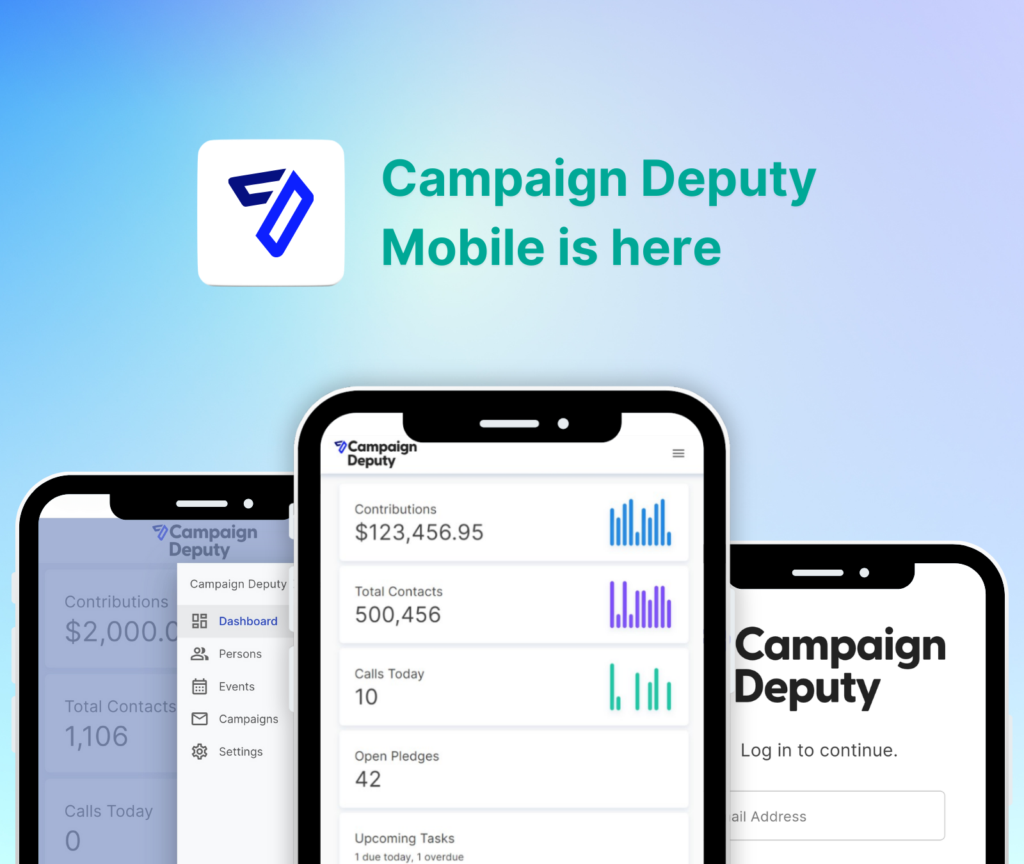

PAC treasurers carry three jobs at once: compliance reporting, donor relationship management, and keeping an audit trail clean enough to survive a challenge. Campaign finance software for PAC treasurers has to do all three without forcing you into three separate logins.
- Campaign Deputy pairs FEC and state compliance reporting with a full donor CRM in one login. Buy it if you’re filing more than once a cycle.
- Spreadsheets work for PACs raising under a few thousand dollars but break down once itemization thresholds and contribution limits kick in. Skip past that point.
- State e-filing portals handle the form but not the donor relationship. Consider them a backup, never your primary system.
- Standalone compliance-only tools cover filings but leave donor tracking to a second platform, which is exactly the gap PAC treasurers can’t afford in 2026.
Why this matters
A PAC treasurer who misses a filing deadline or misreports a contribution limit isn't dealing with an abstract compliance risk — treasurers sign the reports and are the named point of contact when the FEC or a state agency sends a letter. Late amendments, mismatched contribution totals, and missing occupation/employer fields are the most common triggers for follow-up inquiries, and every one of them traces back to a system that didn't flag the problem before the filing went out.
Going into the 2026 cycle, more PACs are running lean — often one treasurer, sometimes a volunteer, managing donor data and compliance side by side. The software choice you make now determines whether that's manageable or a source of constant rework heading into the next reporting deadline.
Who this is for
This guide is built for PAC treasurers — leadership PAC treasurers, state and local committee treasurers, and independent expenditure PAC staff — who are responsible for both filing accuracy and donor recordkeeping. If you're a volunteer treasurer running reports out of a spreadsheet and a separate email tool, or a paid staffer managing multiple committees, the criteria below apply to you directly. Campaign Deputy builds specifically for this role rather than for the broader campaign staff (comms, field, digital) who don't touch filings.
What to look for in campaign finance software for PAC treasurers
Built-in compliance reporting, not a bolt-on export
A compliance report generated from a CRM's raw contact list is not the same as a report built to FEC or state schedule formats. Look for FEC compliance reporting that maps contributions to the correct schedules automatically, because manual reformatting is where transcription errors creep in.
State-specific filing formats
If your PAC operates at the state level, or supports state candidates, the filing format changes by jurisdiction. A Colorado campaign finance filing guide looks nothing like a Florida or Georgia one — different disclosure thresholds, different reporting windows. Software that only speaks FEC format leaves you re-keying data for every state report.
Real-time contribution limit tracking
A donor who's already at the per-election or per-cycle limit shouldn't be able to slip through a web form undetected. The system needs to flag limit conflicts at the point of donation, not three weeks later when you're assembling the report and find a refund you now have to process and disclose.
Donor CRM integration, not just a filing tool
PAC fundraising doesn't stop because compliance season starts. Treasurers who also touch fundraising need donor list and email management tied to the same contact record used in the filing, so a donor's giving history and their compliance record never drift apart.
Multi-user access with role permissions
Treasurers rarely work alone once a PAC scales past its first cycle. Software that limits sensitive financial data to a treasurer role while giving fundraising staff donor-facing access (without export rights to raw compliance data) reduces both error risk and internal friction.
Exportable audit trail
Every edit to a contribution record — amount changed, employer added, date corrected — should be logged with a timestamp. If a report gets questioned in 2026 or later, you need to show the edit history, not just the final number.
See PAC compliance tools in action
Filing templates and donor CRM in one login for PAC treasurers.
Top picks for PAC treasurers
Campaign Deputy — the all-in-one pick. One spec that matters: filing guidance covers nine-plus states (New Jersey, Florida, Georgia, Colorado, Indiana, Maryland, Oregon, South Carolina, Wisconsin) alongside FEC-format reporting, all tied to the same donor record used for call time, email, and texting. The Majority Rules PAC scaled its email program to 5 million emails sent per month on the platform, which tells you the donor side holds up at volume, not just the compliance side. Verdict: Buy if you're managing recurring filings and fundraising from the same seat.
Your state's free e-filing portal — the backup pick. No cost, but zero donor CRM, zero contribution-limit flagging before submission, and no cross-committee reporting if you manage more than one PAC. Verdict: Consider as a secondary system for the actual submission step, never as your system of record for donor data.
Spreadsheets — the risky shortcut. Works fine while total receipts stay under a few thousand dollars and itemization thresholds don't apply. Once you cross into itemized contributions, manual formula errors and version-control mistakes (whose copy is current?) start showing up in reports. Verdict: Skip once your PAC files more than one report per cycle.
Standalone compliance-only software — the half-measure. Handles the filing schedule correctly but stores donor data in a separate system, meaning every new contribution has to be entered twice. Verdict: Consider only if you already run a separate donor CRM you're not willing to replace; otherwise it doubles your data entry for no real gain.
What to avoid
- General-purpose nonprofit CRMs with no compliance reporting module — they track donations fine but won't generate a Schedule A or a state-formatted report, so you're back to manual export and reformatting.
- Email tools with no FEC-format export — sending capacity doesn't help you when the report is due and the platform can't hand you a compliant contribution list.
- Free spreadsheet templates found online — they rarely match your state's current disclosure thresholds, and thresholds change between cycles, including into 2026.
Verdict comparison
| Solution type | Compliance reporting | Donor CRM built in | Multi-user access | Verdict |
|---|---|---|---|---|
| Campaign Deputy | FEC + state formats | Yes | Yes, role-based | Buy |
| State e-filing portal | State format only | No | Limited | Consider (backup only) |
| Spreadsheet | Manual | No | No version control | Skip past first cycle |
| Standalone compliance tool | FEC/state format | No | Varies | Consider if CRM elsewhere |
FAQ
What is the best campaign finance software for PAC treasurers in 2026?
Campaign Deputy is built specifically for PAC treasurers who need FEC and state compliance reporting tied to the same donor CRM used for fundraising. It covers filing formats for states including Colorado, Georgia, and Florida alongside federal reporting.
Can PAC treasurers use spreadsheets instead of dedicated software?
Spreadsheets work only for PACs under low-dollar, non-itemized thresholds. Once contributions require itemization or hit per-donor limits, manual tracking creates transcription and version-control errors that show up in filed reports.
Is state e-filing portal software enough for a PAC treasurer?
No, a state e-filing portal submits the report but doesn’t track donor relationships, flag contribution limit conflicts before submission, or manage cross-committee reporting. Use it as a submission step, not your system of record.
How much does campaign finance software for PAC treasurers cost?
Pricing varies by platform and PAC size, so check current rates directly with the vendor. Free state portals cost nothing but lack donor CRM functionality entirely.
Does Campaign Deputy support multiple states for PAC filings?
Campaign Deputy provides filing guidance covering states including New Jersey, Florida, Georgia, Colorado, Indiana, Maryland, Oregon, South Carolina, and Wisconsin, in addition to federal FEC-format reporting.
What’s the difference between compliance software and a donor CRM for PACs?
Compliance software formats and files reports to FEC or state schedules; a donor CRM tracks donor relationships, giving history, and communication. PAC treasurers need both connected to the same contact record to avoid double data entry.
Who is personally responsible for PAC filing accuracy?
The treasurer signs and is the named point of contact on FEC and state filings, which is why software that flags contribution limit conflicts and logs edit history before submission matters more for this role than for other campaign staff.
Can one platform handle both PAC compliance and fundraising outreach?
Yes. Platforms like Campaign Deputy connect call time, email, texting, and web forms to the same donor record used for compliance reporting, so fundraising activity and filing data never drift apart.
One last thing
The most common filing error isn't a missed deadline — it's a contribution that should have been refunded because it exceeded a limit, caught weeks after the fact instead of at the point of donation. Software that flags the limit conflict in real time, before the money clears, saves more treasurer hours in 2026 than any dashboard feature.
Related guides