Searching for phone banking software for political campaigns turns up two very different tools: voter-contact dialers built for GOTV and canvassing, and donor call time platforms built for fundraising calls. Only one of them raises money.
- Voter-contact dialers and donor call time software are different tools — fundraising campaigns need call time software, not a dialer.
- Campaign Deputy’s call time software helped Supervisor James Walkinshaw raise over $380,000 in 2026 tracking pledges call by call.
- The Majority Rules PAC used Campaign Deputy’s CRM to send 5 million emails a month alongside call time.
- State treasurer candidates need call logs tied to compliance reports; generic dialers skip this entirely.
- First-time candidates: buy call time software with pledge tracking before adding any dialer or spreadsheet in 2026.
Why This Matters
Voter phone banking software dials the electorate: GOTV reminders, persuasion scripts, canvass check-ins. Donor call time software dials donors and prospects: asks, pledges, and follow-ups tied straight to a campaign finance report. The two markets get lumped together under "phone banking software," but a campaign that buys a voter dialer to run call time ends up with call logs and no pledge data — and a treasurer who can't reconcile the numbers before a filing deadline in 2026.
Campaign Deputy builds for the donor side. That's call time software for candidates and campaign staff — segmented call lists, pledge tracking, and reporting that plugs into fundraising totals, not a predictive dialer for cold voter outreach.
Who This Is For
This guide is for candidates, campaign managers, and finance directors on Democratic, non-partisan, or independent campaigns who run donor call time — not volunteer teams knocking doors or dialing voters for turnout. If your team needs GOTV phone banking or door-to-door coordination, that's a volunteer management problem, not a fundraising CRM problem, and the software looks completely different.
If your problem is candidates and staff not finishing call time blocks, pledges falling through the cracks, or a treasurer who can't tell you how much call time actually raised this quarter, keep reading.
What to Look for in Phone Banking Software for Political Campaigns
Call list segmentation and prioritization
Time on the phone is the scarcest resource in any campaign. Software that ranks prospects by giving history, ask amount, and likelihood to answer keeps candidates calling the right 20 names first instead of burning an hour on cold names at the bottom of a spreadsheet.
Pledge and dollar tracking, not just call logs
A call log tells you someone picked up. A pledge tracker tells you they said yes to a specific amount and when the check is due. In 2026, any donor call time platform worth using ties every call to a dollar figure, not just a duration.
Compliance-ready call records
Every pledge and contribution from a call time session eventually lands on a campaign finance report. Software that exports call results directly into reporting workflows saves a treasurer from re-entering donor data by hand before a filing deadline.
Mobile dialing for candidates on the road
Candidates take call time between events, in cars, between doors. Software that runs a full call list from a phone, not just a desktop, keeps sessions from getting skipped when the schedule gets tight.
Integration with the rest of the donor record
A donor who gets a call also gets an email and a text later in the cycle. Call time tools that live inside the same CRM as email and texting keep one donor record instead of three disconnected ones.
Reporting built for the whole team
Finance directors need to see call time results by staffer, by day, by dollar raised — not just a raw tally of dials. Reporting that breaks down results by session lets a campaign manager coach underperforming callers before the money falls short.
“If your call time software can’t tell you how much you raised by the end of the session, it’s a phone log, not fundraising software.”
Top Picks by Campaign Type
The first-time candidate pick
First-time candidates usually inherit a spreadsheet of names and no call discipline. Call time software for first-time candidates sets up segmented call lists and pledge tracking from day one, without asking a first-time treasurer to learn a full CRM before the first fundraising deadline. Supervisor James Walkinshaw's re-election campaign used this setup to raise over $380,000 in 2026. Verdict: Buy if you're running your first race and have no existing call time process.
The scale pick
Congressional campaigns run call time across multiple staffers and multiple call rooms at once, and a single spreadsheet cannot hold that volume. Call time tracking for congressional campaigns tracks sessions by staffer and by call room, then rolls results up so a finance director sees total dollars raised without waiting on five separate reports. The same CRM backbone let The Majority Rules PAC scale email sends to 5 million a month without losing donor records tied to call activity. Verdict: Buy once your call time program has more than one caller working lists at the same time.
The compliance-focused pick
State treasurer and statewide candidates carry heavier reporting obligations than a city council race, and call time pledges have to reconcile with what shows up on the campaign finance report. Call time software for state treasurer candidates ties pledge data directly to the donor records used for filing. Verdict: Buy if your race has state-level reporting deadlines and a treasurer who needs pledge data without a manual export.
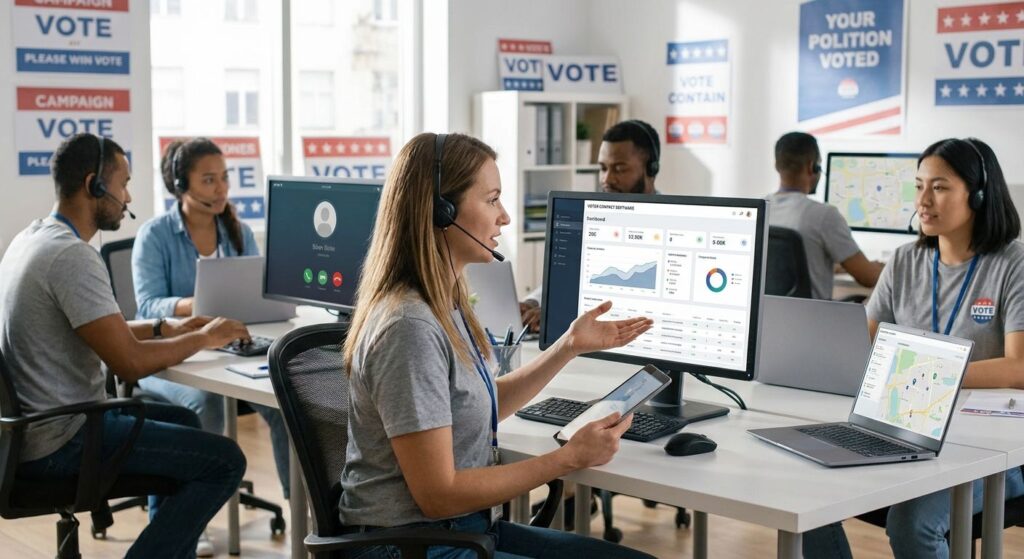
See Call Time Software in Action
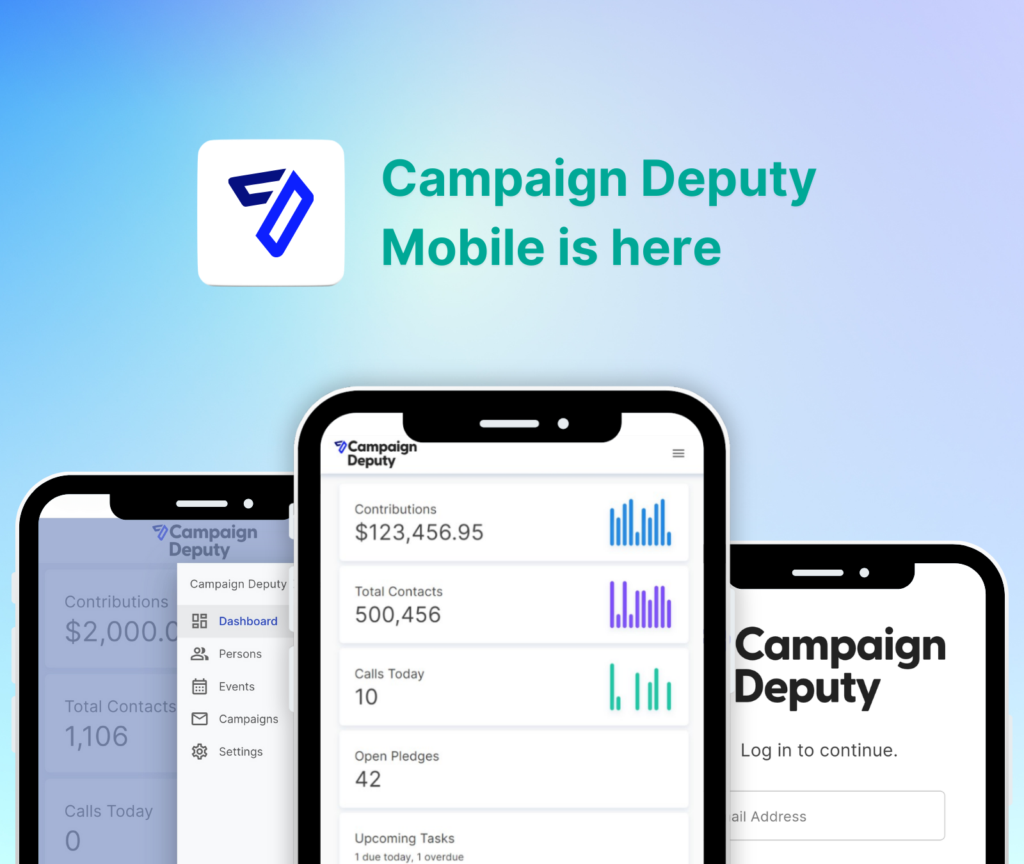
Track pledges, calls, and dollars raised in one dashboard.
What to Avoid
Three things look like phone banking software for political campaigns but aren't built for donor call time:
- Voter-contact predictive dialers. Built for volume calling to the electorate, not pledge tracking or donor records — fine for GOTV, wrong for fundraising.
- Spreadsheet call sheets in a shared doc. Works for the first week of calls, falls apart once two staffers update the same row at once.
- General-purpose CRMs with a phone field bolted on. They store a phone number, but they don't segment lists by giving history or export pledge data into a compliance report.
Verdict Comparison
| Campaign Type | Top Priority | Best Fit | Verdict |
|---|---|---|---|
| First-time candidate | Getting call discipline started | Call time software for first-time candidates | Buy |
| Congressional / multi-staffer | Volume across staffers and call rooms | Call time tracking for congressional campaigns | Buy |
| State treasurer / statewide | Compliance-ready pledge data | Call time software for state treasurer candidates | Buy |
| GOTV / voter outreach | Volume dialing to the electorate | A dedicated voter-contact dialer, not call time software | Skip |
FAQ
What’s the best phone banking software for political campaigns?
For donor fundraising calls, Campaign Deputy’s call time software is built for pledge tracking and compliance-ready records, not general voter dialing. If you need voter-contact phone banking for GOTV, look for a dedicated predictive dialer instead — the two tools solve different problems.
Is phone banking software the same as call time software?
No. Phone banking software usually refers to dialing voters for GOTV or persuasion; call time software refers to donor fundraising calls with pledge tracking. Campaigns searching for fundraising purposes actually need call time software.
How much does phone banking software cost for a political campaign?
Pricing depends on campaign size and features included, so check current rates directly rather than relying on a fixed figure. First-time candidate call time setups typically run leaner than congressional-scale programs handling multiple call rooms.
Can phone banking software track pledges and donations?
Donor call time software should track pledges by name, amount, and follow-up date, tied straight into the donor record. Generic voter-contact dialers usually can’t — they log calls, not dollars.
Do I need separate software for voter phone banking and donor call time?
Yes, in most cases. Voter phone banking and donor call time solve different problems — one drives turnout, the other raises money — and the software built for each looks different.
Does call time software help with campaign finance compliance?
Call time software that ties pledges directly to donor records makes it easier to reconcile totals against a campaign finance report before a filing deadline. Software that only logs call duration doesn’t help a treasurer at all.
How many calls should a candidate make per call time session?
Session length and call volume vary by campaign size and the candidate’s schedule, so there’s no universal number — segmented, prioritized call lists matter more than raw call counts. Dollars pledged per session is the number that matters.
What’s the difference between phone banking and texting for a political campaign?
Phone banking, in the donor context, is live conversation built for larger asks and relationship-building; texting is faster outreach for reminders, smaller asks, or GOTV pushes. Campaigns typically use both, with call time reserved for higher-dollar donors.
One Last Thing
Most campaigns don't lose fundraising dollars because candidates skip call time — they lose it because nobody tracks whether a pledge from March actually turned into a check by June. Donor call time software that ties every pledge to a follow-up date closes more of that gap than adding more hours on the phone in 2026.
Related Guides