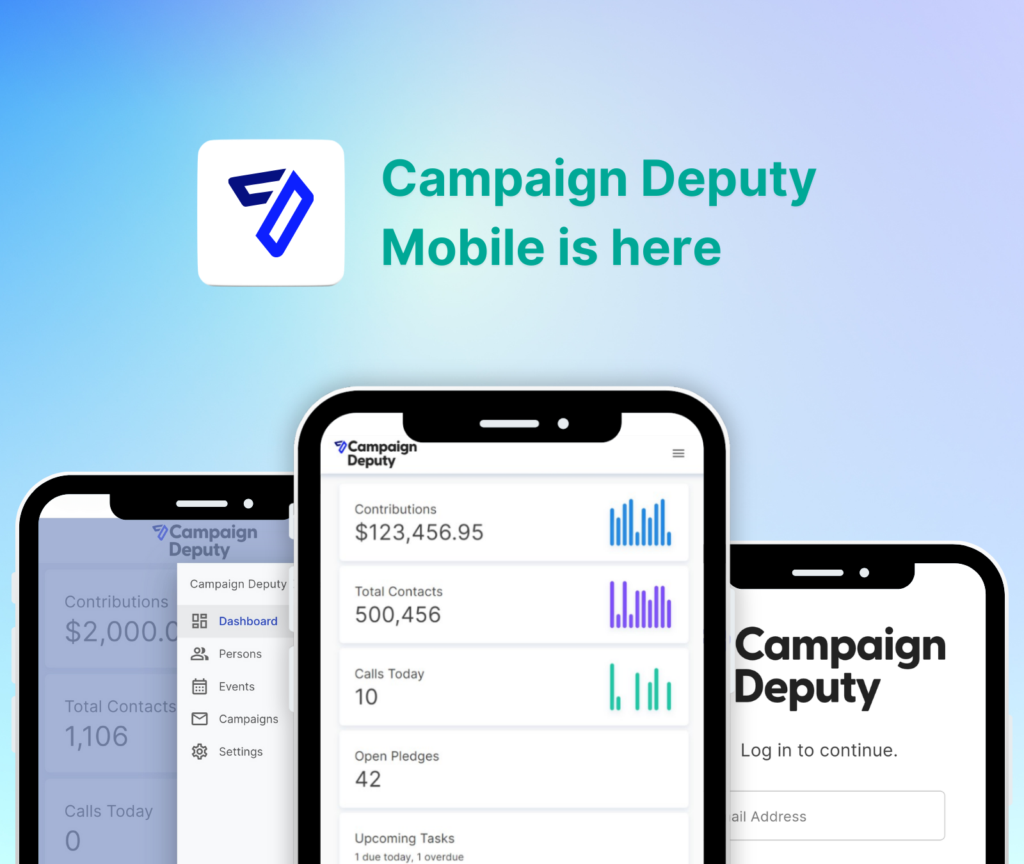

Down-ballot fundraising goal tracker software gives city council, school board, and state legislature campaigns a single dashboard to set a dollar target, watch daily pace against that target, and see which donors or channels are closing the gap fastest. A campaign averaging 400 volunteer hours and three staffers doesn't need enterprise campaign finance software built for a governor's race — it needs a goal number, a pace line, and an alert when the two stop matching in 2026.
- Fundraising goal tracker software works best for down-ballot races when it ties pace to call time hours, not just totals.
- Supervisor James Walkinshaw’s campaign raised over $380,000 tracking weekly pace against a written goal.
- Taylor McGovern U’Sellis built a $30,000 city council fund by checking goal pace against filing deadlines.
- Spreadsheets work under roughly $15,000 raised; past that, manual pace tracking misses donor segment data.
- Campaign Deputy’s fundraising goal tracker software is built for down-ballot and first-time candidate teams, not state party operations.
Why fundraising goal tracking matters for down-ballot campaigns
A congressional campaign has a comms shop, a finance director, and a call time schedule built by someone whose full-time job is fundraising. A city council or school board campaign usually has a candidate, a spouse doing data entry, and a spreadsheet that was accurate three weeks ago. That gap is exactly why goal tracking matters more, not less, for down-ballot races — there's no second person checking whether pace matches the plan.
Down-ballot campaigns also run against a compliance calendar that doubles as a natural checkpoint schedule. State filing deadlines in Florida, New Jersey, Georgia, Colorado, and a dozen other states force a reporting period every few months, and each one is a forcing function to check pace against goal. A fundraising platform for first-time candidates that ties goal tracking to those reporting windows turns a compliance chore into a progress check.
The pattern shows up in real campaigns already using this approach in 2026. Taylor McGovern U'Sellis's city council campaign built a $30,000 fund by watching pace weekly instead of waiting for the end-of-quarter surprise. Supervisor James Walkinshaw's re-election campaign raised over $380,000 the same way — a written goal, a weekly pace check, and adjustments made in real time rather than after the filing deadline passed.
Set a goal that matches your race tier
A school board goal and a state representative goal are not the same order of magnitude, and treating them the same wastes call time on donors who were never going to write a check that size.
- Pull your prior filing period's total as a floor, not a ceiling
- Size the goal to the office: local races often run in the low five figures, state legislative races higher
- Break the annual or cycle goal into monthly and weekly checkpoints
- Set a separate low-dollar goal for grassroots donors if your race qualifies for a matching program
- Write the number down somewhere the whole team sees it weekly
Break the goal into weekly call time blocks
A dollar goal without a call time plan is a wish. Down-ballot campaigns that hit their number consistently tie hours dialed to dollars closed, not just to a total.
- Block 2-3 hours daily for call time, tracked separately from other campaign work
- Log dials, connects, and asks per session, not just money raised
- Set a weekly hours target alongside the dollar target
- Review conversion rate (dials to dollars) every Friday, not every quarter
- Use call time software if a candidate is losing more than 20 minutes a session to manual list-building
Track pace against your filing calendar
Your state's reporting deadline is a free checkpoint. Use it.
- Mark every state or FEC filing deadline on the same calendar as your fundraising goal
- Set a mini-goal for each reporting period, not just the full cycle
- Compare period-over-period totals, not just cumulative totals
- Flag any period that comes in under 80% of its mini-goal for immediate follow-up
Segment donors before you chase new ones
Most down-ballot campaigns spend too much time prospecting and not enough time asking existing donors for a second gift.
- Separate one-time donors from recurring donors in your tracker
- Flag donors who gave in a prior cycle but haven't given yet this cycle
- Set a re-ask date for every donor who gave more than 60 days ago
- Track average gift size by segment, not just total dollars
- Use donor management software once your donor list passes a few hundred names and a spreadsheet stops surfacing patterns
Automate the nudge when pace slips
Manual tracking catches a missed goal after it's already missed. Automated pace alerts catch it while there's still time to fix it.
- Set a threshold (e.g., 15% below weekly pace) that triggers a team alert
- Pair the alert with a same-day action: an extra call block, an email send, or a text push
- Review the trigger weekly — a threshold that never fires isn't tight enough
- Keep the alert simple: dollars behind pace, not a full dashboard dump
Review the dashboard with your treasurer weekly
A goal tracker that only the candidate sees dies in a drawer. A goal tracker reviewed weekly with the treasurer or finance lead stays accurate.
- Set a standing weekly 15-minute check-in
- Reconcile the tracker against the bank balance monthly, not just at filing time
- Have the treasurer flag any donor data that looks off before it hits a compliance report
- Use the same numbers in the tracker and the filing — mismatches cost time during reporting season
Set Up Your Goal Tracker
See how call time, donor data, and pace tracking work together for down-ballot campaigns.
Comparing goal-tracking options for down-ballot campaigns
| Option | Best for | Key limitation |
|---|---|---|
| Spreadsheet (Excel/Sheets) | Campaigns under roughly $15,000 raised | Manual entry only, no automatic pace or segment alerts |
| Generic CRM (Salesforce, HubSpot) | Teams already paying for the platform for other work | Not built around FEC or state filing periods or call time logging |
| NGP VAN | State party committees and large-budget operations | Built for high-volume operations, heavier setup than a local race needs |
| Campaign Deputy | Down-ballot and first-time candidate campaigns tracking pace against call time and filing deadlines | New workspaces need the goal and race data entered before tracking starts |
Common mistakes down-ballot campaigns make
- Setting one lump-sum goal instead of period goals. A single cycle-end number gives no warning until it's too late to fix; break it into checkpoints tied to filing periods.
- Tracking total dollars but not call time hours. A campaign can be behind on pace and not know it if hours dialed aren't logged alongside dollars raised.
- Chasing new donors while ignoring lapsed ones. Down-ballot campaigns often have a smaller prior-donor list than a competitive race, and every lapsed donor is a warmer ask than a cold one.
- Missing the tie between the goal tracker and the filing calendar. A goal tracker that isn't checked against reporting deadlines misses the one built-in accountability moment every campaign already has.
- Letting only one person see the numbers. A tracker the candidate never shares with the treasurer or finance lead drifts out of sync with the actual bank balance by the time a filing is due.
FAQ
What is fundraising goal tracker software?
Fundraising goal tracker software sets a dollar target for a campaign and tracks daily or weekly progress against it, usually broken down by donor segment or call time hours. For down-ballot campaigns in 2026, the useful versions tie that pace to the state or FEC filing calendar so every reporting period doubles as a checkpoint.
Is a spreadsheet good enough to track fundraising goals?
A spreadsheet works for campaigns raising under roughly $15,000, where manual entry stays manageable. Past that point, spreadsheets miss pace alerts and donor segment patterns that dedicated goal tracker software surfaces automatically.
How much should a city council campaign aim to raise?
There’s no fixed number — Taylor McGovern U’Sellis’s city council campaign built a $30,000 fund, but the right target depends on the district, the opponent, and prior-cycle totals in that race. Use the last filing period’s total as a floor and set the goal from there.
Does goal tracking work for state legislative races too?
Yes — Supervisor James Walkinshaw’s re-election campaign raised over $380,000 using the same weekly pace-tracking approach scaled up for a larger district and higher target.
What’s the difference between goal tracking and donor management software?
Goal tracking measures progress against a dollar target and pace; donor management software organizes the donor records, gift history, and segments that feed that progress. Most campaigns need both working together, not one instead of the other.
Can call time software replace a fundraising goal tracker?
No — call time software logs dials, connects, and asks during a session, while a goal tracker measures whether those sessions are adding up to the overall target on schedule. The two work together: hours dialed on one side, dollars against pace on the other.
How often should a campaign check its fundraising pace?
Weekly, at minimum, with a monthly reconciliation against the bank balance. Campaigns that only check pace at filing time lose the ability to course-correct before the number is locked in for the report.
Is Campaign Deputy built for down-ballot candidates specifically?
Campaign Deputy is built for political candidates and nonprofit campaigns across race sizes, including first-time and down-ballot candidates, with call time, email, texting, web forms, and finance reporting tools in one platform.
One last thing
The campaigns that hit their number in 2026 — Walkinshaw's $380,000 haul, McGovern U'Sellis's $30,000 city council fund — didn't get there with a bigger goal. They got there by checking pace weekly instead of quarterly, which meant every shortfall was caught with weeks to fix it instead of days.
Related guides