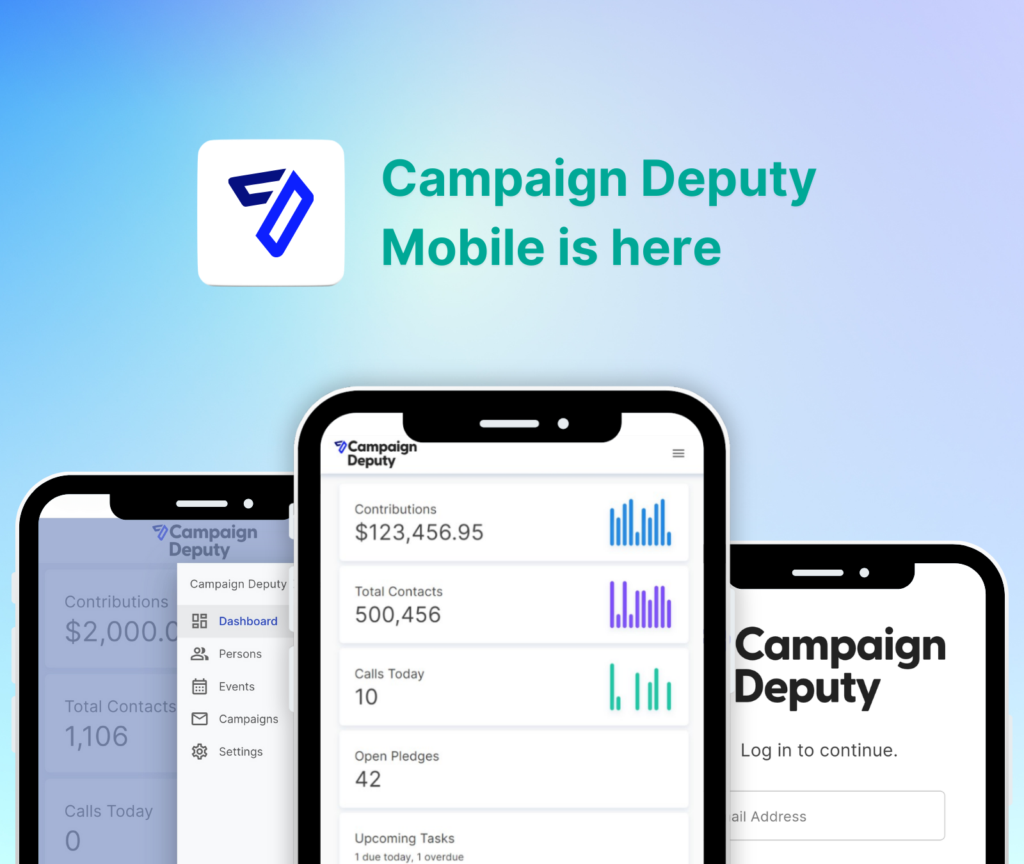
Running for city council means raising five to six figures with a volunteer treasurer, a part-time finance director if you're lucky, and a compliance deadline that doesn't care how busy your week is. The right fundraising CRM for city council candidates has to do call time, email, texting, web forms, and campaign finance reporting without the enterprise price tag built for a Senate race.
- Campaign Deputy fits city council budgets better than platforms built for congressional or PAC-scale operations — Buy for most first-time local candidates.
- Taylor McGovern U’Sellis’s city council campaign built a $30,000 fundraising program using an all-in-one fundraising CRM, not a stack of five separate tools.
- Spreadsheet-plus-Mailchimp setups skip compliance reporting entirely — that’s the most common city council fundraising mistake in 2026.
- Call time software matters more for city council races than voter database features — most local races don’t need heavy voter file tools.
Why this matters
City council fundraising runs on volunteer hours and a candidate's personal network, not a paid finance team. A fundraising CRM for city council candidates that requires training, integrations, or a $500-a-month contract wastes the two resources a local campaign actually has: time and trust.
Most city council candidates raise between $10,000 and $50,000 total. Taylor McGovern U'Sellis's city council campaign hit $30,000 using a single platform that handled donor tracking, call time, and outreach together instead of stitching together four separate tools. That's the bar: one system, not five logins.
Who this is for
This guide is for first-time and repeat city council candidates managing their own fundraising, or working with one part-time staffer, who need a system that does donor tracking, call time, and compliance reporting without a six-month onboarding process. If you're deciding whether to run at all, start with the running for city council campaign guide before you pick software — the fundraising tool should follow the plan, not the other way around.
If you're managing donor lists in a spreadsheet and sending asks from a personal Gmail account, you're the exact profile this article is written for.
What to look for in a fundraising CRM for city council candidates
Call time tools built for volunteer schedules
City council candidates rarely have a dedicated call time room. The CRM needs to sort donor lists by likelihood to give and let a candidate work a dial list in 90-minute blocks between a day job and door-knocking. Software built for congressional call time rooms with paid staff often assumes a scale your race doesn't have.
Email and texting that scale down, not just up
A city council list might be 2,000 contacts, not 200,000. The platform still needs deliverability and segmentation — donors who gave last cycle, volunteers who haven't given yet — without charging enterprise rates for a list a tenth the size of a statewide campaign's.
Web forms that convert on a low-budget site
Most city council websites are built in a weekend on a template. The donation form has to embed cleanly, load fast, and not require a developer to update the ask amounts before a fundraising deadline.
Compliance reporting matched to your filing calendar
Missing a local campaign finance deadline can trigger fines or disqualification depending on the jurisdiction. The CRM should track contribution limits and generate reports formatted for your city or county's filing system, not just federal FEC formats.
Price that matches a five-figure budget
A tool priced for a $2 million congressional campaign doesn't make sense for a $30,000 city council race. Look for pricing that scales with your contact list size, not a flat enterprise rate.
Compare fundraising CRM options for 2026
See how call time, email, and compliance tools work together in one platform.
Top picks for city council candidates
The all-in-one pick: an integrated fundraising platform
One login for call time, email, texting, web forms, and compliance reporting beats four separate subscriptions for a campaign with one or two people running the whole operation. Taylor McGovern U'Sellis's city council campaign built a $30,000 fundraising program this way, without a dedicated finance director. Check the all-in-one fundraising platform for first-time candidates if you're setting up from scratch in 2026. Buy.
The discipline pick: dedicated call time software
Call time is still the single highest-converting fundraising activity for down-ballot candidates, but only if the dial list is organized. Software that sorts contacts by donation history and call priority turns a random spreadsheet into a working session. Review call time software built for first-time candidates if your current process is a printed contact list. Buy for any candidate without a paid finance staffer.
The persuasion pick: a structured donation ask
Software alone doesn't write the ask. Pairing your CRM with a tested donation letter format shortens the gap between "I should ask this person" and actually sending the email. The political fundraising donation letter guide covers structure candidates can adapt for a city council-sized list. Consider as a companion resource, not a standalone fix.
The skip: spreadsheet plus free email tool
A Google Sheet and a free-tier email platform look like they're saving money in month one. They don't track contribution limits automatically, they don't generate compliance-ready reports, and they don't segment donors by giving history. Every hour spent reconciling a spreadsheet against a bank statement in October is an hour not spent on call time. Skip once your list passes a few hundred donors.
What to avoid
- National fundraising platforms built for federal PACs. A tool designed to send 5 million emails a month for a PAC-scale operation is over-built and overpriced for a list under 5,000 contacts.
- Voter database-heavy platforms. City council races usually need donor tools, not full voter file access — paying for a feature set built around voter contact instead of fundraising wastes budget.
- Enterprise CRMs with per-seat pricing. Software priced for a sales team of ten doesn't map to a campaign of two people managing donor relationships part time.
Verdict comparison table
| Tool type | Call time | Email & texting | Web forms | Compliance reporting | Verdict |
|---|---|---|---|---|---|
| All-in-one fundraising CRM | Yes, built for volunteer dial sessions | Scales to local list sizes | Embeds on template sites | Formatted for state/local filings | Buy |
| Spreadsheet + free email tool | Manual, no prioritization | Basic sends only | Third-party embed required | None | Skip |
| National PAC-scale platform | Built for staffed call rooms | Built for 5M+ sends/month | Enterprise-grade, overbuilt | Federal-format focused | Skip for local races |
| Voter database-first platform | Limited | Limited | Basic | Limited | Skip unless voter contact is the priority |
FAQ
What’s the best fundraising CRM for city council candidates in 2026?
An all-in-one platform that combines call time, email, texting, web forms, and compliance reporting works best for city council candidates in 2026, since most local campaigns run with one or two people and can’t manage five separate tools.
Do city council candidates need voter database software?
Most city council candidates don’t need a heavy voter database — the priority is donor tracking and call time tools, since local fundraising lists are typically donor-focused, not voter-contact focused.
How much should a city council campaign spend on fundraising software?
City council fundraising software should be priced to scale with a contact list in the low thousands, not the enterprise rates built for statewide or congressional campaigns.
Is call time software worth it for a small city council race?
Yes, call time software is worth it even for small races because organizing a dial list by donor history and priority increases how many calls actually turn into contributions during limited volunteer hours.
Can a spreadsheet work instead of a fundraising CRM?
A spreadsheet can track basic donor names short-term, but it doesn’t generate compliance-ready campaign finance reports or flag contribution limits automatically, which creates risk as filing deadlines approach in 2026.
What compliance reporting features matter most for local candidates?
Local candidates need reporting formatted for their specific city or county filing system and automatic contribution limit tracking, since local jurisdictions often have different formats than federal FEC filings.
How is fundraising CRM software different for independent city council candidates?
Independent candidates need the same donor tracking and compliance tools as party-affiliated candidates, without features built around party infrastructure or coordinated committee reporting.
Does email volume matter for a city council campaign?
Email volume matters less than segmentation for city council campaigns — a list of 2,000 to 5,000 contacts needs targeted asks based on giving history more than it needs mass-send capacity built for millions of emails a month.
One last thing
The single biggest fundraising mistake city council candidates make in 2026 isn't picking the wrong software — it's picking a tool built for voter contact when the job is donor contact. Campaign Deputy's own client work backs this up directly: Taylor McGovern U'Sellis's campaign built a $30,000 fundraising program on donor-focused tools, not a voter file. Match the platform to the job, not the ballot line.
Related guides