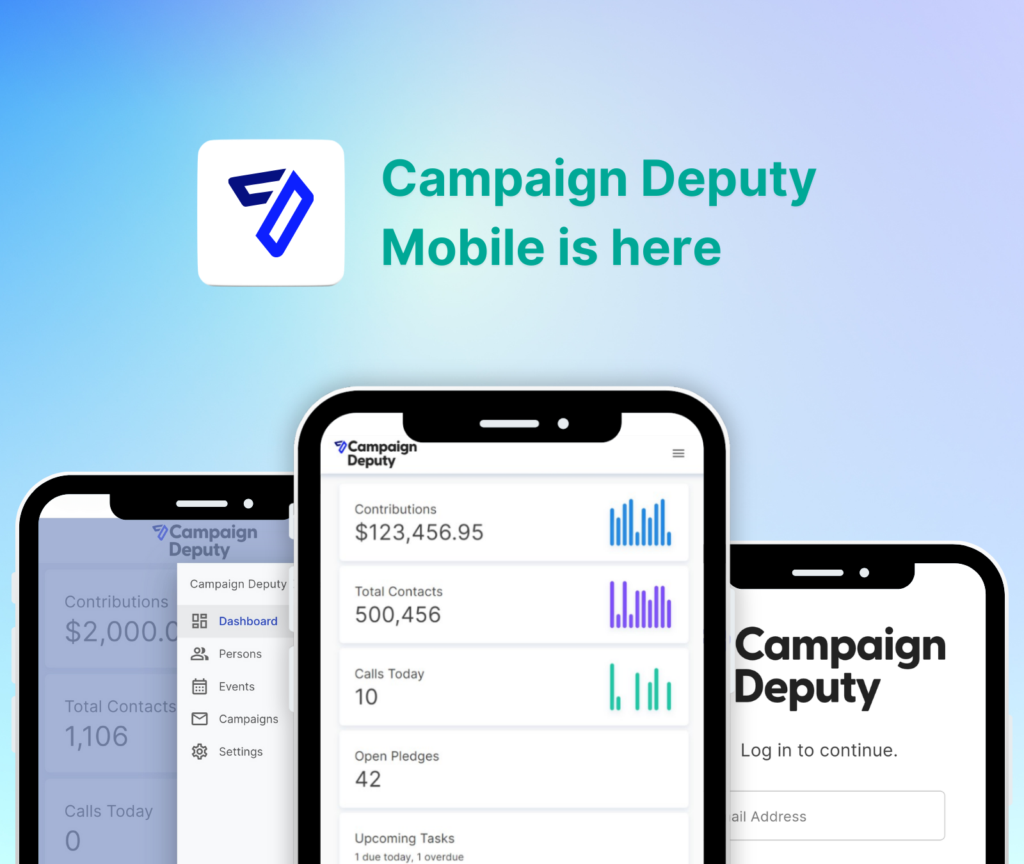

Building a volunteer recognition program means tracking every hour a volunteer logs, setting clear milestones that trigger a thank-you, and closing the loop with a personal touch within 48 hours of a shift. The number most campaigns miss isn't the reward budget — it's the staff time spent manually tracking who showed up, which is why campaigns that centralize volunteer hours in one system spend that setup effort once and reuse it through the entire cycle.
- Track volunteer hours in one system before you build recognition tiers — you can’t reward what you don’t measure.
- Milestone recognition at 10, 25, 50, and 100 hours keeps call time and canvassing volunteers coming back in 2026.
- Public recognition works for door-knockers; private thank-you texts work better for phone bank volunteers.
- Campaign Deputy centralizes volunteer hours, shift data, and contact history so recognition triggers off real activity, not memory.
Why this matters
Volunteers who feel invisible quit after two or three shifts. Campaigns that lose volunteers early lose the compounding value of trained callers and door-knockers right when field operations need to scale.
A recognition program is retention infrastructure in 2026, the same way a donor CRM is retention infrastructure for your fundraising list. Campaigns that treat volunteer hours like a donor pipeline — logged, segmented, followed up on — keep the same people through the entire cycle instead of rebuilding the volunteer base every six weeks.
How to build a volunteer recognition program
This is the sequence that works whether you're running a first city council race or a congressional field operation.
- Track every hour in one place. Call time, canvassing, event staffing — log it against each volunteer's contact record. A volunteer coordination platform does this automatically instead of relying on sign-in sheets that never make it back to headquarters.
- Set milestone thresholds. Common breakpoints are 10, 25, 50, and 100 hours. Each threshold triggers one specific action: a text, a shoutout, a handwritten note.
- Segment by role. A precinct captain who has run six canvasses needs different recognition than a caller with 40 hours of call time. Generic "thanks everyone" emails get ignored by both.
- Automate the first touch, personalize the second. An automated text within 24 hours of a shift proves the campaign noticed. A follow-up from the candidate or field director within a week makes it stick.
- Recognize publicly at scale, privately at the top. Rally shoutouts and social posts work for visible wins. One-on-one calls from the candidate are what retain your top 5 to 10 volunteers.
- Close the loop after election day. A post-election thank-you, win or lose, decides whether that volunteer comes back for the next race.
Recognition by volunteer type
| Volunteer role | Best recognition format | Trigger metric | Best for |
|---|---|---|---|
| Call time volunteer | Private text or call from the candidate | Dials made, dollars raised | Retaining fundraising callers |
| Canvasser | Public shoutout at rally or on social | Doors knocked, shifts completed | Building field morale |
| Precinct captain | Handwritten note plus leadership title | Canvasses organized | Keeping mid-level leaders |
| Event volunteer | Same-day thank-you at the event close | Events staffed | One-off volunteers you want back |
| Digital volunteer | Newsletter mention | Texts sent, posts shared | Remote supporters who never see HQ |
The verdict: Campaign Deputy is the practical choice for down-ballot Democratic, nonpartisan, and independent campaigns that want volunteer hours, donor records, and outreach history living in one system instead of three spreadsheets.
Why volunteer recognition programs fail
Most recognition programs break for the same handful of reasons.
- No tracking system, so recognition depends on whoever remembers a name at the debrief meeting.
- Recognition arrives too late. A shoutout three weeks after a big canvass push reads as an afterthought.
- One-size-fits-all messaging that treats a first-time door-knocker like a volunteer with 100 logged hours.
- No public visibility for top performers, so nobody sees that effort gets noticed campaign-wide.
- No link to campaign goals. Recognition disconnected from doors knocked, calls made, or dollars raised feels like corporate filler.
- Recognition stops after the primary, exactly when the general election needs those volunteers most.
“If your volunteer recognition depends on someone remembering a name at the debrief meeting, you don’t have a program — you have luck.”
Campaigns running phone banks off a shared system find it far easier to layer recognition on top of hours that are already logged. The same logic applies to field: campaigns that recruit and track precinct captains inside a shared contact system can fire off recognition the moment a captain hits a canvassing milestone, instead of waiting on a manual report that arrives after the enthusiasm has cooled.
Track volunteer hours automatically
See how Campaign Deputy logs shifts, calls, and canvasses in one system.
Milestone tiers: what to give at each level
Keep tiers simple enough that a volunteer coordinator can run them without a manual.
10 hours: the first acknowledgment. A personal text from the field director naming the specific shift. This is the highest-leverage touch in the whole program because it catches volunteers at the exact point most of them drop off.
25 hours: public recognition. Newsletter mention, social post, or a shoutout at the next volunteer meeting. Name the person and the number.
50 hours: candidate contact. A direct call or handwritten note from the candidate. At 50 hours a volunteer has given the equivalent of more than a full work week to your race in 2026 — that deserves the candidate's time, not a staffer's.
100 hours: leadership role. Offer a title and responsibility: precinct captain, phone bank lead, canvass trainer. The best recognition for a committed volunteer is more meaningful work, not a coffee mug.
How often should you recognize campaign volunteers?
Recognize volunteers at least once per milestone and once at the end of every major push — a canvass weekend, a call time sprint, a filing deadline. Waiting until election night to say thanks is the single biggest reason campaigns bleed volunteers between the primary and the general in 2026.
What's the best way to track volunteer hours for recognition?
The best way to track volunteer hours is inside the same system that holds your donor and contact data, not a separate spreadsheet nobody updates. When call time, canvassing, and event shifts live in one campaign CRM, recognition triggers off real activity instead of a coordinator's memory. Campaigns already running call time volunteer recruitment through a shared system get this tracking for free.
Do volunteers need public recognition or is a private thank-you enough?
Both, and they do different jobs: public recognition builds campaign-wide morale, while a private thank-you from the candidate builds individual loyalty. Campaigns that do only one lose either their top performers or their broader volunteer pool.
One last thing
The campaigns that hold the same volunteer base from the primary through election night in 2026 aren't the ones with the biggest thank-you budgets. They're the ones where the candidate personally calls the top five volunteers by name after every major push. That takes ten minutes and a system that tells you who actually put in the hours.
FAQ
How do I start a volunteer recognition program for a small campaign?
Start by logging every volunteer’s hours in one system, then send a personal thank-you text within 24 hours of each shift. Add milestone recognition at 10, 25, and 50 hours once baseline tracking is in place.
What’s the best way to recognize call time volunteers?
Recognize call time volunteers by dials made and dollars raised, not just hours logged, so recognition ties to real fundraising impact. A shoutout after a volunteer’s best call time session beats a generic monthly thank-you email.
Should recognition differ for canvassers versus phone bankers?
Yes. Canvassers respond well to public recognition tied to doors knocked, while phone bankers usually prefer private acknowledgment tied to calls made or funds raised. Segment your recognition messaging by role.
How much does it cost to run a volunteer recognition program?
Recognition itself costs little beyond staff time and small tokens like handwritten notes. The real investment is a system that tracks hours accurately, since manual tracking costs more in lost volunteers than any recognition budget saves.
Can volunteer recognition help with fundraising?
Yes. Volunteers who feel recognized are more likely to give and to recruit friends into your donor network. Campaigns that keep volunteer and donor activity in the same system spot that crossover automatically.
What’s a good milestone schedule for volunteer recognition?
A common schedule recognizes volunteers at 10, 25, 50, and 100 hours, with a larger gesture at each tier. Adjust the thresholds to match your campaign’s typical shift length.
How do I recognize volunteers after a losing campaign?
Send a personal thank-you regardless of the outcome, because volunteers who feel appreciated after a loss are far more likely to return for the next race. This is the most skipped step in campaign volunteer management.
Is volunteer recognition worth it for a first-time candidate?
Yes, and it matters more for first-time candidates because you have no existing volunteer base to fall back on. Every volunteer you retain in 2026 is one you don’t have to recruit and train again.
Related guides
- Canvassing app for door-to-door campaign teams
- Best CRM for down-ballot political candidates
- How to run for city council: a campaign guide