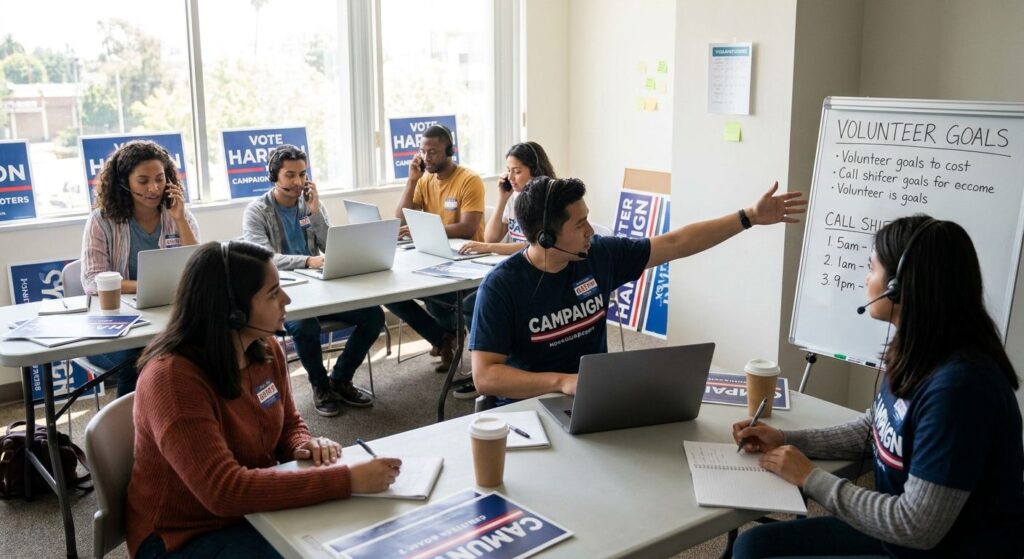
Recruiting call time volunteers means finding a short list of people who will actually sit down and dial donors, not filling a spreadsheet with names who say yes once and never show up. The fastest way to build that list is to ask your smallest, most invested circle first — finance committee, past donors, then staff — and give each one a real call sheet from day one.
- Recruit call time volunteers from the finance committee first; they already know the donor list and the ask.
- Cap the roster at 3-5 dedicated callers per candidate — a bigger list dilutes accountability fast.
- Give every volunteer a pulled call list from your CRM so no donor gets asked twice in one cycle.
- Recruit at least two weeks before the first scheduled call time block, not after training week one is wasted.
Why this matters
Most first-time campaigns burn the first month of their fundraising plan trying to recruit 15-20 volunteers, then end up relying on the same 3 people by week three. The problem isn't finding volunteers — it's finding volunteers who will keep showing up and calling the same list a CRM tracks for them. A campaign that recruits 5 committed callers with a tracked list out-raises one with 20 untracked callers working off memory.
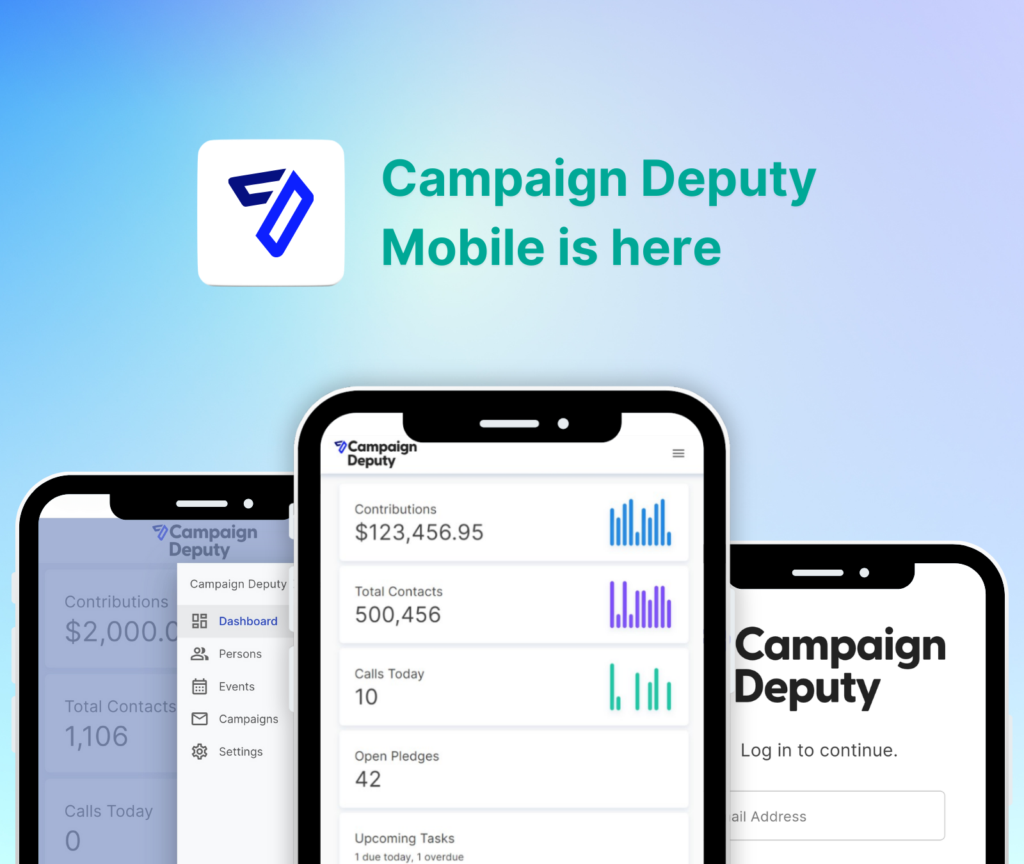
Donors also notice sloppy call time. Getting called twice by two different volunteers in the same week from the same campaign reads as disorganized, and it costs you the ask. Campaign Deputy's call time software exists specifically to stop that duplication, but the recruiting problem comes first — you need the right people before the tool matters.
How do you recruit call time volunteers for a campaign?
Recruit call time volunteers in this order, starting with people who already have a stake in the campaign winning:
- Ask the finance committee first. These are the people who already agreed to help raise money — they should be the first callers, not just check-writers.
- Ask past donors and event hosts. Anyone who already gave or hosted an event knows the network and can call peer-to-peer credibly.
- Recruit staff and interns as a backup bench. They fill gaps when finance committee members can't make a scheduled block.
- Give every volunteer a scripted ask and a pulled call list, never a blank spreadsheet or a printed donor report from last cycle.
- Set fixed call time blocks and track results weekly so no-shows and low-output callers surface before report deadlines, not after.
That order matters more than the total number recruited. A campaign that skips straight to a public volunteer sign-up form for call time usually ends up with people who don't know the donors and won't push past a voicemail.
Finance committee volunteers: the first call
Finance committee members already said yes to helping raise money, so asking them to call time is a natural next step, not a new commitment. They know the top donors personally, which means higher pickup rates and shorter calls. Best for: campaigns in their first 60 days of fundraising, before the donor list has grown past a few hundred names.
Past donors and event hosts: the warm-list callers
Someone who already gave $250 or hosted a house party can call a peer donor and get a yes faster than a paid staffer ever will — peer asks convert better than staff asks in nearly every campaign that tracks the difference. The tradeoff: they have day jobs, so they need flexible call time blocks, not a rigid 9-to-5 schedule. Best for: campaigns with 100+ past donors who haven't been re-asked this cycle.
Campaign staff and interns: the backup bench
Staff and interns fill the gap when volunteer callers cancel, and they're the easiest to train on a script since they're already on payroll or committed hours. They shouldn't be the primary callers, though — donors respond better to a peer volunteer than to a 22-year-old field organizer reading a script. Best for: covering last-minute cancellations, not building the core call time program.
Why call time volunteer recruitment is hard
A handful of recurring problems sink most campaigns' first attempt at recruiting call time volunteers:
- Donor fatigue from duplicate calls — two volunteers working off separate lists both call the same donor in one week.
- No CRM access for volunteers, so they can't see who's already been asked or given this cycle.
- Untrained callers go off-script, which costs credibility with major donors on the first call.
- No accountability system, so no-shows go unnoticed until the finance report is due.
- Compliance confusion — volunteers unclear on solicitation rules for PACs or state limits, which slows every call down.
- Recruiting too late, usually inside the final two weeks before a filing deadline, leaving no time to train.
Solving the list-and-tracking problem is mostly a tooling fix: give every recruited volunteer a call list pulled straight from your donor database inside volunteer coordination software rather than a shared spreadsheet six people are editing at once.
“A volunteer who hasn’t made a call in the first week won’t start in week three.”
How many call time volunteers does a campaign need?
Most first-time candidate campaigns need 3 to 5 dedicated call time volunteers, not 15 or 20. A smaller, tracked roster consistently outperforms a large, untracked one because accountability holds — every caller knows their assigned list and their weekly number.
Do call time volunteers need compliance training before they start?
Yes, volunteers making solicitation calls for a PAC or state-level campaign need at least a short briefing on who they can and can't ask under that state's contribution limits. This matters more for down-ballot and PAC campaigns than for federal races, where the rules are more standardized.
Can call time volunteers use their personal phones to call donors?
Most campaigns let volunteers use personal phones for call time, but the call list itself should never live on a personal device or personal spreadsheet. Pull the list from the campaign's donor CRM each session and delete it after, so the data doesn't leak past the cycle.
Give recruits a real call list, not a spreadsheet
Pull tracked call lists straight from your donor CRM for every recruited volunteer.
Supervisor James Walkinshaw's re-election campaign built its 2026 fundraising plan around exactly this structure — a small, tracked call time roster instead of a large untracked one — and raised over $380,000 with it. That result came from discipline in who was recruited and how their calls were logged, not from the size of the volunteer list.
FAQ
How do you recruit call time volunteers for a campaign?
Recruit call time volunteers starting with your finance committee, then past donors and event hosts, then staff as backup callers. Give each one a pulled call list and a fixed call time block instead of an open-ended ask.
How many call time volunteers does a campaign need?
Most first-time candidate campaigns need 3 to 5 dedicated call time volunteers rather than a large roster. A small, tracked group holds accountability better than 15-20 untracked names.
What makes a good call time volunteer?
A good call time volunteer already knows part of the donor list personally, usually a finance committee member or past donor. Peer-to-peer asks convert better than asks from paid staff or strangers on the list.
Should call time volunteers get a script?
Yes, every call time volunteer should get a written ask script before their first session. Untrained callers who improvise lose credibility on calls to major donors.
Is it better to recruit call time volunteers early or closer to the filing deadline?
Recruit at least two weeks before your first scheduled call time block. Training and list-building eat the first week, so recruiting inside the final two weeks before a 2026 filing deadline leaves no runway.
Do call time volunteers need access to the donor CRM?
Call time volunteers need a pulled call list from the CRM for each session, not full account access. Giving them a shared spreadsheet instead usually causes duplicate asks to the same donor.
Can interns replace volunteer call time callers?
Interns work as a backup bench for cancellations, not as the primary call time roster. Donors respond better to a peer volunteer or finance committee member than to campaign staff reading a script.
Do PAC call time volunteers need compliance training?
Yes, volunteers soliciting for a PAC need a short briefing on contribution limits before their first call time session. This matters most for state and down-ballot campaigns where limits vary by jurisdiction.
One last thing
Most campaigns that try to recruit 15-20 call time volunteers in their first month end up using the same 3 people by week three anyway — skip the mass recruitment push and go straight to the finance committee. You'll save two weeks and land on the same roster size you'd have reached eventually, just without the wasted training sessions for volunteers who never show up twice.
Related guides
- Call time software built for first-time candidates and staff
- Call time tracking for congressional campaigns