
Write-in candidate fundraising is the work of raising money and tracking donors when your name isn't printed on the ballot, which means every dollar and every voter contact has to come from a list you build yourself. A write-in run has no ballot-line name recognition, often a compressed timeline, and donors who need extra reassurance that the campaign is real before they give.
This guide breaks down what a fundraising CRM needs to do for a write-in campaign in 2026, step by step, with the manual approach first and the software shortcut where it actually saves time.
- A CRM for write-in candidate campaigns should handle donor list-building, call time, and finance compliance in one place since there’s no ballot-line traffic to lean on.
- Write-in candidates still owe the same campaign finance filings as any other candidate – a missed deadline is not forgiven because the name isn’t on the ballot.
- Campaign Deputy is built for down-ballot and independent-style campaigns that need fundraising and compliance together, best for solo or small-staff write-in operations.
- Spreadsheets work for the first 90 days of list-building but break down once you’re segmenting donors and filing reports on a real schedule.
Why CRM matters for write-in candidates
A write-in campaign starts from zero name recognition with voters and donors alike – there's no ballot listing pulling in undecided support, so every donor has to be found, asked, and followed up with directly. That makes donor data the actual campaign infrastructure, not a nice-to-have.
Compliance doesn't relax for write-in status either. Most states and the FEC require the same finance reports from a write-in candidate as any other candidate once contributions or spending cross the reporting threshold, so a campaign still needs a system that tracks every contribution against a filing deadline. Skipping that step because the race is "just a write-in" is how campaigns end up with late-filing penalties before they've had a chance to run.
A CRM for independent candidate campaigns shares this exact problem – no party infrastructure, no automatic donor pipeline – which is why write-in campaigns and independent runs tend to need the same core toolset: donor tracking, call time, and compliance reporting under one login.
Build your donor list from scratch
Write-in campaigns almost never inherit a donor list from a prior filing or party committee, so this step comes first and it comes manually.
- Start with a spreadsheet of every personal contact who has given to a cause, PTA, or local campaign before
- Add contacts from community groups, local social media groups, and neighborhood associations
- Import any petition signers or supporters who helped you qualify as a write-in
- Track how each contact was acquired so you know which channel is working
- Flag anyone who has already said yes to a future ask
Set call time blocks and quotas early
Call time is where write-in campaigns make up for the name-recognition gap, because a direct ask closes donors that a ballot listing would have warmed up for you.
- Block 2-3 hour call time sessions on the calendar before the schedule fills with events
- Set a daily dollar quota, not just a call-count quota
- Script the write-in explanation into the first 15 seconds of every call
- Log every call outcome immediately, not at the end of the day
- Review quota performance weekly and adjust the ask amount if conversion is low
A call time tool built for first-time political candidates speeds this step up by auto-loading the next donor and logging the outcome without leaving the call screen, which matters more for a write-in candidate working solo than for a staffed campaign with a call time director.
Send email and text asks that explain the write-in status upfront
Every email and text has to do double duty: explain that you're a write-in candidate and ask for money in the same message.
- Lead the subject line with the office and the write-in status, not just your name
- Keep the ask above the fold – don't bury it after three paragraphs of biography
- Segment first-time recipients separately from repeat donors so the tone matches the relationship
- Send a follow-up within 48 hours to anyone who opened but didn't give
- Use texting for time-sensitive deadlines, like the last day to give before a filing period closes
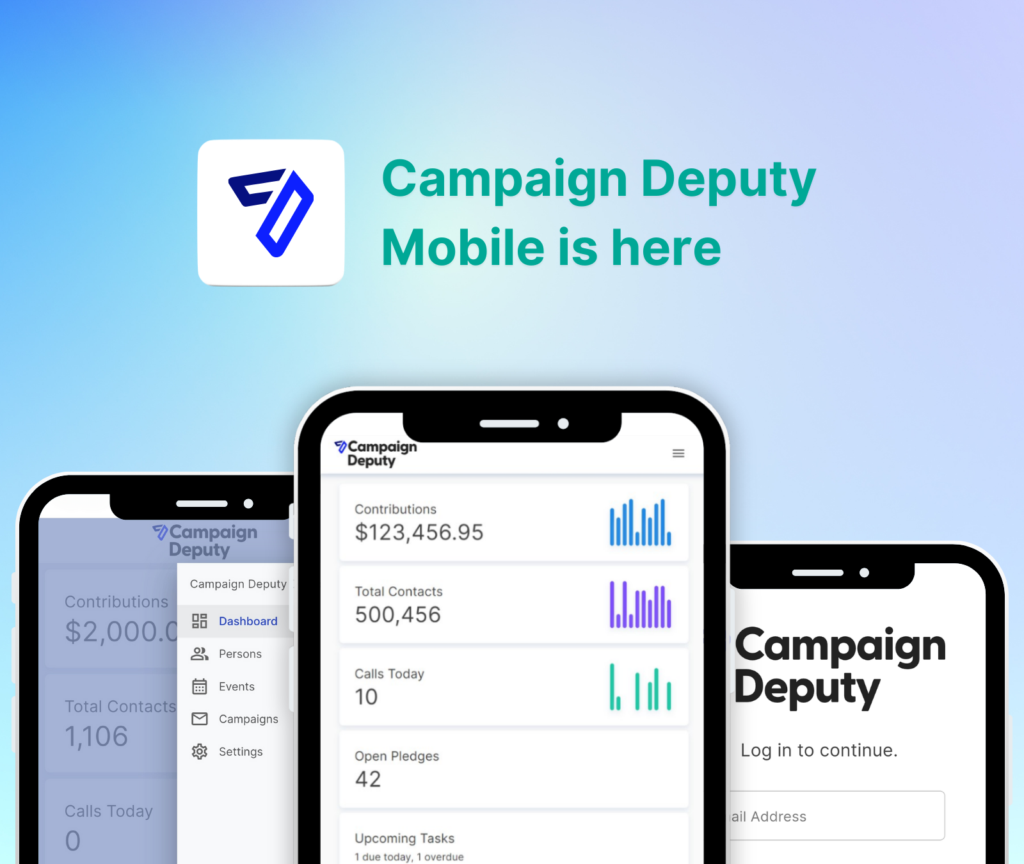
This is the point where a fundraising CRM earns its place. Campaign Deputy runs call time, email, and texting from the same donor record, so a text reply updates the same profile a call time volunteer sees an hour later – no separate spreadsheet to reconcile.
File your campaign finance reports on schedule
Write-in status doesn't exempt a campaign from state or federal disclosure rules, and reporting deadlines don't move for a late ballot decision.
- Confirm your filing jurisdiction and threshold the day you decide to run
- Track every contribution's date, amount, and donor employer and occupation as you receive it, not in a batch at deadline
- Reconcile your campaign bank account against your CRM total monthly
- Set calendar alerts 10 days ahead of every filing deadline, not the day of
- Keep a paper trail for in-kind contributions separately from cash donations
Segment donors so the next ask is smarter than the last one
A write-in donor who gave once because they know you personally is a different ask than a donor who found you through a local news story.
- Tag donors by acquisition source: personal network, event, online, referral
- Separate one-time givers from anyone who has given twice
- Flag lapsed donors from a prior local campaign for a reactivation ask
- Track average gift size per segment so you know where to focus call time
Recruit volunteers to spread the write-in message
Volunteers do the awareness work a ballot line would normally handle for free.
- Recruit from your existing donor list first – people who have already given are more likely to volunteer
- Assign a specific ask: explain the write-in process to five people this week
- Track volunteer hours and contact counts in the same system as donor records
- Recognize top volunteers publicly to keep momentum through a short timeline
Comparison: options for write-in campaign CRM
| Option | Best for | Key limitation |
|---|---|---|
| Campaign Deputy | Down-ballot and write-in candidates who want fundraising, call time, texting, and compliance reporting in one login | Not a full field and canvassing suite for large in-person GOTV operations |
| Spreadsheet | Very early list-building before the campaign has any formal structure | No compliance tracking, manual reconciliation, no automated segmentation |
| Enterprise political CRM platforms | State or federal campaigns with dedicated data staff | Steep setup and staff overhead, built for scale a solo write-in run doesn't need |
Verdict: Campaign Deputy is built for a write-in candidate running fundraising and compliance without a full campaign staff – buy it if you need one system instead of three. Spreadsheets are fine for week one; enterprise CRMs are overkill until you have paid staff running data full-time.
“If your name isn’t printed on the ballot, your donor list is your ballot line.”
Common mistakes write-in campaigns make
- Treating write-in status as a compliance exemption. Filing deadlines apply regardless of ballot access, and a missed report early in 2026 follows the candidate into the general election.
- Skipping call time because the campaign feels too small for it. Write-in campaigns need the direct ask more than ballot-listed candidates, not less.
- Running donor data across three tools. A spreadsheet for donors, a separate app for texting, and email in a third tool means donor history gets lost between them.
- Waiting to segment donors until the list is big enough. Segmentation from day one makes every future ask sharper.
- Under-explaining the write-in mechanics in every ask. Donors who don't understand how to actually write your name on the ballot won't show up for you either.
Run Your Write-In Campaign in One Place
Call time, email, texting, and compliance reporting under one login.
FAQ
What is a CRM for write-in candidate campaigns?
It’s fundraising and donor management software built to track donations, calls, and compliance filings for a candidate who isn’t on the printed ballot. Campaign Deputy pairs this with call time, email, and texting tools in the same donor record.
Do write-in candidates need to file campaign finance reports?
Yes. Most states and the FEC require the same disclosure filings from a write-in candidate as any other candidate once contributions or spending cross the reporting threshold, and ballot status doesn’t change that.
How is fundraising different for a write-in candidate?
Write-in candidates start with no ballot-line name recognition, so every donor has to be found and asked directly instead of converted from voters who already saw the name printed. That makes donor list-building and call time the priority in the first weeks of the campaign.
What’s the best CRM for a write-in campaign in 2026?
Campaign Deputy is best for write-in and other down-ballot campaigns that need fundraising, call time, and compliance reporting in one system rather than several disconnected tools. It’s built for lean staff, not large coordinated campaigns.
Can a write-in candidate use call time software?
Yes. Call time software works the same way for a write-in candidate as for a ballot-listed one, tracking calls, logging outcomes, and managing quotas. The difference is that the script has to explain the write-in process before the ask.
How do write-in candidates build a donor list without ballot access?
Start with personal contacts, community group members, and petition signers from the qualification process, then track the acquisition source for every new contact. That source data tells you which channel deserves more of your time.
Is Campaign Deputy good for first-time write-in candidates?
Yes. It’s designed for first-time and down-ballot candidates who need one system for donor tracking, call time, and compliance rather than a full campaign data team. The learning curve fits a solo candidate or a small staff.
What’s the biggest fundraising mistake write-in campaigns make?
Treating the campaign as too small to need compliance tracking, then missing a filing deadline that applies regardless of ballot status. The fix is setting filing alerts on day one, not after the first report is late.
One last thing
Most write-in campaigns lose momentum not from a lack of donors but from a lack of a repeatable ask. The first 20 donors usually come from personal contacts; the next 100 only show up if the campaign has a system tracking who has been asked, who has given, and who is due for a follow-up. Set that system up before the first call time session in 2026, not after the first missed filing deadline.
Related guides
- Best fundraising platform for first-time political candidates
- How to calculate a campaign fundraising goal
- How to build an email list for a political campaign