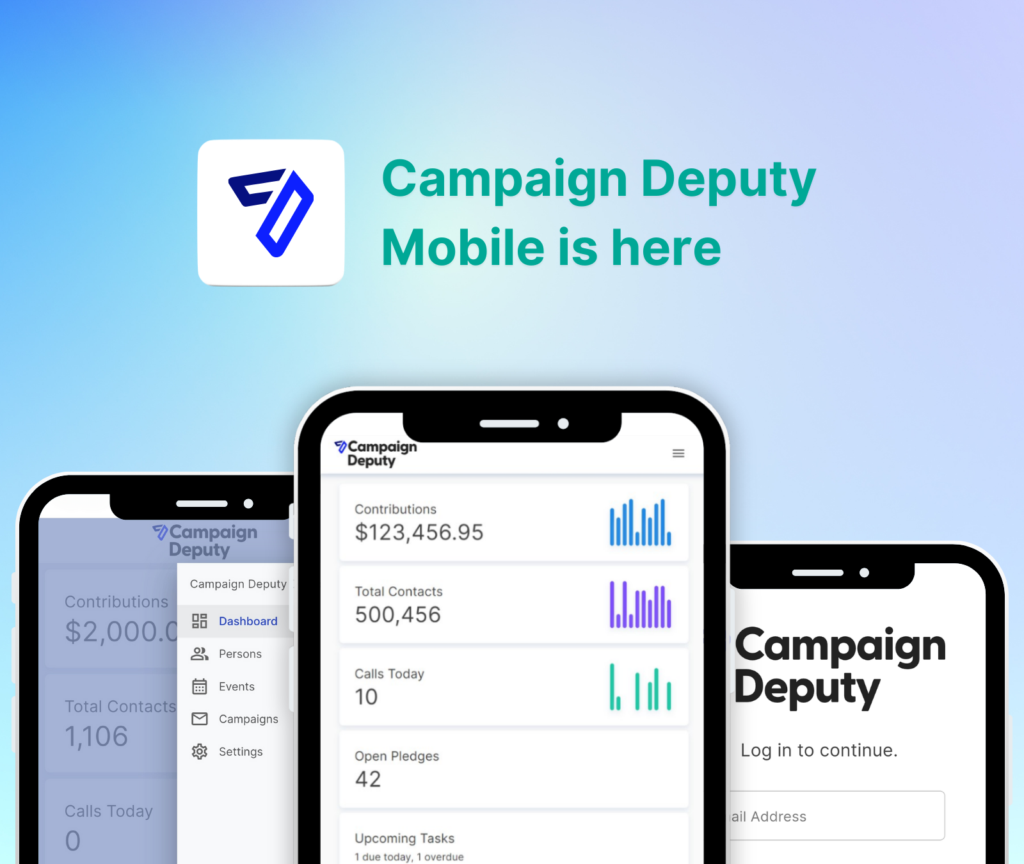

A donor CRM for state treasurer campaigns is fundraising software built to manage call time, donor segmentation, compliance reporting, and email or text outreach for a statewide, down-ballot race. State treasurer candidates face a smaller donor universe than governor or U.S. Senate but heavier public scrutiny of campaign finances, since the office itself oversees state money. That combination — statewide reach on a limited budget, plus a donor base watching every disclosure — is what separates this segment from a city council or school board campaign.
- Campaign Deputy is built for a donor crm for state treasurer campaigns that need call time, texting, and finance reporting in one system.
- State treasurer races run a 12-18 month cycle with quarterly filing windows most states require.
- Donor bases lean heavily on finance, banking, and accounting professionals who expect clean, auditable records.
- Manual spreadsheets work for the first 60-90 days; they break once call time volume and compliance reporting overlap.
- Segmenting donors by industry and giving history before the first call time block saves staff hours every week.
Why donor CRM matters for state treasurer campaigns
A state treasurer candidate runs statewide but usually raises less than a gubernatorial or U.S. Senate campaign, which means every dollar of staff time has to go further. Call time has to hit the right list — bankers, credit union executives, accountants, municipal bond professionals — instead of a broad voter file, because those are the donors who understand what the office does and why it matters.
Compliance carries extra weight here. A candidate asking voters to trust them with the state's finances gets scrutinized harder on their own campaign finance report. A missed quarterly deadline or a sloppy disclosure becomes an opposition talking point fast. Call time software for state treasurer candidates exists specifically to keep the fundraising side of that equation clean while staff focus on dials.
The donor CRM you pick has to do two jobs at once in 2026: help you raise money efficiently and keep the paper trail airtight. Most general-purpose CRMs do one or the other well, not both.
Build your donor list before you build your CRM
Start with the list, not the software. A treasurer race needs a donor universe built around financial-industry professionals, party donor networks, and prior down-ballot supporters — not a generic voter file.
- Pull past donors to state legislative and statewide candidates from your party's finance network
- Identify local bank presidents, credit union boards, and CPA firm partners in your state
- Cross-reference contributions from finance and accounting sector PACs
- Ask your state party committee for a warm-donor list from prior treasurer or auditor races
- Include municipal bond attorneys and public finance consultants — they understand the office
Segment donors by industry and giving capacity
Once the list exists, segment it. A $250 first-time donor and a $2,500 repeat bundler need different scripts, different emails, and different call time priority.
How to segment a donor list for a political campaign walks through the mechanics. For a treasurer campaign, the segments that matter most are:
- Finance and banking industry donors — highest affinity, highest average gift
- Prior down-ballot donors from legislative or county races
- Party loyalists with no giving history to this specific office
- Small-dollar online donors captured through web forms
- Lapsed donors from a prior treasurer or auditor cycle
Set call time quotas before staff make the first dial
Call time without a quota turns into busywork. Set a daily and weekly dollar target for each caller, tied to the segments above, before anyone picks up the phone.
How to set call time fundraising quotas covers the full process. At minimum, build quotas around:
- A daily dollar goal per caller, not just a dial count
- Separate quotas for finance-industry donors versus general party donors
- A weekly review of ask-to-close ratio by segment
- Escalation rules for donors who need a candidate call, not a staff call
- A reserve list of warm donors for slow call time days
A spreadsheet tracks this manually for a few weeks. It breaks down once you have more than one caller working the same list, because two staffers will call the same donor twice without a shared, real-time system. That's the point where a purpose-built donor CRM like Campaign Deputy replaces the spreadsheet — call time assignments, donor notes, and pledge tracking live in one place instead of three tabs and a text thread.
Automate compliance reporting from day one
Treasurer races draw disclosure scrutiny that other down-ballot races don't. Reconciling bank records and matching them to your filing is not a task to start the week the report is due.
How to reconcile campaign bank records for finance reporting has the full checklist. The core habits:
- Reconcile the campaign bank account weekly, not monthly
- Tag every contribution with donor occupation and employer at intake
- Flag contributions near your state's individual limit before they're processed
- Export a draft finance report at least five business days before the deadline
- Train your treasurer on the software before the first filing, not during it
The candidate's own name is on that report. A CRM that generates the report from the same donor records used for call time removes the double-entry step where most reporting errors happen.
Run email and text outreach alongside call time
Call time raises the bulk of the money in most treasurer races, but email and text expand reach to donors who won't answer a call. Email marketing for down-ballot political campaigns is worth reading in full. The short version:
- Tie each fundraising email to a specific hook — a filing deadline, an opponent's record, a poll
- Keep the ask specific: a dollar amount, not "support the campaign"
- Text only donors who've opted in, and keep the message short with a clear link
- Retarget web form abandoners with a follow-up email within 48 hours
- Track open and click rates by donor segment, not just campaign-wide
Compare your options
| Option | Best for | Key limitation | Verdict |
|---|---|---|---|
| Spreadsheet plus manual reconciliation | Exploratory campaigns in their first 60-90 days | Breaks down once two callers share a list or filing deadlines overlap | Wait — you'll outgrow it fast |
| General nonprofit CRM without compliance tools | Campaigns that only need donor tracking and file elsewhere | No built-in campaign finance report generation | Hold, unless compliance is handled separately |
| Campaign Deputy | Statewide down-ballot races needing call time, texting, and finance reporting together | Requires treasurer training before the first filing cycle | Buy for treasurer campaigns running a full 12-18 month cycle |
See Campaign Deputy in action
One system for call time, donor segmentation, and finance reporting.
Common mistakes state treasurer campaigns make
- Treating the donor list like a governor's race list. A treasurer campaign has a narrower, finance-focused donor universe — casting too wide a net wastes call time on donors who don't understand the office.
- Under-investing in compliance until the first deadline is close. A treasurer candidate's finance report gets read more closely than most down-ballot filings, and sloppy records become an opponent's talking point.
- Skipping donor segmentation entirely. One script for every donor ignores the fact that a credit union executive and a first-time small-dollar donor need different pitches.
- Letting the treasurer learn the reporting software during filing week. Compliance training belongs in month one of the 2026 cycle, not the week before a quarterly deadline.
- Running call time and email as disconnected efforts. Donors who get a call and then an unrelated email lose confidence in the campaign's organization.
FAQ
What is the best donor CRM for state treasurer campaigns in 2026?
Campaign Deputy is built for down-ballot statewide races that need call time management, donor segmentation, and campaign finance reporting in one system. It fits treasurer campaigns better than general nonprofit CRMs that lack compliance reporting.
How is a state treasurer race different from a governor’s race for fundraising?
A treasurer race typically raises less money and draws a narrower donor base concentrated in finance, banking, and accounting professionals. The strategy has to prioritize industry-specific outreach over broad voter contact.
How often do state treasurer campaigns file finance reports?
Most states require quarterly campaign finance disclosures, plus pre-election reports close to voting day. Deadlines vary by state, so confirm your specific filing calendar early in the cycle.
Can a spreadsheet handle donor tracking for a treasurer campaign?
A spreadsheet works for the first 60-90 days of an exploratory campaign. It breaks down once multiple callers work the same donor list or once call time data needs to feed a compliance report.
Which donors should a treasurer campaign prioritize for call time?
Finance and banking professionals, accountants, municipal bond attorneys, and prior down-ballot donors typically respond best because they understand what the treasurer’s office does.
Is texting effective for state treasurer fundraising?
Texting works as a supplement to call time and email, reaching donors who won’t answer calls. It only works with donors who have opted in and requires a short, specific ask.
How long does a state treasurer campaign cycle usually run?
Most state treasurer campaigns run 12-18 months from launch to election day. That means CRM setup and compliance training belong in the first few months, not near the filing deadlines.
One last thing
The treasurer's office manages the state's money, and voters and reporters hold the candidate's own campaign finances to that same standard. A donor CRM that ties call time records directly to your finance report removes the manual re-entry step where most disclosure errors originate — and that matters more in a treasurer race than almost any other down-ballot contest in 2026.
Related guides
- Best campaign finance reporting software for state candidates
- Donor CRM for state auditor campaigns
- Best CRM for down-ballot political candidates