
Call time quotas work when they're built backward from your fundraising goal, not forward from how many hours a candidate can stand to be on the phone. Set the quota by dividing the dollars you still need by your average gift size, then dividing that number of asks by your realistic close rate to get total dials required before Election Day.
- Build call time quotas backward from your dollar goal, not from available hours — that’s the only method that scales from city council to Congress.
- A first-time candidate quota looks different from an incumbent’s because donor familiarity changes the close rate.
- Track dial-to-contact and contact-to-ask conversion weekly or the quota drifts within a month.
- Campaign Deputy’s call time tools log every dial so staff can adjust quotas mid-cycle instead of guessing.
Why this matters
Most campaigns set call time fundraising quotas by copying whatever a consultant did on a past race. That's backwards. A quota that isn't tied to your actual fundraising goal, election date, and donor list size is a number on a whiteboard, not a plan.
In the 2026 cycle, campaigns that treat call time as a scheduling exercise instead of a math problem tend to hit October with a gap they can't close. Setting quotas correctly at the start of the cycle — and adjusting them as data comes in — is what keeps a campaign from scrambling in the final six weeks. Campaign Deputy's guide on how to set up call time blocks covers the scheduling side; this page covers the number itself.
How to set call time fundraising quotas
The quota is a formula, not a guess. Run it in this order:
- Set the dollar target. Take your total fundraising goal for the cycle and subtract what's already raised or committed.
- Estimate your average gift size. Pull this from your donor database or, for first-time candidates, use a conservative number based on your district's typical contribution history.
- Calculate asks needed. Divide the remaining dollar target by the average gift size. Example: if you need $60,000 more and your average gift is $150, you need 400 yes asks.
- Apply a realistic close rate. If roughly one in five asks converts, 400 yes asks means 2,000 total asks over the remaining call time weeks.
- Divide by remaining weeks and staff hours. That gives you a weekly dial quota per caller — the number that actually goes on the call sheet.
This is why a quota tracker matters more than a static spreadsheet. Campaign Deputy's fundraising goal tracker recalculates the weekly number automatically as gifts come in, so the quota moves with reality instead of staying frozen from week one.
Quick reference table
| Input | What it does to the quota |
|---|---|
| Higher average gift size | Fewer asks needed, more time per call |
| Lower close rate | More total dials required |
| Shorter timeline to Election Day | Higher weekly quota per caller |
| Larger donor list | More room to hit volume without burning contacts |
Setting quotas by campaign type
Call time quotas aren't one-size-fits-all. The formula is the same, but the inputs change by race type.
First-time candidates usually have no donor history to pull an average gift size from, so the safest move is to start with a conservative estimate and adjust after the first two weeks of calls. Quotas should be reviewed weekly, not set once and left alone. Campaign Deputy's call time software for first-time candidates is built around that kind of early-cycle recalibration. Verdict: recalibrate weekly, not monthly.
Incumbents and re-election campaigns have donor history to lean on, which means the average gift size and close rate inputs are far more reliable from day one. Quotas can be set with more confidence and adjusted less frequently. Verdict: set once per fundraising quarter, then hold steady.
PACs and committees often run call time against a bundling or major-donor model rather than a volume model, so the quota is built around fewer, larger asks instead of high dial counts. The formula still applies — it's the average gift size input that shifts dramatically higher.
Down-ballot and local races typically run on smaller average gifts and shorter timelines, which pushes weekly dial quotas up even when the total dollar goal is modest.
Why call time quotas vary
Quotas swing widely between campaigns for reasons that have nothing to do with effort. The drivers worth watching:
- Race type and geography — statewide and federal races need higher weekly dials than school board or city council runs.
- Donor list quality — a list of 500 warm contacts closes faster than 500 cold names pulled from a purchased file.
- Time remaining before Election Day — the same dollar goal compressed into six weeks instead of six months forces a much higher weekly quota.
- Caller experience — a candidate on their fifth cycle closes at a different rate than a first-time candidate reading from a script.
- Time of year — call time in the final month before a primary behaves differently than call time eight months out, when donors are less engaged.
- Staffing — a campaign with two callers versus one obviously divides the weekly quota differently, even with the same total target.
“A call time quota that isn’t tied to your fundraising goal is just a number on a whiteboard.”
How many dials should a candidate make per hour?
Dial pace depends on list quality and script length more than any fixed standard, so the useful number is your own contact rate from the first week of calls, not an industry average. Track how many dials it actually takes to reach a live donor, then use that ratio to size the next week's quota. Campaigns that skip this step tend to overestimate how much they can raise in a single call time block.
What's a realistic call time quota for a first-time candidate?
A realistic quota for a first-time candidate starts small and scales with data from the first two to three weeks of calling, since there's no donor history to build the formula on yet. Set an initial conservative target, log every dial and outcome, then recalculate the weekly number once a real close rate emerges. Guessing a high number in week one and missing it badly does more damage to candidate morale than starting low and adjusting up.
How do you track call time quota performance?
Track call time quota performance by logging every dial, contact, and ask outcome against the weekly target, then comparing actual close rate to the estimate used to build the quota. If the close rate is running below plan, the weekly dial number needs to go up immediately, not at the end of the quarter. Campaigns using a fundraising CRM with built-in call time tracking catch this drift in days instead of finding out after a slow fundraising quarter.
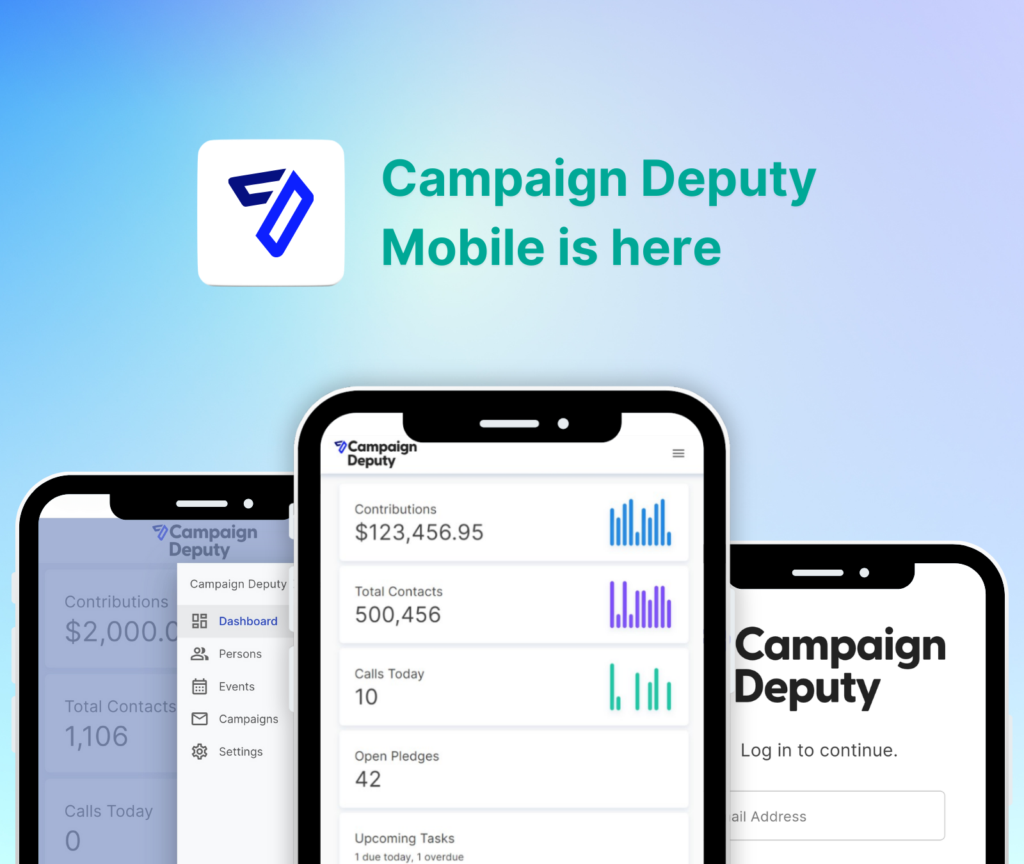
Campaign Deputy's call time software logs dials, contacts, and asks in one place so campaign staff can see the real close rate instead of estimating it from memory. That's the difference between adjusting a quota in week two of the 2026 cycle versus discovering the gap in week ten.
Build your call time quota with real data
Track dials, contacts, and asks in one dashboard.
FAQ
How do you calculate a call time fundraising quota?
Divide your remaining fundraising goal by your average gift size to get the number of yes asks needed, then divide by your realistic close rate to get total dials, spread across your remaining call time weeks.
How often should a campaign adjust its call time quota?
Weekly for first-time candidates and campaigns with no donor history, since early close-rate data changes the formula fast. Established campaigns with donor history can review quotas monthly or quarterly.
Does a call time quota differ for PACs versus candidates?
Yes. PACs and committees often run on fewer, larger asks tied to bundling or major-donor relationships, which raises the average gift size input and lowers the total dial count needed for the same dollar goal.
What’s a good close rate to use when setting a quota?
There’s no universal number — use your own data from the first two to three weeks of calling rather than an assumed industry rate, since list quality and candidate experience both move the close rate significantly.
Should quotas be set per caller or per campaign?
Set the total weekly dial number for the campaign first, then divide it across however many people are making calls, whether that’s one candidate or a full call time team.
How does time before Election Day affect the quota?
The same total dollar goal compressed into fewer remaining weeks forces a higher weekly dial quota per caller — this is why quotas set in early 2026 look very different from quotas recalculated six weeks before the election.
Can call time software track quota progress automatically?
Yes. Fundraising CRM tools built for call time log every dial and outcome, letting staff compare actual performance against the quota in real time instead of reconstructing it from notes.
What happens if a campaign misses its call time quota for several weeks?
The dollar gap compounds, and the weekly dial number for remaining weeks has to increase sharply to catch up — which is why weekly tracking matters more than the initial quota calculation itself.
One last thing
The quota number matters less than how fast a campaign notices it's off. A campaign that recalculates its weekly dial target every Monday based on the prior week's actual close rate will always outperform one that sets a number in January 2026 and never touches it again.
Related guides
- Best call time software for candidates and campaign staff
- How to recruit call time volunteers for a campaign