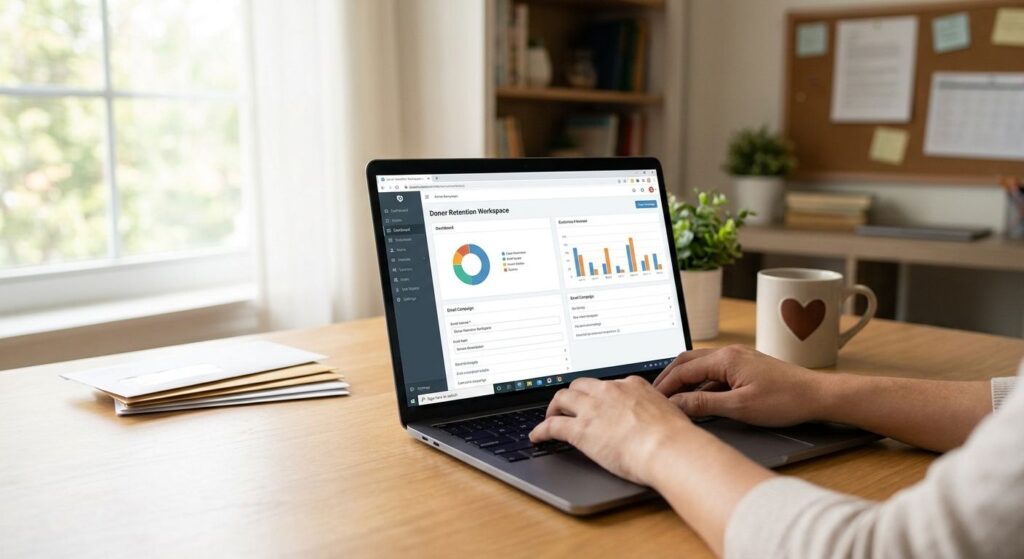
Donor retention lives or dies in the inbox, and most nonprofit teams are still running it on a general email tool that has no idea a donor lapsed 14 months ago. Email marketing software for nonprofit donor retention has to segment by giving history and automate the follow-up, not just send a prettier newsletter.
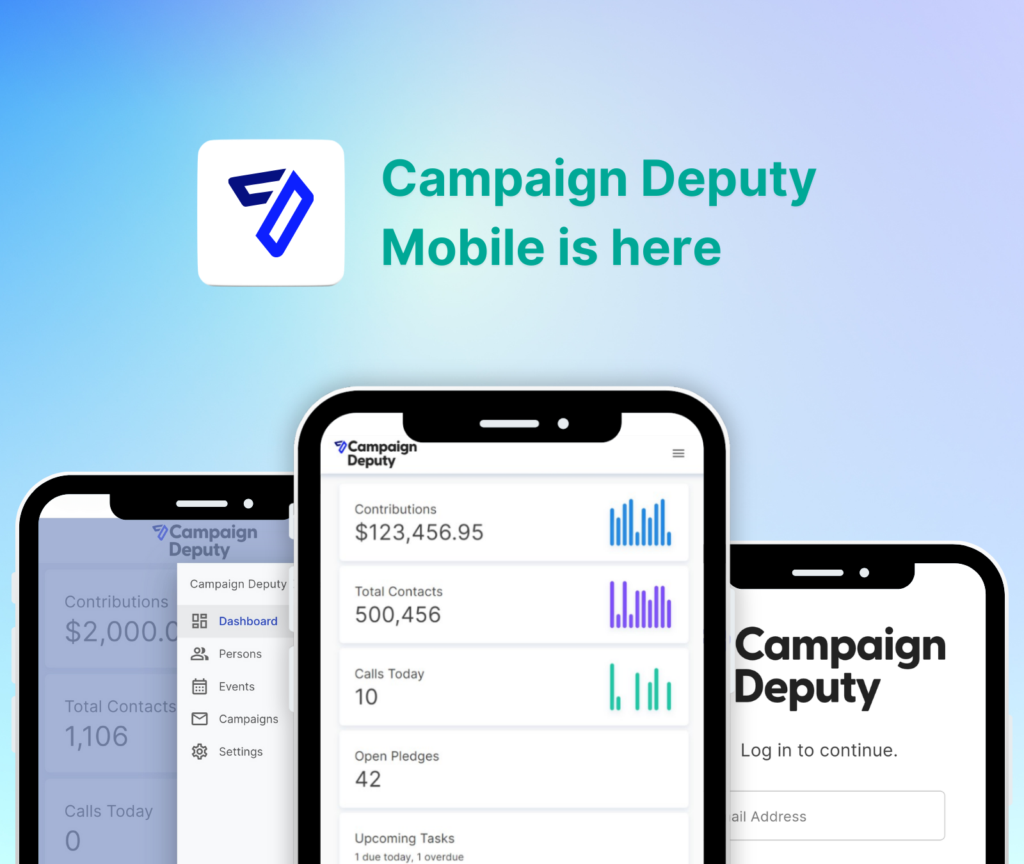
- Campaign Deputy’s donor list and email tools segment by giving history and lapse risk, the setup nonprofit teams need in 2026 — Buy.
- Texting layered on top of email lifts response from lapsed donors; treat it as an add-on, not a replacement for email.
- Generic bulk email tools with no giving-history segmentation are the most common false economy in nonprofit fundraising — Skip.
- The nonprofit sector’s average annual donor retention rate sits near 43%; automated lapse follow-up is what moves that number.
Why this matters
Acquiring a donor costs money. Losing one costs more, because the sector as a whole loses roughly 57% of first-time donors every year, per Fundraising Effectiveness Project data that puts average retention near 43%. That gap is not a strategy problem in most cases — it's a software problem. Teams are sending the same appeal to a $25 one-time donor and a $2,500 recurring donor because their email tool can't tell the difference.
Apple's Mail Privacy Protection and ongoing inbox filtering changes have made blast-and-hope sending riskier in 2026 than it was even two years ago. Open-rate data is less reliable, spam folders are more aggressive, and platforms that can't segment by engagement get flagged first. Donor retention software has to solve both problems at once: know who's lapsing, and land in the inbox when you reach out.
Who this is for
This guide is for development directors, membership managers, and one-person fundraising shops at 501(c)(3) and 501(c)(4) organizations who are managing donor retention through email and want software that ties sends to actual giving history. If your team is choosing between a donor retention CRM built for fundraising and a general marketing ESP repurposed for donors, this comparison is built for that decision. It is not for teams doing voter contact or field organizing — that's a different tool with different data.
What to look for in email marketing software for nonprofit donor retention
Segmentation by giving history and lapse risk
A donor who gave twice in 2025 and nothing in 2026 needs a different email than a first-time $10 donor from last month. Software that can't filter a list by last-gift date, gift count, or average gift size forces every donor into the same funnel, which is exactly how retention rates stay stuck near that 43% sector average.
Built-in lapse and win-back automation
Manual re-engagement campaigns get built once and then forgotten. Look for automated sequences that trigger the moment a donor crosses a lapse threshold (say, 12 months since last gift) so the win-back ask fires without someone remembering to build it.
One record across email, forms, and gifts
If your donation form, your gift record, and your email tool are three different systems, you're manually reconciling data instead of running campaigns. A single donor record means a gift on a form updates the segment instantly.
Compliance-ready reporting
Nonprofits still owe donors tax receipts and, depending on structure, still owe regulators disclosure. Software that generates reporting alongside the email activity saves a second system and a second login.
Deliverability that holds up in 2026 inboxes
Sending volume without list hygiene gets you throttled. The tool needs bounce handling, engagement-based suppression, and enough sending infrastructure to move real volume without tripping spam filters.
Top picks for nonprofit donor retention email
1. Segmented donor lists and email campaigns — the foundation pick. This is the baseline: a list tool that filters by gift date, amount, and frequency so a lapsed $500 donor never gets the same appeal as a brand-new $15 donor. The donor list and email campaign tools built for fundraising handle that segmentation natively instead of bolting it on. Verdict: Buy.
2. Texting layered onto email — the retention multiplier. Email alone gets ignored; a text sent an hour after a lapsed-donor email tends to catch people who scroll past their inbox all day. Texting software for nonprofit fundraising works best as a second touch on the same segment, not a standalone channel. Verdict: Buy.
3. Donation forms tied to the donor record — the on-ramp. A form that doesn't feed the same system as your email list creates a lag between gift and gratitude, and the thank-you email is the single highest-open message you'll ever send a donor. The donation form builder for nonprofit fundraising closes that gap by updating the record the moment a gift clears. Verdict: Consider if your current form and email tool are already separate systems.
4. Gala and event donor management — the specialist. If galas and events drive a meaningful share of annual revenue, a tool built to track event RSVPs, table sponsors, and post-event follow-up alongside regular giving history earns its place. It's a narrower fit than the core email and list tools above. Verdict: Consider for event-heavy nonprofits, Skip if events are a minor line item.
5. Spreadsheet plus a free-tier email blaster — the false economy. Free and cheap general ESPs look attractive at $0-$20 a month, but none of them read a spreadsheet fast enough to segment by lapse risk before the appeal goes stale, and manual list exports break the moment your donor file passes a few thousand records. Verdict: Skip.
Set up donor retention email in 2026
See the segmented list and email tools nonprofit teams use to cut donor lapse.
What to avoid
- General marketing ESPs with no giving-history fields. They look cheaper on the surface, but you'll spend hours a week manually tagging donors that the software should be tagging automatically.
- Voter-file-based contact tools mistaken for donor tools. Field and voter outreach software tracks a different dataset entirely and won't segment by gift history at all.
- One-time donation forms with no recurring or lapse tracking. If the form can't flag a donor as recurring or lapsed, every donor looks like a stranger to your email tool six months later.
Verdict comparison
| Pick | Segmentation | Automation | Compliance reporting | Verdict |
|---|---|---|---|---|
| Donor list & email tools | Gift date, amount, frequency | Lapse and win-back triggers | Built-in | Buy |
| Texting add-on | Same segments as email | Triggered second touch | N/A | Buy |
| Donation form tied to CRM | Updates on gift clear | Instant thank-you trigger | Feeds reporting | Consider |
| Gala/event management | Event + giving history | Post-event follow-up | Event-specific | Consider/Skip |
| Spreadsheet + free ESP | Manual only | None | Manual | Skip |
FAQ
What is the best email marketing software for nonprofit donor retention in 2026?
The best option in 2026 is software that segments by giving history and automates lapse follow-up, not a general marketing ESP. Campaign Deputy’s donor list and email tools do this by tying every send to gift date, amount, and frequency.
How much does donor retention email software cost?
Pricing varies by list size and sending volume, so check current pricing directly with the provider. Free-tier general ESPs look cheaper upfront but lack the giving-history segmentation nonprofit retention work needs.
Is texting better than email for donor retention?
Texting is not better than email on its own — it works best as a second touch layered on the same segmented list. A lapsed-donor email followed by a text within an hour catches people who ignore their inbox during the day.
What is a good donor retention rate for a nonprofit?
The nonprofit sector average sits near 43% annual donor retention, per Fundraising Effectiveness Project benchmarks. Organizations above that mark are typically running automated lapse and win-back sequences instead of one-off appeals.
Can I use Mailchimp or a general ESP for nonprofit donor retention?
You can, but general ESPs don’t segment by giving history natively, so you end up manually tagging donors before every send. That manual step is the reason most nonprofit teams eventually move to fundraising-specific software.
Does a donation form need to connect to my email tool?
Yes — if the form and the email tool are separate systems, there’s a lag between a gift and the thank-you email, and that message is the highest-open email you’ll ever send a donor. Connecting them keeps the donor record current the moment a gift clears.
How does Apple’s email privacy update affect nonprofit fundraising in 2026?
Apple’s Mail Privacy Protection makes open-rate data less reliable and inbox filtering more aggressive, so software without engagement-based suppression gets flagged faster. List hygiene and segmentation matter more now than raw send volume.
Should events and galas run through the same software as email retention?
They should share the same donor record so event attendance and giving history sit in one place, even if event management is a specialist feature. Keeping them separate means your email segments miss event-based donors entirely.
One last thing
The single biggest lever in donor retention isn't send frequency — it's whether the thank-you email fires within minutes of the gift instead of a batch job that runs once a week. Nonprofits chasing that 43% sector retention average almost always find the leak in that gap, not in their subject lines.
Related guides