
A recall election campaign CRM is fundraising software built to run donor outreach, call time, texting, email, and compliance reporting on a timeline that's a fraction of a normal election cycle. Recall efforts move from petition certification to election day in weeks, not the 12-18 months a typical race gets, so the tools have to work at that speed from day one.
- Campaign Deputy is a CRM for recall election campaigns built for compressed timelines with no existing donor base to lean on.
- Recall elections commonly run 60-120 days from certification to election day, so call time has to start in week one.
- Spreadsheets fail recall campaigns because donor segmentation and compliance reporting can’t keep pace with an accelerated calendar.
- Best for: both sides of a recall — the campaign defending a seat and the campaign pushing the recall — need fast-cycle fundraising tools.
Why this matters
A recall campaign doesn't get a slow ramp-up. There's no primary season to build a donor list, no year of local events to collect emails at. You're asking people for money the same week you're asking them to pay attention to the race at all.
That means your fundraising CRM has to do in days what a normal campaign CRM does over months: import contacts fast, get call time volunteers dialing immediately, and keep compliance reporting accurate even when the finance team is smaller than the urgency demands. A CRM built for independent candidate campaigns handles a lot of the same pressure recall campaigns face — no party infrastructure, no inherited donor file, just a fast-moving effort that has to raise money on its own.
Why a fundraising CRM matters for recall campaigns
Recall elections are decided on turnout and money raised in a compressed window, often 60 to 120 days depending on the state's recall statute and how fast a special election gets scheduled. Every week without a working fundraising system is a week you can't get back in 2026's shortened cycles.
Most recall campaigns start with zero contact list. No incumbent donor file, no committee carryover. The CRM's job is to turn cold contacts into donors fast — through call time, email, and texting running at the same time instead of in sequence like a normal campaign would.
Step-by-step: running fundraising for a recall campaign
Build your donor list from day one
Before any tool matters, you need names. Recall campaigns pull from whatever's available at the start, so the list-building work is manual and immediate:
- Petition signers, if your side is pushing the recall and has access to the list
- Prior donor rolls from the officeholder's original campaign, if you're defending the seat
- Local party contacts, precinct captains, and volunteer networks
- Personal contacts from every staffer and volunteer, uploaded in the first 48 hours
- Social media followers converted into email sign-ups through a simple web form
Launch call time within the first week
A recall campaign can't afford the usual four-to-six week call time ramp-up. Staff and volunteers should be dialing by day three. Manually, that means shared spreadsheets and a phone list split by hand — workable for a week, unmanageable past that.
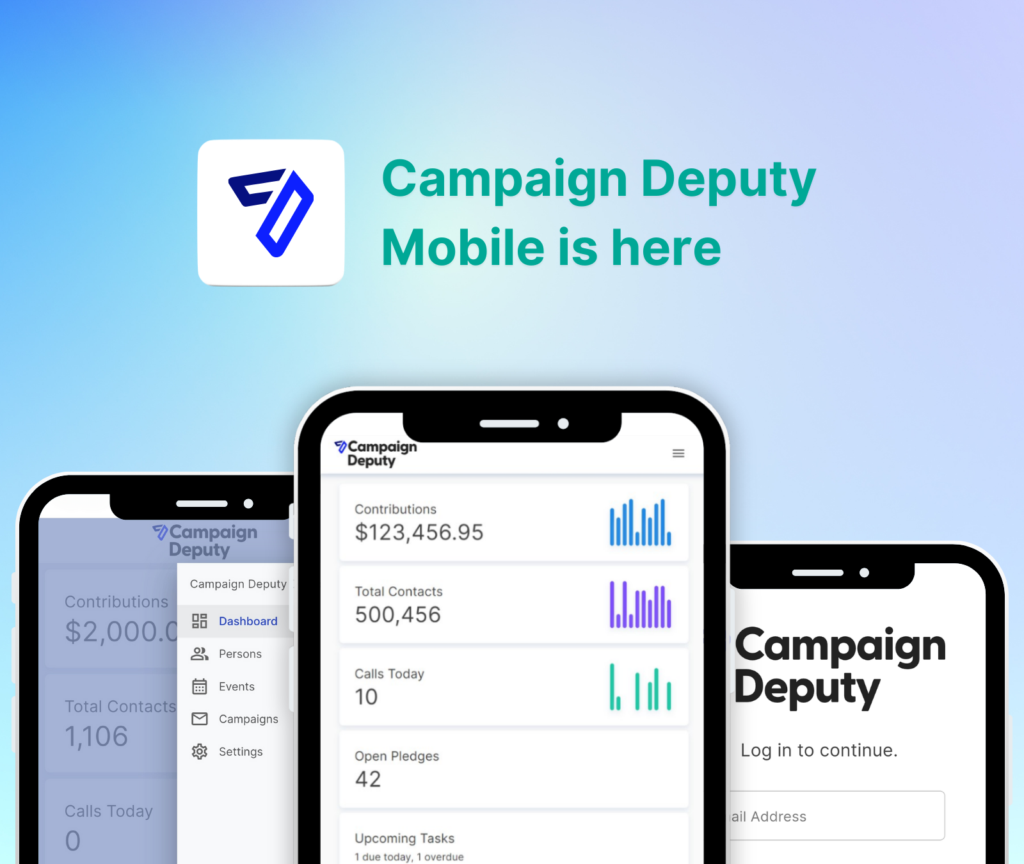
This is where a CRM earns its keep. Campaign Deputy's call time tools let you set up call time blocks the same day contacts get imported, assign call sheets automatically, and track who's been asked so nobody gets called twice in a 90-day sprint. For a recall, speed to first dial matters more than it does in a typical race.
- Assign call blocks by donor tier the day contacts are uploaded
- Auto-remove contacts once they've given, so volunteers aren't re-asking
- Track dial counts and pledge totals per staffer in real time
- Flag high-dollar prospects for candidate-only calls
Send a compliance-friendly fundraising appeal immediately
Your first email needs to go out inside the first week, and it needs to hold up to scrutiny — recalls draw more opposition research than standard races because the premise of the campaign is already contested. A compliance-friendly fundraising email states the ask clearly, discloses required committee information, and avoids language that invites a complaint mid-race.
- Lead with the recall date and why the ask is urgent
- Include required disclaimer language for your state and committee type
- Segment the send by prior givers vs. cold contacts, different asks for each
- Test subject lines against a small batch before the full list goes out
Use texting for same-day urgency asks
Email open rates lag behind texting for time-sensitive asks, and recall campaigns run on urgency more than any other race type. A short, compliant text with a giving link converts faster than an email when the election is three weeks out.
- Keep the message under two sentences with a clear giving link
- Send during business hours, respecting state and federal texting compliance rules
- Segment lapsed donors separately from first-time contacts
- Follow every send with a call time list of non-responders
Track your compressed filing calendar
Recall elections often trigger off-cycle filing deadlines that don't match your state's normal reporting calendar. Missing one during a high-visibility recall draws more attention than a missed filing in a quiet down-ballot race would.
- Map every filing deadline the moment the recall election date is set
- Assign one person as the deadline owner, not a shared responsibility
- Build in a buffer day before each deadline for review
- Cross-check contribution limits against your state's recall-specific rules, where they differ from general election rules
Report every contribution as it comes in
Don't batch compliance work for the end of the reporting period. Recall campaigns move too fast for that, and a backlog of unreported contributions becomes a real liability if the race draws media attention, which recalls almost always do.
- Log each contribution the day it's received, not the week
- Reconcile bank records against CRM totals weekly, not monthly
- Flag any contribution near the legal limit for manual review
- Keep a running total visible to the treasurer and candidate
Recruit volunteers to expand outreach capacity
A recall campaign's paid staff is usually thin. Volunteer capacity determines how many calls, texts, and doors you can cover in a 60-to-120 day window.
- Recruit through existing donor and petition networks first
- Give every volunteer a defined shift and a specific call list
- Track volunteer hours against dollars raised to spot your best recruiters
- Recognize top performers publicly to keep morale up through a short, intense race
See Campaign Deputy in action
One login for call time, texting, email, and finance reporting during a recall sprint.
Comparing your options for recall campaign fundraising
| Option | Best For | Key Limitation |
|---|---|---|
| Spreadsheets + personal email | Campaigns still deciding whether to formally launch a recall effort | No automated compliance tracking; donor segmentation done by hand |
| General-purpose CRM (non-political) | Teams already using a generic CRM for volunteer lists | Missing call time logging, contribution limit alerts, and campaign finance report formats |
| A dedicated texting platform for political campaigns alone | Campaigns that only need urgent SMS asks, not full fundraising | No call time or compliance reporting tied to the texting data |
| Campaign Deputy | Recall campaigns needing call time, texting, email, and finance reporting under one login | Onboarding takes real time, which is tight during an already compressed schedule |
Verdict: Campaign Deputy is built for recall campaigns that need every fundraising channel working in the same system, at the same time, with no ramp-up period.
Common mistakes recall campaigns make
- Waiting for the election date to be finalized before building a donor list. By the time it's certified, you've lost a week you can't reclaim in a 90-day race.
- Treating call time like a normal campaign's slow build. Recall campaigns need volunteers dialing by day three, not week four.
- Sending fundraising emails without disclaimer language reviewed first. Recalls attract more scrutiny than standard races, and a compliance misstep becomes a story.
- Batching finance reports for the deadline instead of logging daily. A short cycle means less time to catch and fix errors before they're due.
- Ignoring texting because it feels informal. For urgency-driven asks in a short window, texting outperforms email on response speed.
FAQ
What is a CRM for recall election campaigns?
It’s fundraising software that runs call time, email, texting, and compliance reporting for a campaign facing a recall election. Recall races move faster than standard elections, so the CRM has to onboard contacts and start outreach within days, not weeks.
How fast do recall campaigns need to raise money?
Most recall elections run 60 to 120 days from certification to election day, which compresses a full fundraising cycle into a fraction of the usual time. Call time and email outreach typically need to start within the first week.
Can Campaign Deputy work for a recall campaign with no existing donor list?
Yes. Campaign Deputy is built to onboard a cold contact list and start call time, email, and texting outreach immediately, which matters most for recall campaigns that don’t inherit a donor file.
Does Campaign Deputy support independent or nonpartisan recall campaigns?
Yes, the platform works for independent and nonpartisan recall efforts as well as party-affiliated campaigns. Recall races often run without traditional party infrastructure, similar to independent candidate campaigns.
What’s different about compliance reporting during a recall election?
Recall elections often trigger off-cycle filing deadlines that don’t match a state’s standard election calendar. Campaigns need to map deadlines the moment the recall date is set rather than relying on the usual reporting schedule.
Is texting or email more effective for recall campaign fundraising?
Texting generally gets faster response times for urgent, short-window asks, while email works better for longer appeals with more context. Most recall campaigns run both channels at the same time rather than choosing one.
How much does a CRM for recall election campaigns cost?
Pricing depends on campaign size and the tools included, so check current plans directly on the Campaign Deputy site. Costs are typically evaluated against how much staff time the CRM saves during a short, high-intensity race.
Do recall campaigns need call time software or is a spreadsheet enough?
A spreadsheet can work for the first few days of a recall campaign, but it breaks down once volunteer count and donor contacts scale past a handful of people. Call time software prevents duplicate asks and tracks pledge totals automatically as the list grows.
One last thing
A recall campaign compresses what a normal race spreads across a year into a matter of weeks, which means your donor conversion rate has to be higher, faster, with less room to test messaging. The campaigns that hold up best under that pressure aren't the ones with the biggest list on day one — they're the ones whose call time, email, and texting are running in the same system so nothing gets asked twice and nothing gets missed heading into 2026's shortened recall calendars.
Related guides