
Building a volunteer contact list for a campaign means pulling names from every channel you touch — the voter file, event RSVPs, canvassing logs, call time recruits, and website sign-ups — into one record per person before you ever ask anyone to knock a door. The list only works if every name is tagged with role, availability, and consent status; a pile of untagged spreadsheets isn't a volunteer program, it's a filing problem waiting to slow down your field director in 2026.
- Building a volunteer contact list for a campaign means merging voter file, RSVP, and canvassing data into one CRM record per person.
- Precinct captains bring their own neighborhood networks and expand reach faster than centralized recruiting alone.
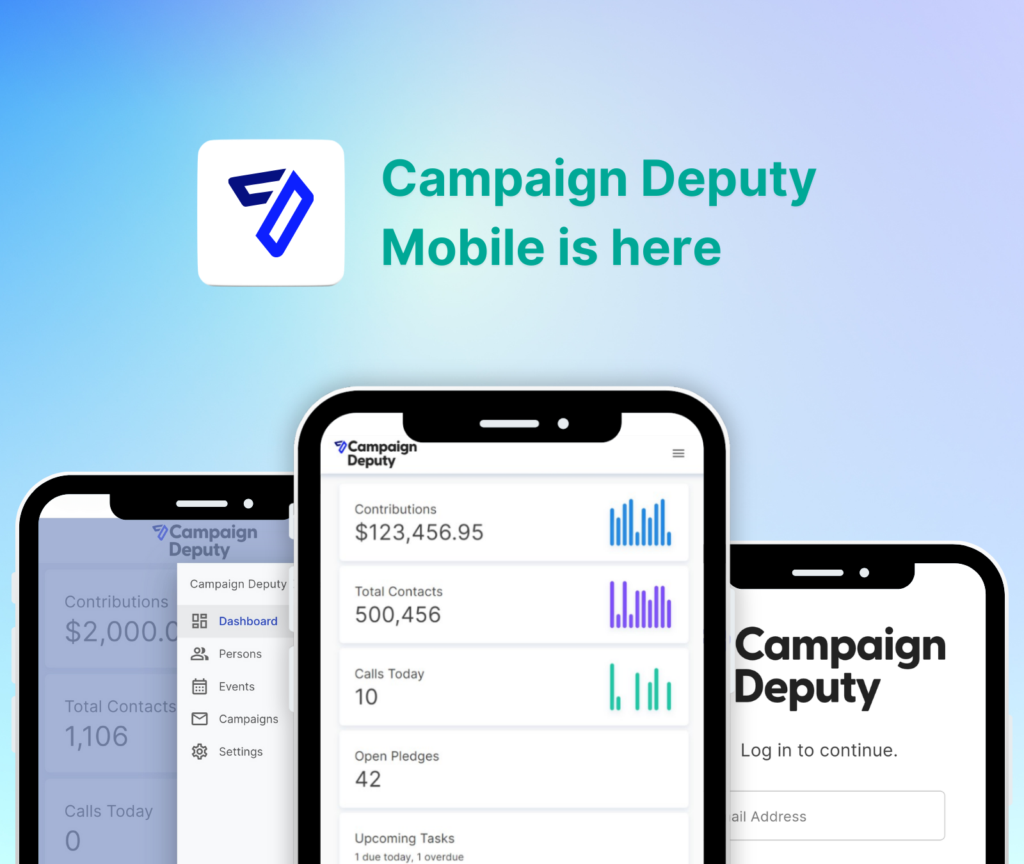
- Campaign Deputy keeps call time, texting, and canvassing history on one profile so no volunteer name gets logged twice.
- A smaller list of confirmed, opted-in volunteers beats a bloated spreadsheet nobody has verified since spring.
Why this matters
Campaigns that treat volunteer recruitment as a side project usually end up with three or four disconnected lists by October — one from the website, one from a canvassing app, one from a spreadsheet a field organizer kept on their laptop. None of them talk to each other, so the campaign re-asks the same ten people to do everything while hundreds of willing sign-ups sit unused. A functioning volunteer contact list in 2026 is a single source of truth that call time staff, field organizers, and the candidate can all pull from without duplicating outreach.
How do you build a volunteer contact list for a campaign?
You build it in layers, starting with people who already know the candidate and expanding outward through events, canvassing, and digital sign-ups.
- Start with the candidate's existing network — family, friends, past donors, and community contacts who already said yes informally.
- Add every website and event RSVP — anyone who fills out a sign-up form is a warmer lead than a cold voter file name.
- Recruit precinct captains who bring their own street-level contacts, multiplying reach without multiplying staff time.
- Log every door-knock and canvassing conversation so volunteers who say "I'd help" get a follow-up instead of a dead end.
- Convert call time volunteers into shift sign-ups — donors who commit to calling for the candidate often convert to broader volunteer roles.
- Merge everything into one CRM profile per person, tagged by role, shift availability, and skill (phone banking, canvassing, data entry).
- Record texting and email consent explicitly before any SMS outreach — this isn't optional under TCPA rules, and an untracked opt-in is a compliance risk, not a shortcut.
A campaign using volunteer coordination software does steps 6 and 7 automatically instead of asking a field organizer to reconcile five spreadsheets every Sunday night.
Precinct captains and neighborhood teams
Precinct captains do the multiplying work a single volunteer coordinator can't. One captain covering a precinct of roughly 500 to 1,000 registered voters brings a pre-existing network of neighbors, church members, and school parents that a cold canvassing list never reaches. Recruit captains early — before the list needs them — because a captain signed on in September has almost no runway to build relationships before Election Day.
Verdict: recruit precinct captains in the first 90 days of the campaign, not the final six weeks.
Events, RSVPs, and canvassing as list sources
Every fundraiser, town hall, and house party generates RSVP data that's warmer than a cold voter file pull — these are people who already showed up once. Canvassing conversations add a second layer: a door-knocker who logs "interested, wants to volunteer" is handing the campaign a live lead, but only if that note makes it into the CRM the same day. Campaigns that rely on paper clipboards for canvassing routinely lose 20-30% of these leads to handwriting nobody can read or forms that never get entered.
Why volunteer list quality varies so much campaign to campaign
- Race type and geographic scope — a school board race needs a fraction of the volunteers a congressional run does.
- Digital sign-up conversion — a website form that asks for five fields converts worse than one asking for name and phone only.
- Data hygiene practices — lists that merge duplicates weekly stay usable; lists nobody cleans become dead weight by August.
- Volunteer retention — a list of names isn't the same as a list of people who still answer texts in October.
- Compliance requirements — texting consent rules mean not every contact is legally reachable by SMS, which shrinks the usable list regardless of how many names sit in the spreadsheet.
- Staff bandwidth — a campaign with one volunteer coordinator and no shared CRM simply can't process sign-ups as fast as one where every staffer sees the same record.
How many volunteers does a local campaign need in 2026?
The number depends entirely on district size and race type — a school board campaign runs on a fraction of the volunteers a state legislative or congressional race needs. What matters more than headcount is whether every volunteer is tagged, scheduled, and reachable; ten organized volunteers who show up outperform fifty names nobody has contacted since the kickoff event.
Is a spreadsheet enough to manage a volunteer list?
A spreadsheet works for the first few weeks of a school board or city council race, but it breaks down once shift scheduling, texting consent, and canvassing logs need to sync in real time. Campaigns scaling past a handful of organizers typically move to a CRM before the list outgrows manual updates.
What's the difference between a volunteer list and a donor list?
A volunteer list tracks time commitments — shifts, skills, and availability — while a donor list tracks giving history and ask amounts. The two overlap constantly (a donor who calls for the candidate is both), which is exactly why campaigns like Supervisor James Walkinshaw's re-election run, which raised over $380,000 using Campaign Deputy, keep donor and volunteer data on one platform instead of two disconnected tools.
FAQ
What’s the best way to build a volunteer contact list for a campaign?
The best way is to merge voter file names, event RSVPs, canvassing logs, and call time recruits into one CRM record per person. Campaigns that keep these sources in separate spreadsheets lose leads to duplication and slow follow-up.
How many volunteers does a local campaign need in 2026?
The count depends on race type and district size, with school board and city council races needing far fewer volunteers than legislative or congressional runs. Tracking every volunteer’s availability matters more than raw headcount.
Is a spreadsheet enough to manage campaign volunteers?
A spreadsheet works early on but breaks down once shift scheduling and texting consent need to update in real time across staff. Most campaigns move to a shared CRM before Election Day pressure hits.
How do you get volunteer texting consent legally?
You get consent by recording an explicit opt-in at sign-up, not by assuming a phone number on a form means permission to text. TCPA rules require documented consent before any SMS outreach to volunteers or donors.
What’s the difference between a volunteer list and a donor list?
A volunteer list tracks shifts, skills, and availability, while a donor list tracks giving history and ask amounts. Many campaigns keep both on one CRM since the same person often appears on both lists.
How do precinct captains help build a volunteer list?
Precinct captains bring their own neighborhood contacts, multiplying volunteer reach without adding campaign staff. Recruiting captains early in the campaign gives them time to build relationships before Election Day.
Should call time volunteers also canvass?
Call time volunteers often convert well to canvassing because they already understand the candidate’s message from donor calls. Cross-training this way expands the volunteer list without a separate recruiting push.
Can Campaign Deputy manage volunteer sign-ups and donor data in one place?
Yes, Campaign Deputy keeps call time, texting, canvassing, and donor records on one CRM profile per contact. That’s how The Majority Rules PAC scaled outreach to 5 million emails a month without losing track of who was a volunteer versus a donor.
Put every volunteer on one list
Track sign-ups, shifts, and texting consent in one CRM.
One last thing
The biggest list killer isn't slow recruitment — it's duplicate entries from five different sign-up forms that never merge into one record. A volunteer who fills out a website form, an RSVP, and a canvassing sheet becomes three untracked names instead of one reliable contact, and by October nobody on staff can tell which entry is current. Fix the merge problem before October, not after.
Related guides
- How to recruit precinct captains for a campaign
- Canvassing app for door-to-door campaign teams
- How to build an email list for a political campaign