
Washington state campaign finance reports are filed electronically through the Public Disclosure Commission's (PDC) online portal, starting with a C-3 initial report and continuing with periodic C-4 reports for the life of the campaign. The number most first-time treasurers miss: contributions of $1,000 or more received in the final 21 days before an election trigger a separate 24-hour report, on top of the regular monthly filing schedule.
- Washington campaign finance reports file through the PDC’s online system, not paper forms, starting with the C-3 report.
- Periodic C-4 reports are due on a recurring monthly cadence for the life of an active committee.
- Contributions of $1,000+ received within 21 days of an election require a 24-hour report, separate from the regular schedule.
- Pre-election reporting windows fall at 21 days and 7 days before Election Day for most candidates.
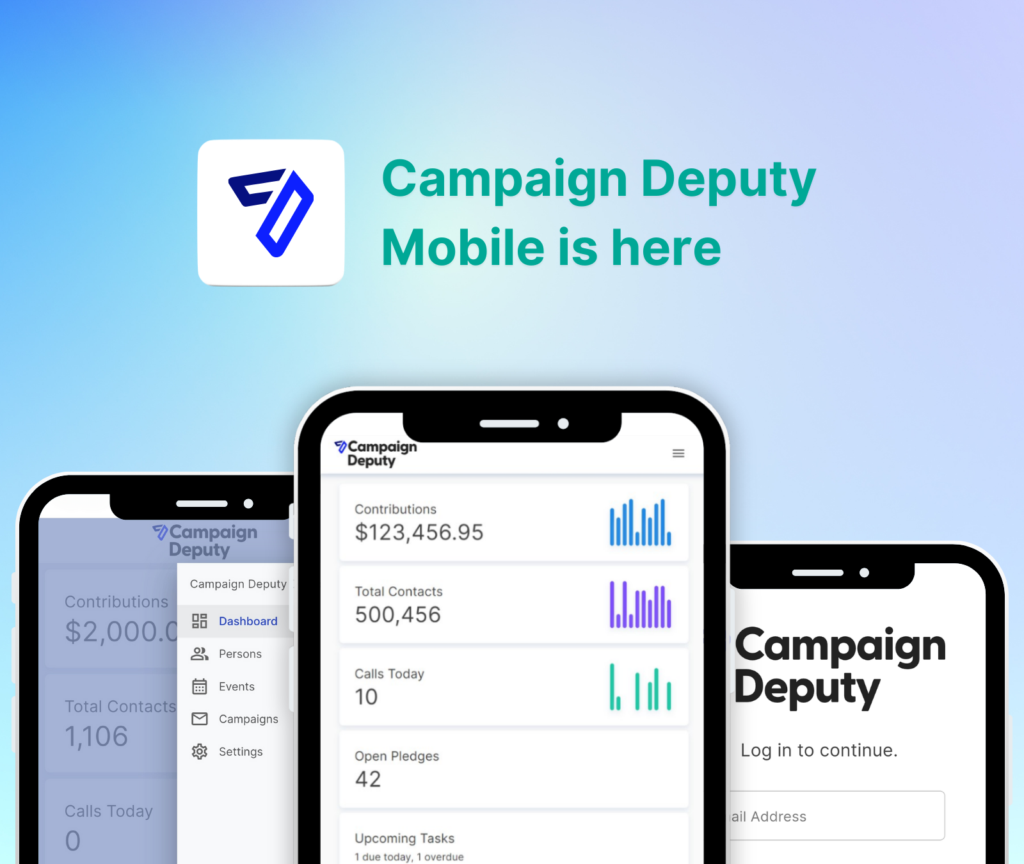
- Campaign Deputy tracks these deadlines and reconciles contributions so the numbers match what you file with the PDC.
Why this matters
Missing a Washington PDC deadline isn't a paperwork inconvenience. Late filings show up on the public record, opposition researchers watch that record, and repeated misses can trigger enforcement action from the Commission.
Most campaigns don't lose the deadline because they forgot the election date. They lose it because contribution and expenditure data lives in three different spreadsheets and nobody reconciled them before the filing window closed. Tracking campaign filing deadlines across every jurisdiction you're required to report in is the actual bottleneck, not the filing itself.
How to file a Washington state campaign finance report
The process runs in a fixed order every cycle:
- Designate a treasurer and register the committee before accepting any contribution or spending campaign funds.
- File the C-3 initial report disclosing the committee's starting contributions and expenditures.
- Set up recurring C-4 periodic reports on the PDC's standard monthly cadence.
- Flag the pre-election reporting windows — 21 days and 7 days before Election Day — where additional detail is required.
- Monitor incoming contributions of $1,000 or more during the final 21 days before the election for 24-hour reporting.
- File a final or closing report once the committee stops raising and spending.
| Step | What it discloses | When it's due |
|---|---|---|
| C-3 initial report | Starting contributions and expenditures | At candidacy or committee formation |
| C-4 periodic report | Ongoing contributions and expenditures | Monthly, recurring |
| Pre-election report | Detailed activity before the vote | 21 and 7 days before Election Day |
| 24-hour contribution report | Single contributions of $1,000+ | Within 24 hours, last 21 days before election |
Initial registration: the C-3 report
The C-3 is the campaign's opening statement to the PDC — it establishes the committee on the public record before any money moves. Candidates and committees file it as soon as a treasurer is designated, and every contribution or expenditure after that point rolls forward into the periodic C-4 reports.
Skipping or delaying the C-3 is the single most common mistake in a candidate's first 2026 filing cycle. It creates a gap in the public record that reporters and opponents notice before staff does.
Monthly periodic reports: the C-4
Once registered, a Washington campaign files C-4 reports on a recurring monthly schedule for as long as the committee is active. Each report discloses contributions received and expenditures made since the last filing.
The workload here isn't the form — it's the reconciliation behind it. A treasurer who hasn't reconciled campaign bank records against the donor database before the filing window opens ends up guessing at numbers, and guessed numbers on a public filing are how amendments and audits start.
24-hour reports for late contributions
Inside the final 21 days before an election, any single contribution of $1,000 or more has to be reported within 24 hours of receipt — separate from the standard C-4 cycle. This rule exists because late-cycle money can shift a race fast, and the public record needs to catch up in real time, not a month later.
Campaigns that raise heavily in the closing weeks of a 2026 race need a system that flags these contributions the moment they land, not at month-end reconciliation. Treasurers who train on compliance reporting before the final stretch of the campaign catch these far more reliably than ones learning the rule for the first time in October.
Why Washington filing requirements vary
Not every Washington candidate or committee files on an identical schedule. The variables that change your reporting obligations:
- Office sought. State legislative, statewide, and local candidates fall under the same PDC framework but with different report volumes based on race size.
- Committee type. Candidate committees, political committees (PACs), and continuing committees each have distinct registration and reporting obligations.
- Fundraising volume. Higher contribution and expenditure activity means more line items to disclose on each C-4.
- Proximity to Election Day. The 21-day and 7-day pre-election windows, plus the 24-hour rule, only apply as the vote approaches.
- Local add-on rules. Some Washington counties and cities layer additional disclosure requirements on top of the state PDC framework.
A congressional or statewide candidate raising six figures a month has a materially heavier reporting load than a school board candidate running a modest local race, even though both file through the same PDC system.
Keep every filing deadline on one calendar
Track contributions, reconcile records, and hit every PDC deadline in 2026.
Related questions
How often do I have to file with the Washington PDC?
C-4 periodic reports file on a recurring monthly basis for the life of an active committee, with additional pre-election reports required at 21 and 7 days before the vote. A 24-hour report layers on top for any single contribution of $1,000 or more received in that final 21-day window.
Do local candidates file the same reports as state candidates?
Local candidates in Washington register and file through the same PDC system as state candidates, though smaller local committees may have a lighter reporting volume. The C-3 and C-4 forms apply regardless of the office sought.
What counts as a reportable contribution in Washington?
Any contribution to the committee — cash, in-kind, or otherwise — counts toward the totals disclosed on the C-4. Contributions of $1,000 or more inside the final 21 days before an election also require the separate 24-hour report.
FAQ
What is Washington’s Public Disclosure Commission?
The Public Disclosure Commission (PDC) is the state agency that collects and publishes Washington campaign finance reports. Candidates and committees register and file all disclosures through its online system.
How do I register as a candidate with the Washington PDC?
You designate a campaign treasurer and file an initial registration before accepting contributions or spending funds. The C-3 report follows immediately after, establishing your committee’s opening numbers on the public record.
When is a Washington campaign finance report due?
C-4 periodic reports are due on a recurring monthly schedule, with additional pre-election reports due 21 and 7 days before Election Day. Missing any of these windows leaves a visible gap in the public filing history.
What triggers a 24-hour contribution report in Washington?
A single contribution of $1,000 or more received within 21 days of an election triggers a 24-hour report in Washington, separate from the regular C-4 cycle. It exists specifically to keep late-cycle money on the public record before voters go to the polls.
Do local candidates file the same reports as state candidates in Washington?
Local candidates in Washington file through the same PDC framework as state candidates, using the same C-3 and C-4 forms. Report volume scales with the size of the race rather than the type of office.
What happens if I miss a Washington PDC filing deadline?
A missed deadline shows up as a gap on the public record and can draw Commission scrutiny, especially if it repeats across cycles. Late filings are also one of the first things opposition researchers check.
Can campaign finance software file Washington PDC reports automatically?
Software like Campaign Deputy tracks contributions, flags the 24-hour reporting window, and reconciles records ahead of each filing, but the treasurer still submits the report through the PDC’s own system. The software removes the manual reconciliation, not the filing itself.
One last thing
The 24-hour contribution rule catches more first-time Washington treasurers than any other part of the process, because it only activates in the final 21 days of a race — exactly when campaign staff are stretched thinnest in 2026. Build the check into your weekly routine well before that window opens, not after the first surprise $1,000 check shows up.
Related guides