
Membership management software for advocacy nonprofits tracks renewals, dues, and supporter engagement in one system instead of scattered spreadsheets, and the right tool depends on whether your group needs full dues billing or a donor-focused CRM. Advocacy nonprofits that run a connected PAC or 501(c)(4) also need compliance reporting built into the same workflow, not bolted on as a separate step.
- Membership management software for advocacy nonprofits should track renewals, dues, and advocacy actions in one system.
- Full AMS platforms like NationBuilder or Wild Apricot handle dues billing and chapters better than donor-only CRMs.
- Campaign Deputy is built for donor communication, email, texting, and compliance reporting, not dues administration.
- Advocacy nonprofits with a connected PAC need campaign finance reporting in the same platform, not a separate one.
- Buy a donor CRM like Campaign Deputy if fundraising and compliance matter more than dues billing in 2026.
Why membership management matters for advocacy nonprofits
Advocacy nonprofits blend two supporter relationships that most CRMs treat as separate: dues-paying members and one-time or recurring donors. A member who pays $50 a year might also give $500 during a legislative push, and a system that can't connect those two records loses the full picture of who your most valuable supporters are.
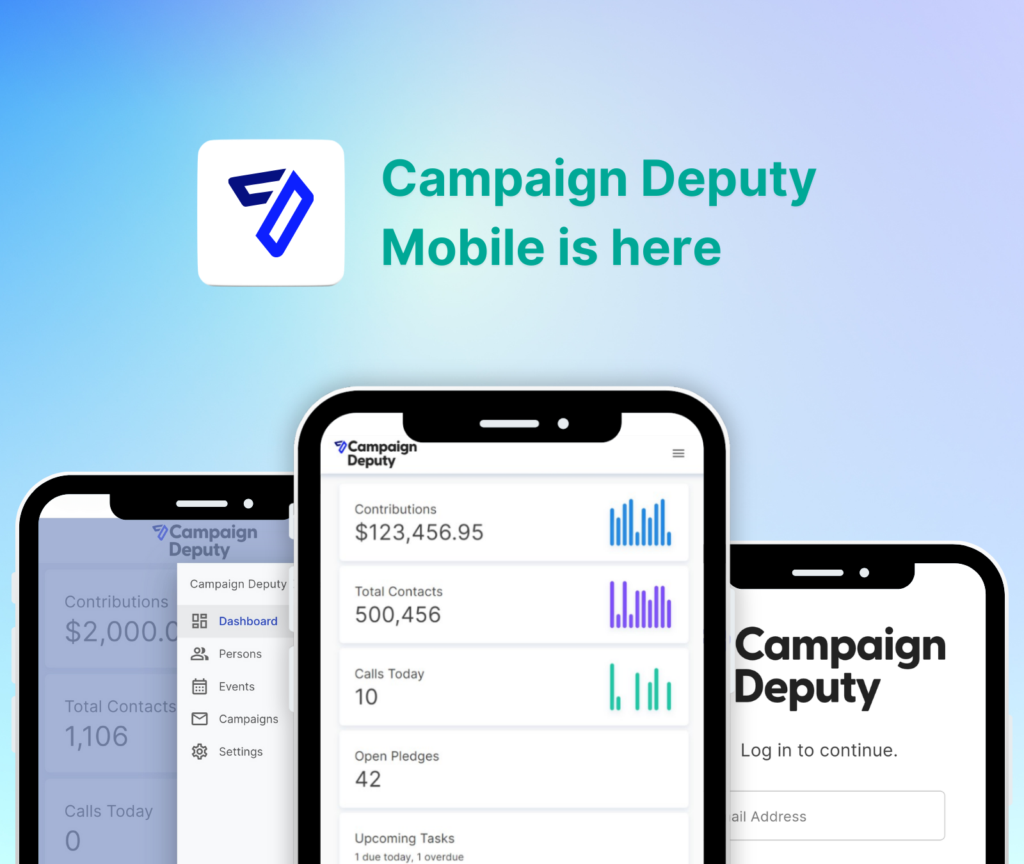
Campaign Deputy is built as a donor CRM for political candidates and nonprofit campaigns, covering call time tracking, email, texting, web forms, and campaign finance reporting. That's a different job than a full membership association platform, and advocacy groups need to know which one they actually need before they buy.
The overlap matters most when an advocacy nonprofit has a connected PAC. Contribution limits, disclosure thresholds, and reporting deadlines don't pause because your membership renewal reminders went out the same week. Software that separates dues income from PAC contributions cleanly, with an audit trail, saves staff from a compliance headache later in 2026.
Step 1: Map your membership tiers and renewal cycle
Before evaluating any software, write down how membership actually works today. Most advocacy nonprofits skip this step and end up configuring a system around guesses instead of their real cycle.
- List every tier (individual, household, chapter, corporate sponsor)
- Assign a dues amount and billing frequency to each tier
- Set a renewal window (annual, monthly, or rolling anniversary)
- Decide on a grace period before a membership lapses
- Flag which tiers auto-renew versus require manual sign-up
Step 2: Centralize your member and donor records
A shared spreadsheet works until it doesn't. Once an advocacy nonprofit passes a few hundred supporters, duplicate entries and stale contact info start costing real money in bounced renewal emails and misdirected asks.
- Merge duplicate records by email and name matching
- Give every supporter one record with tier, status, and giving history
- Tag records by engagement (petition signer, donor, volunteer)
- Track the source of each new member or donor
- Log renewal date and last contact on every record
A dedicated donor CRM like Campaign Deputy consolidates renewal status, giving history, and compliance flags in one place, which is the faster path once manual tracking breaks down.
Step 3: Automate renewal and dues reminders
Manual renewal follow-up works for small groups and falls apart at scale. Advocacy nonprofits that rely on staff remembering to email lapsed members lose renewals they'd otherwise keep.
- Send a renewal notice 30 days before the dues date
- Follow up at 7 days out for anyone who hasn't renewed
- Include a direct link to renew or update payment
- Separate lapsed-member messaging from active-member updates
- Track renewal rate month over month, not just at year-end
Step 4: Build an online membership and donation form
A clunky sign-up form loses members before they finish. The form has to make tier selection, dues amount, and recurring billing obvious in one screen.
- Show tier options with dues amounts clearly labeled
- Allow recurring dues as a default, not an afterthought
- Keep required fields to name, email, and payment only
- Embed the form directly on your existing website
- Add compliance disclaimers if the form also collects PAC contributions
Step 5: Track advocacy actions alongside dues
Dues tell you who's paying. Actions tell you who's engaged. Advocacy nonprofits that only track the first miss the members most likely to become major donors or volunteer leads.
- Log petition signatures against the member record
- Track event RSVPs and actual attendance
- Record phone bank or canvass shifts
- Note letter-to-the-editor or testimony submissions
- Roll up total volunteer hours per supporter per year
Step 6: Segment members for targeted asks
A single email blast to every member and lapsed donor performs worse than a segmented send. Segmentation is the difference between a 2% and a much higher response rate on renewal and fundraising appeals.
- Split lists by engagement level (high, medium, low)
- Segment by membership tier and renewal status
- Group by geography for chapter-specific asks
- Separate active donors from lapsed donors
- Layer in giving history for major-donor cultivation
Step 7: Stay compliant if you run a connected PAC or 501(c)(4)
This is the step advocacy nonprofits skip until an audit forces the issue. Dues money and PAC contributions have to stay separate on paper even if your supporters see one organization.
- Keep PAC contributions in a distinct fund from dues revenue
- Track disclosure thresholds by state and by federal rule
- File on the schedule your PAC or committee requires
- Flag and reject foreign national contributions automatically
- Maintain a clean audit trail tying every dollar to its source
Campaign finance reporting built for PAC treasurers handles this separation without a second spreadsheet, which matters most when your advocacy nonprofit's PAC files on a state or federal deadline.
Membership management options for advocacy nonprofits
| Option | Best for | Starting price | Key limitation |
|---|---|---|---|
| Full AMS (e.g., Wild Apricot, NationBuilder) | Chapters that need dues billing, event ticketing, and member directories | Not published | Donor fundraising and compliance features are limited or sold as add-ons |
| Spreadsheet + manual renewal | Very small advocacy groups under a few hundred members | Free | No automation; breaks down fast once membership grows |
| Campaign Deputy | Donor communication, email, texting, and compliance reporting for advocacy nonprofits and connected PACs | Not published | Not built for dues billing, chapter directories, or event ticketing |
Campaign Deputy is the right pick for advocacy nonprofits when donor communication and compliance matter more than dues administration — groups that need chapter management and dues billing as the primary function should look at a full AMS platform instead.
Common mistakes advocacy nonprofits make
- Treating members and donors as one list. Sending the same appeal to a $25 dues-payer and a $2,500 major donor wastes both relationships.
- No renewal cadence. Letting dues lapse silently instead of sending automated reminders at 30 and 7 days out costs more revenue than any single fundraising email recovers.
- Co-mingling PAC and dues money. Advocacy nonprofits with a connected PAC that don't separate funds on paper create compliance problems that surface during an audit, not before.
- Splitting actions and donations across two tools. Tracking petition signatures in one system and gifts in another means nobody sees the full supporter picture.
- Under-segmenting email lists. A single blast to active and lapsed members alike underperforms a segmented send by a wide margin.
Compare fundraising software for nonprofits
See how Campaign Deputy handles donor communication and compliance in 2026.
FAQ
What’s the best membership management software for advocacy nonprofits in 2026?
There’s no single best option — a full AMS platform like Wild Apricot or NationBuilder fits groups that need dues billing and chapter directories, while Campaign Deputy fits advocacy nonprofits that prioritize donor communication and compliance reporting, including a connected PAC.
Is Campaign Deputy a full membership management platform?
No. Campaign Deputy is a donor CRM covering email, texting, call time, web forms, and campaign finance reporting for political candidates and nonprofit campaigns, not dues billing or chapter directories.
How is membership management different from donor management for nonprofits?
Membership management tracks dues, tiers, and renewal status; donor management tracks giving history, communication, and fundraising asks. Advocacy nonprofits usually need both connected on the same supporter record.
Do advocacy nonprofits need separate software for a connected PAC?
Not necessarily, but the software needs to separate PAC contributions from dues revenue and support the disclosure schedule the PAC files on. Bolting compliance onto a system that wasn’t built for it creates audit risk.
How much does membership management software cost for a small advocacy nonprofit?
Pricing varies by platform and isn’t published across the board, so request a quote based on your member count and feature needs before committing to a system in 2026.
Can I use email marketing software to manage membership renewals?
Email marketing software can automate renewal reminders and segment lapsed versus active members, but it won’t track dues billing or tier status on its own — pair it with a CRM that holds the full member record.
What features matter most for advocacy nonprofit membership software?
Renewal automation, supporter segmentation, action tracking, and compliance reporting matter most, especially for nonprofits that run a connected PAC or file disclosure reports.
How do I track advocacy actions alongside membership dues?
Log petition signatures, event attendance, and volunteer shifts on the same supporter record as dues and giving history, so staff see full engagement instead of two disconnected lists.
One last thing
Most advocacy nonprofits don't need a full association management system. If the only membership benefit is being on the email list and getting invited to actions, that's a donor program wearing a membership label — a donor CRM with renewal-tagged segments handles it with less overhead than a dues-billing platform built for chapters and events. Check which one you're actually running before you shop for software in 2026.
Related guides
- Build a donor database for your nonprofit
- Volunteer coordination software for local campaign teams
- Email marketing software for nonprofit donor retention