Judicial candidates can't run call time the way a city council or congressional candidate does — most state judicial canons bar the candidate from personally soliciting money, so the campaign committee has to make the calls instead. That single rule breaks half the call time software built for other races. Campaign Deputy is the best call time software for judicial candidates overall, built to log committee-made calls separately from candidate activity and track state contribution limits as you go. Numero wins for high-volume donor calling on bigger judicial slates. A spreadsheet-and-Google-Voice setup is the honest budget pick for a first local judicial run with a handful of committee members.
- Campaign Deputy is the best call time software for judicial candidates in 2026 because it logs committee calls separately from candidate solicitation.
- Judicial canons in most states bar candidates from personally asking for money — your software needs a committee-caller model, not a candidate-dialer model.
- NGP VAN fits judicial races tied to state party infrastructure; CallHub fits volunteer-heavy phone banking; a spreadsheet works for a first small race.
- Contribution limit tracking by state matters more for judicial calling than for almost any other office.
Why this matters
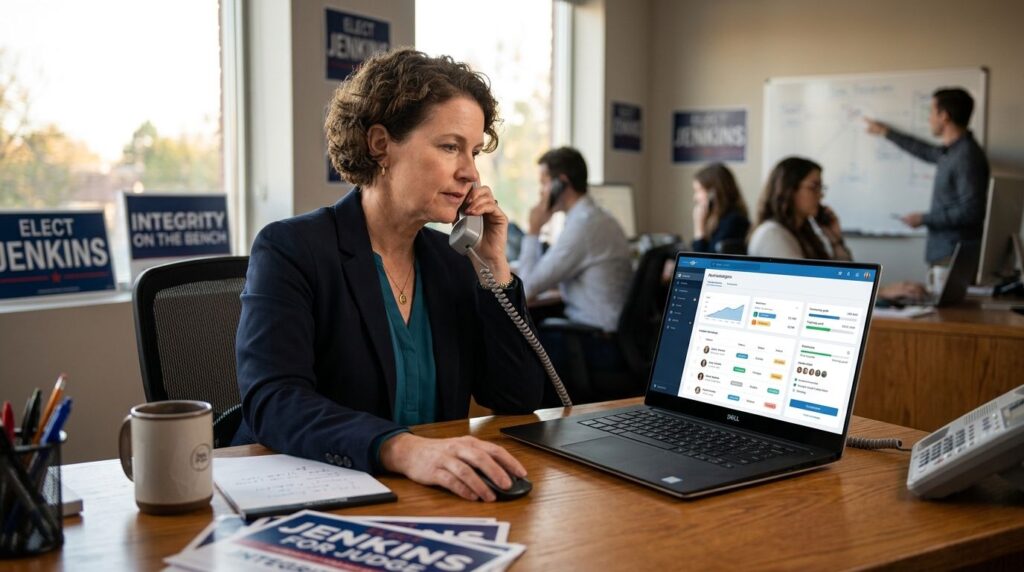
Most campaign software assumes the candidate is the one on the phone. Under the ABA Model Code of Judicial Conduct Rule 4.1(A)(4), adopted in some form by a majority of states, judicial candidates are barred from personally soliciting campaign contributions — a finance committee has to do the asking. Call time software for judicial candidates has to reflect that split: committee members making calls, contributions logged against state-specific limits, and a candidate who may only be allowed to write thank-you notes, not ask for the check.
That changes what "good" looks like in 2026. A generic CRM built for a U.S. House race will let the candidate dial from a call sheet and log a pledge in ten seconds. A judicial campaign needs the same speed, but with a caller field that isn't the candidate, a compliance layer that flags when a donor is close to a state judicial contribution cap, and reporting clean enough to hand to a treasurer without redoing the math.
What makes the best call time software for judicial candidates
- Committee-attributed calling — logs which committee member made the ask, not just who owns the account
- State contribution limit tracking — flags donors approaching judicial-race caps before the check is deposited
- Compliance-ready call logs — exportable records a treasurer can reconcile against the finance report
- Fast donor lookback — call history and giving history in one screen, so callers aren't asking someone who already maxed out
- Low onboarding time — committee volunteers are rarely full-time staff; the tool has to work on day one
- Segmentation for judicial donor pools — bar association members, attorney networks, and past judicial donors need their own lists
Call time software for judicial candidates: at a glance
| Software | Best for | Standout feature | Key limitation |
|---|---|---|---|
| Campaign Deputy | Committee-based calling with compliance built in | Contribution limit tracking tied to call logs | Newer to judicial-specific marketing than legacy party tools |
| NGP VAN | Judicial races tied to state party infrastructure | Deep integration with party voter files | Call time UI is dated; steep learning curve for volunteers |
| CallHub | Volunteer-heavy phone banking at scale | Simple dialer volunteers pick up fast | Built more for voter contact than donor-specific call time |
| Numero | High-volume donor calling on bigger judicial slates | Rapid-dial call sheets for full-time callers | Overkill for a single down-ballot judicial seat |
| Spreadsheet + Google Voice | A first local judicial race with a small committee | Zero setup, works today | No compliance flags, no automated limit tracking |
1. Campaign Deputy: best call time software for judicial candidates overall
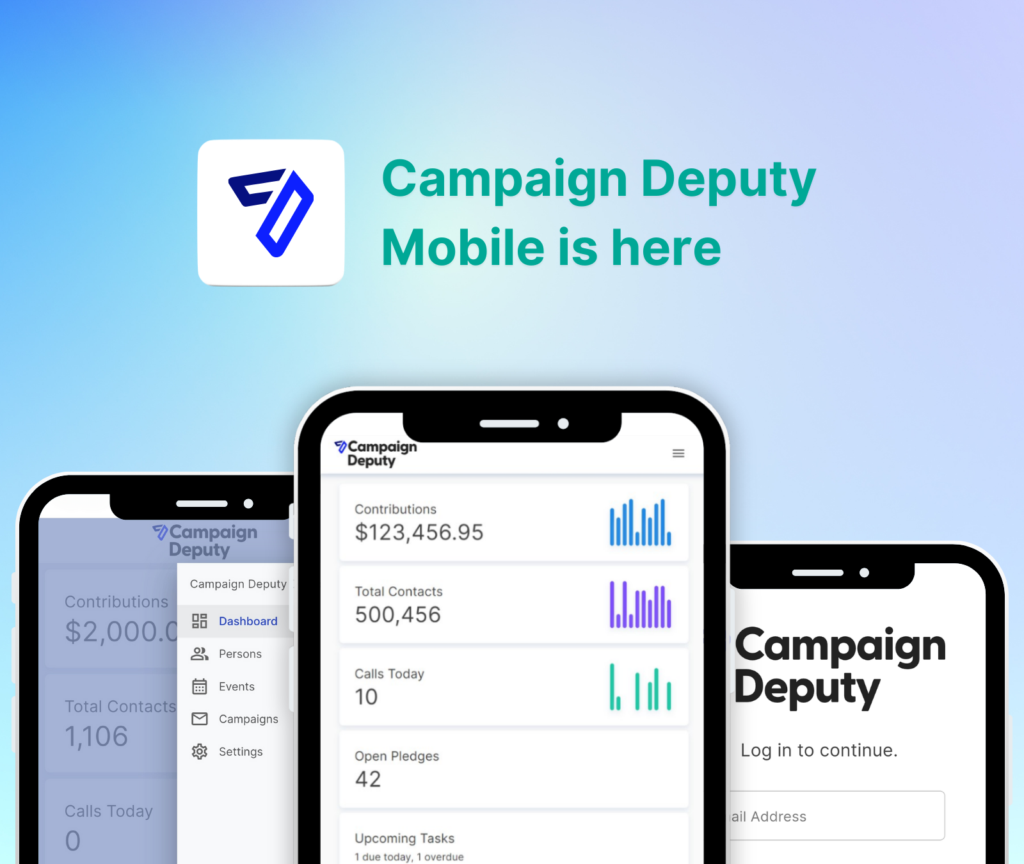
Campaign Deputy is a fundraising CRM built for political campaigns, and its call time tools let a committee log calls, pledges, and contribution history without ever attributing the ask to the candidate. Because judicial canons in most states require the committee — not the candidate — to solicit, that separation is the feature that matters most for this race type. The judicial campaign fundraising CRM setup pairs call time with contribution limit tracking so a committee doesn't accidentally push a donor past a state judicial cap.
Campaign Deputy pros:
- Committee members log calls under their own name, keeping candidate solicitation out of the record
- Contribution limit flags tied to donor profiles, checked against judicial candidate contribution limit compliance rules
- Call sheets segment by donor type, useful for separating attorney and bar-association donors from general supporters
- Built by the same platform that handles campaign finance reporting, so call time data and filings live in one system
Campaign Deputy cons:
- Judicial-specific marketing and templates are lighter than the party-affiliated tools that have run down-ballot races for a decade
- A single-person judicial run with no committee structure won't need the full call time module
Best for: judicial candidates whose committee is doing the soliciting and needs the calls and the compliance in one place.
Verdict: Buy.
2. NGP VAN: best call time software for judicial races tied to state party infrastructure
NGP VAN is widely used by campaigns plugged into state party voter files, and some judicial races — particularly partisan-elected judgeships — run through that same infrastructure. It works when a judicial candidate's committee is already using NGP VAN for voter contact and wants call time in the same system.
NGP VAN pros:
- Deep tie-in with state party voter files already used for other race types
- Familiar to committee volunteers who've worked other down-ballot campaigns
- Handles high call volume across large volunteer rosters
NGP VAN cons:
- Interface wasn't designed around the candidate-can't-solicit constraint judicial races face
- Onboarding a small judicial committee takes longer than the size of the race justifies
Best for: judicial candidates running through state party-affiliated infrastructure with a committee that already knows the tool.
Verdict: Hold — worth it only if the party apparatus is already using it.
3. CallHub: best call time software for volunteer-heavy phone banking
CallHub is built for phone banking at scale, and a judicial committee that leans on a large volunteer bench for donor outreach can use it to run shifts fast. It's less a donor CRM and more a dialer layered on top of a contact list.
CallHub pros:
- Simple enough that volunteers pick it up in a single training session
- Handles large call volumes across many simultaneous callers
- Works for both donor calls and voter contact if the committee runs both
CallHub cons:
- No built-in state contribution limit tracking, which matters more for judicial races than most
- Donor and giving history live outside the dialer, so callers lose context mid-call
Best for: committees running large volunteer phone banks where speed of dialing matters more than compliance context.
Verdict: Hold — pair it with a separate compliance system if you use it for donor calls.
4. Numero: best for high-volume donor calling on bigger judicial slates
Numero is built for rapid-dial call sheets and fits campaigns with full-time call time staff working through large donor files daily. That's rare for a single trial-court judicial seat but common on statewide judicial slates or committees coordinating several judicial candidates at once.
Numero pros:
- Built for callers dialing continuously through large lists
- Fast call-sheet turnover for high-volume programs
Numero cons:
- More infrastructure than a single down-ballot judicial race typically needs
- No judicial-specific compliance framing
Best for: statewide judicial slates or joint committees coordinating multiple judicial candidates.
Verdict: Wait — right tool only once the program has real volume.
5. Spreadsheet + Google Voice: best budget option for a first local judicial race
A shared spreadsheet and a Google Voice line is how a lot of first-time judicial committees start, and for a small local race with three or four committee members making calls, it works well enough to get through the first filing period.
Spreadsheet + Google Voice pros:
- No setup cost, no learning curve, works the same day
- Fine for a committee under a dozen callers
Spreadsheet + Google Voice cons:
- No automated contribution limit tracking — someone has to check state caps by hand
- Breaks down fast once the donor list passes a few hundred names
Best for: a first local judicial campaign with a small committee and a short timeline before the filing deadline.
Verdict: Skip once the committee grows past a handful of callers.
“If your call time software can’t separate candidate calls from committee calls, it’s the wrong tool for a judicial campaign.”
How we ranked these
Each tool is judged against the six criteria above, weighted toward the two that matter most for judicial races specifically: committee-attributed calling and state contribution limit tracking. A dialer with great volume but no compliance layer ranks below a slower tool that keeps a committee out of trouble. That's why Campaign Deputy tops the list even though NGP VAN and Numero handle more raw call volume — call time software for a judicial race has a different job than call time software for a state house seat.
Set up judicial-compliant call time
See how committee-based call logging and contribution limit tracking work together.
Which call time software should you choose in 2026?
If your committee is soliciting on your behalf and you need the calls, the donor history, and the contribution limit checks in one place, Campaign Deputy is the default pick. If your race runs through state party infrastructure that's already on NGP VAN, stay there rather than adding a second system. If you're three months from a local judicial filing deadline with four committee volunteers, the spreadsheet gets you through — just plan to move off it before the list hits a few hundred donors.
FAQ
What is the best call time software for judicial candidates in 2026?
Campaign Deputy is the best call time software for judicial candidates in 2026 because it logs calls under the committee member who made them and tracks contribution limits against donor profiles, matching the committee-solicits-not-the-candidate rule most states follow.
Can judicial candidates personally ask donors for money on call time?
In most states, no. Judicial canons based on the ABA Model Code of Judicial Conduct Rule 4.1 bar candidates from personally soliciting contributions, which is why call time software needs a committee-attributed calling model rather than a candidate dialer.
Is NGP VAN good for judicial campaign call time?
NGP VAN works for judicial races tied to state party infrastructure that already use it for voter contact, but it wasn’t built around the candidate-can’t-solicit constraint that judicial campaigns face.
How much does call time software cost for a judicial campaign?
Pricing varies by platform and committee size, so check current pricing directly with each vendor rather than relying on a fixed figure.
Do I need special software to track judicial contribution limits?
You need a system that flags donors approaching state-specific judicial contribution caps before the check is logged, since many states cap giving to judicial candidates differently than other races.
Can a small judicial committee just use a spreadsheet for call time?
A spreadsheet works for a small local judicial race with a handful of committee callers, but it has no automated limit tracking and breaks down once the donor list grows past a few hundred names.
What’s the difference between call time software and phone banking software?
Call time software tracks donor calls, pledges, and giving history for fundraising; phone banking software like CallHub is built mainly for voter contact and lacks donor compliance context.
One last thing
The committee-attribution requirement is the detail most judicial campaigns miss until a treasurer flags it during compliance review — by then the call logs are already tangled with the candidate's name attached to asks the candidate legally couldn't make. Fix the caller field before the first call time shift in 2026, not after the first finance report is due.
Related guides
- How to set up call time blocks for a political campaign
- Call time software for first-time political candidates