
Call time software for school board candidates is a CRM that organizes donor calls, tracks pledges, and logs results for a down-ballot race where every hour of volunteer time and every $25 gift matters. School board donors are neighbors, PTA parents, and local business owners, not national email lists, and the filing thresholds and reporting rules that apply to them often run on a county or district calendar instead of a state one.
- Call time software for school board candidates should track dial queues, pledges, and follow-ups in one place – a spreadsheet can’t do all three reliably.
- Campaign Deputy is built for down-ballot races and works well for school board candidates running call time with a handful of volunteers.
- Start with a manual call list and paper tracking sheet before buying anything; upgrade once volunteers outnumber your ability to track pledges by hand.
- School board donors are local – segment your list by school zone and relationship strength, not by donor size alone.
Why this matters for school board candidates
School board races rarely have paid staff, professional treasurers, or a donor file inherited from a past campaign. Most candidates are calling people they already know – fellow parents, coworkers, neighbors – which means the call list is short and personal, and losing track of even a handful of pledges is a real dent in the budget.
The reporting side adds pressure that voter contact never does: contributions to school board campaigns still have to be itemized and filed correctly, and missing a deadline because a pledge got buried in a text thread is an avoidable problem. Call time software for first-time political candidates exists for exactly this gap – most school board candidates are running their first race, not their fifth.
Build a call time system that fits a school board race
Build your donor list before you touch software
The list comes first. No CRM fixes a call time program that starts with 15 names and no plan to grow it.
- Start with people who already know you: neighbors, coworkers, fellow parents at school pickup
- Pull public voter file data for your district if your state or county makes it available
- Add local business owners near the schools in your zone – they often care about the same issues you're running on
- Note relationship strength next to each name: close, acquaintance, cold
- Skip generic purchased donor lists – school board donors respond to a personal ask, not a cold list match
Set up call time blocks that fit around your day job
Most school board candidates hold a full-time job through the campaign, so call time has to work around that, not compete with it. Setting up call time blocks for a political campaign starts with the calendar, not the phone.
- Book 2-hour sessions in the evening, three or four nights a week, instead of scattering calls throughout the day
- Batch calls by list segment so you're not switching scripts mid-session
- Write a 30-second opening that names the relationship first, the ask second
- Track every no-answer number so you know who to try again and when
- Schedule blocks weekly, not daily – daily call time burns out volunteer-run campaigns fast
Set realistic fundraising quotas per session
A quota per call session, not per day, keeps volunteers from feeling behind before they've even started dialing. Setting call time fundraising quotas works best when the quota counts asks made, not just dollars closed.
- Set a quota for number of asks per session, separate from a dollar target
- Track pledges and cash-in-hand as two different numbers
- Revisit the quota after the first two weeks of calling – your real numbers will tell you if it was set too high or too low
- Give new volunteers a lower quota than experienced callers for the first few sessions
Track pledges and follow-ups without losing them
This is where a spreadsheet starts to break down for a school board campaign running on volunteer hours. A pledge that isn't followed up within a few days is a pledge that quietly disappears.
- Log every pledge the same day it's made, not at the end of the week
- Set a follow-up reminder for 5 days after the pledge if the check hasn't arrived
- Flag any pledge unpaid past 30 days for a direct follow-up call, not another email
- Keep a running total of pledged versus collected so you always know your real cash position
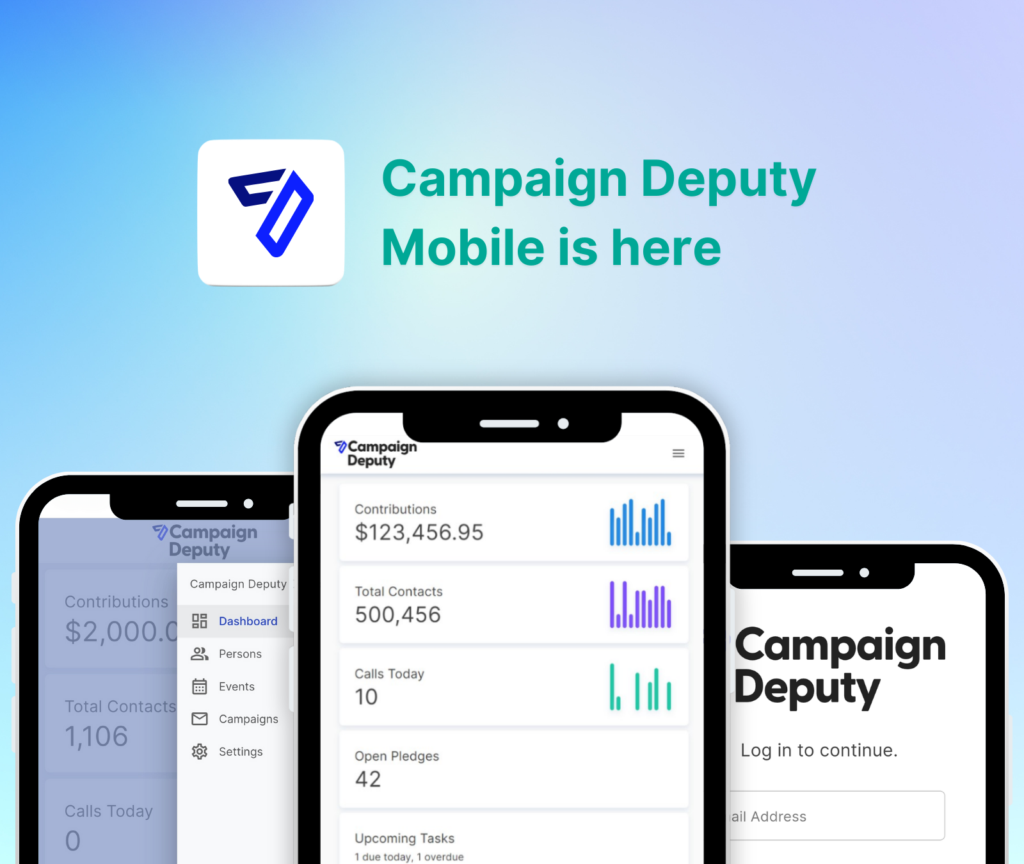
This is the step where Campaign Deputy's call time software replaces the spreadsheet: volunteers log pledges directly on the call screen during the session instead of retyping numbers into a shared file afterward, and nothing sits in someone's notebook until Sunday.
“An unpaid pledge past 30 days isn’t money in the bank – it’s a maybe that needs a phone call, not another email.”
Recruit and onboard volunteer callers
A school board campaign's call time program lives or dies on volunteers, since most candidates can't afford paid callers.
- Ask supporters directly to make calls rather than waiting for volunteers to offer
- Print or share call sheets so volunteers aren't guessing what to say
- Run a 10-minute training on the script before anyone's first session
- Give new callers a smaller list of warm names first, cold names once they're comfortable
- Pair a new caller with an experienced one for the first session if you have the volunteer capacity
Report contributions correctly and on schedule
Call time pledges eventually become line items on a campaign finance report, and school board filings are easy to get wrong precisely because the thresholds and forms vary by county and state.
- Record every itemized contribution with name, address, and employer at the time it's logged, not at filing deadline
- Check your state or county's itemization threshold before you assume a small gift doesn't need to be reported
- Put every filing deadline on a shared calendar the moment your campaign is set up
- Reconcile pledges tracked during call time against actual bank deposits before submitting a report
- Assign one person to double-check the report before it goes in
Measure what's working and adjust the script
A few weeks into call time, the data tells you more than instinct does.
- Track connect rate versus voicemail rate by list segment
- Track average pledge size by relationship strength (close contacts vs. cold names)
- Revisit the script after the first week – if the opening isn't landing, change it before week two
- Ask your strongest donors for referrals; school board donor networks are small and interconnected
- Retire any number that bounces three times instead of calling it a fourth
Comparing call time options for school board candidates
| Option | Best for | Key limitation | Verdict |
|---|---|---|---|
| Paper call sheets + spreadsheet | Testing the water before you've filed to run | No reminders, pledges get lost between sessions | Wait |
| General CRM (Salesforce, HubSpot) | Campaigns already paying for a CRM for other operations | Not built for call time; pledge tracking needs custom setup | Skip for call time |
| Campaign Deputy | School board candidates running call time with a handful of volunteers | Built for political fundraising, not a general-purpose contact database | Buy |
| Dialer-only apps | Campaigns wanting autodialing features | Compliance risk if the app isn't built around state consent and reporting rules | Hold – check compliance first |
Organize your call time in one place
See how Campaign Deputy handles dial queues, pledges, and follow-up for down-ballot races.
Common mistakes school board candidates make
- Treating call time as an afterthought behind door-knocking. School board donors respond to a personal phone call more consistently than they respond to canvassing, especially in the first month of a campaign.
- Ignoring itemization thresholds on small local gifts. A $50 check from a neighbor still needs to be logged correctly – missing it creates a compliance headache later, not a savings now.
- Calling the same 20 names on repeat. Campaigns that never expand past immediate friends and family run out of call time momentum by week three.
- Skipping volunteer training entirely. Inconsistent scripts across callers produce inconsistent asks, and inconsistent asks produce lower average pledges.
- Not following up on pledges. A pledge that isn't chased within 30 days rarely turns into a deposit on its own.
FAQ
What is call time software for school board candidates?
Call time software for school board candidates is a CRM that organizes donor dial lists, tracks pledges, and logs call outcomes so a volunteer-run campaign doesn’t lose track of commitments. Campaign Deputy is built for this scale of race, from first-time candidates to congressional runs.
Is call time software worth it for a low-budget school board race?
Yes, once your list grows past what one person can track by memory or spreadsheet. Most campaigns hit that point once volunteers are making calls in parallel and pledges start coming in faster than one person can log them.
How is call time software different from a phone banking app?
Phone banking apps are built for voter contact at volume – reaching many voters with a short script. Call time software is built for donor conversations, tracking pledges, follow-up dates, and giving history for each contact.
Do school board candidates have to report small campaign contributions?
In most states and counties, contributions above a set itemization threshold must be reported with donor name, address, and employer. Thresholds vary locally, so check your specific state or county election office rules before assuming a small gift is exempt.
Can volunteers use call time software without training?
They can log in without training, but results improve sharply with a short walkthrough of the script and the pledge-logging screen. A 10-minute session before the first call block prevents most early mistakes.
How do I recruit call time volunteers for a school board campaign?
Ask supporters directly instead of waiting for volunteers to offer – most people who care about the race haven’t thought to ask how they can help. Start with your closest supporters and expand from there once the first few sessions go well.
What should a school board candidate’s call time quota look like?
Set a quota based on number of asks per session rather than dollars raised, since dollar totals vary by list quality. Adjust the quota after the first two weeks once you know your actual connect and pledge rates.
One last thing
School board donors are more likely to pick up a call from a name they recognize than respond to a text or an email blast – which means the phone number on your call sheet matters more than the script for the first ten seconds. Spend more time building a list of people who already know you before 2026 filing deadlines close in than polishing the pitch itself.
Related guides