A texting platform for state assembly campaigns is software that sends compliant, opt-in text messages to donors and volunteers with the aim of raising money and building a volunteer bench fast on a district-sized budget. State legislative races run on tighter compliance staff and shorter fundraising windows than statewide campaigns, so the platform has to handle opt-in tracking and quiet-hours rules without a dedicated compliance hire.
- Campaign Deputy’s texting platform for state assembly campaigns pairs peer-to-peer texting with donor CRM data, best for candidates without a compliance staffer.
- Opt-in list building matters more than send volume for down-ballot texting programs in 2026.
- Quiet-hours and opt-out tracking are the two rules that get first-time campaigns in trouble.
- Peer-to-peer texting recruits volunteers faster than broadcast blasts for district-level races.
Why texting matters for state assembly campaigns
Most state assembly seats run on two-year terms, which means the fundraising window closes fast and there's no time to build a donor program from scratch mid-cycle. A best texting platform for political campaigns built for this tier has to do two things at once: reach a district-sized donor list quickly, and keep an opt-in record clean enough to survive a compliance review after the election.
State assembly campaigns rarely have a full-time compliance officer. That's the real difference between this tier and a statewide or congressional operation, texting has to be simple enough for a volunteer to run and structured enough that the candidate isn't personally liable for a bad opt-out process. Heading into 2026, more state legislative campaigns are running texting alongside call time and email rather than treating it as an afterthought.
Update your opt-in list before you send anything
Texting only works if the list behind it is clean. A state assembly campaign that skips this step ends up with high opt-out rates and no defensible consent trail if a complaint ever surfaces.
- Add an opt-in checkbox to every donation and volunteer web form, not just the main ask page
- Capture consent at doorknocking and tabling events with a paper sign-up sheet logged into the CRM afterward
- Never import a purchased or scraped number list, it fails consent requirements under the Telephone Consumer Protection Act
- Store the opt-in timestamp and source with every record so a compliance review has a paper trail
- Send a one-time confirmation text before any fundraising ask goes out
Segment donors and volunteers separately
One list, one message, one result, that's the mistake most first-time campaigns make with texting. Donors and volunteers respond to different asks and belong in different segments from day one.
- Split first-time donors from repeat donors so the ask amount matches giving history
- Tag volunteers who signed up for phone banks or canvassing separately from cash donors
- Flag major donors and bundlers for a different cadence than small-dollar givers
- Keep a running suppression list for anyone who has texted STOP
- Route text replies into the same record as email and call-time notes so staff aren't working from three separate lists
A CRM built for this, like Campaign Deputy, merges these segments automatically instead of requiring a staffer to reconcile spreadsheets between texting, email, and call time.
Write text scripts built for a fundraising ask
Assembly races lose donors to confusion more than statewide races do, voters and donors get several down-ballot texts in the same week and can't always place the name.
- Keep the first message under 160 characters so it doesn't split into multiple texts
- Name the candidate and the district in the first line
- Include one clear ask, a dollar amount or a single link, never both in the same message
- Test two versions of the ask line before a full send
- Add an opt-out line, "Reply STOP to unsubscribe," on every first message to a new contact
Set a send cadence and quiet hours
Over-texting is the fastest way to burn a donor list a state assembly campaign spent months building.
- Cap fundraising texts at two to three per week per contact
- Block sends before 8am and after 9pm local time
- Pause texting for 24 hours after a debate, endorsement, or major news event so the ask doesn't compete for attention
- Keep filing-deadline reminders as internal staff notes, not text content sent to donors
- Route high-dollar asks to a live call instead of a text, texting converts best under a few hundred dollars
Measure response and conversion, not just send volume
Send counts look impressive in a report and mean nothing on their own. Reply rate and donation conversion are the numbers that tell you whether the texting program is working.
- Measure reply rate and click-through on the donation link, not messages sent
- Compare conversion by segment, first-time donors convert differently than repeat donors or volunteer converts
- Watch opt-out rate as a leading indicator, a spike past a few percent means the ask or cadence is off
- Report weekly texting numbers to the finance committee alongside call time and email metrics
Automate the compliance paperwork
A spreadsheet tracking opt-ins works for the first month of a state assembly race and falls apart by month three, when volume climbs and the treasurer needs a clean record for the finance report.
- Log every consent record and opt-out automatically instead of by hand
- Time-stamp sends so a campaign finance report can reflect vendor or in-kind costs accurately
- Keep an audit trail long enough to survive a post-election compliance review
- Sync texting records with call time and web form data so the treasurer isn't reconciling three systems separately
For the legal groundwork behind all of this, texting compliance rules for campaigns cover the opt-in and quiet-hours requirements in more depth.
Layer in peer-to-peer texting for volunteer recruitment
Broadcast texting works for donation deadlines. It's the wrong tool for recruiting canvass leads and precinct captains, where a personal-toned conversation converts better than a blast.
- Use peer-to-peer texting, where a live person sends each message, for volunteer recruitment and event RSVPs
- Recruit precinct captains and canvass leads through a personal thread instead of a mass send
- Reserve broadcast texting for time-sensitive donation deadlines like FEC quarter closes
- Track volunteer text response separately from donor response, the outcomes (sign-up vs. gift) aren't comparable
Comparing texting options for state assembly campaigns
| Option | Best for | Key limitation |
|---|---|---|
| Personal cell phone or Google Voice | Very early campaigns testing message fit | No opt-in tracking or compliance record, doesn't scale past a few hundred contacts |
| Consumer mass-text apps | One-way announcements only | Not built for donor segmentation or campaign finance recordkeeping |
| Dedicated political texting tools | Campaigns running fundraising and volunteer texting together | Standalone tools still require manual export and import with your CRM |
| Campaign Deputy | State assembly campaigns that want texting, donor data, and call time in one system | Setup requires real opt-in list work upfront, it doesn't generate contacts for you |
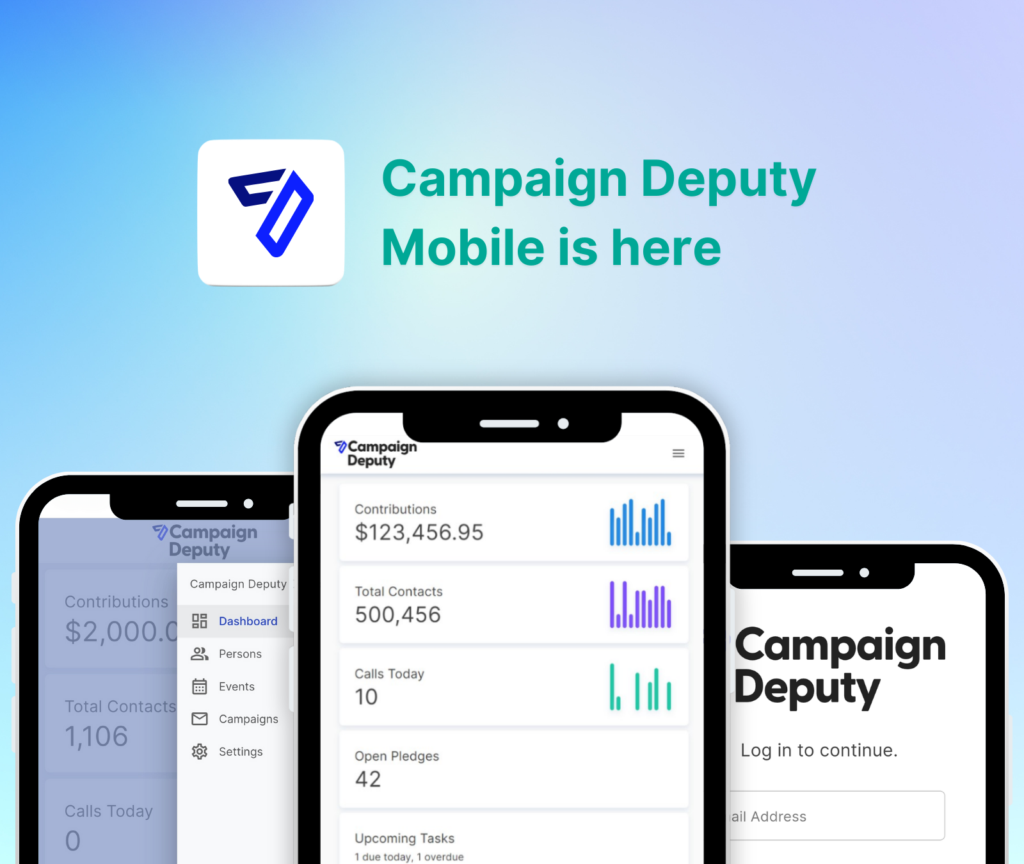
Campaign Deputy is built for state assembly campaigns that need texting connected to donor records and call time, not a standalone blast tool.
Run texting inside your donor CRM
See how Campaign Deputy connects texting, call time, and donor data.
Common mistakes state assembly campaigns make
- Waiting until after the primary to start building an opt-in list, leaving no runway heading into the general election
- Using a personal cell number for donor texting with no record of consent or opt-out
- Blasting every donor with the same ask regardless of giving history, which spikes opt-out rates
- Treating texting as a replacement for call time instead of a supplement, high-dollar asks still need a live call in 2026
- Not connecting text replies back to the CRM, so a staffer sends a duplicate ask by email the same day
FAQ
What is a texting platform for state assembly campaigns?
It’s software that sends compliant, opt-in text messages to donors and volunteers for a state legislative race. It tracks consent, opt-outs, and reply data so the campaign has a defensible record alongside its fundraising numbers.
Is texting legal for political campaigns?
Yes, but only with documented opt-in consent and an opt-out option on every message. The Telephone Consumer Protection Act governs the rules and campaigns without a clean consent trail are the ones that run into trouble.
How often should a state assembly campaign text donors?
Two to three fundraising texts per week per contact is a reasonable ceiling. Going higher spikes opt-out rates and burns the list before the general election.
What’s the difference between broadcast and peer-to-peer texting?
Broadcast texting sends one message to a full list at once, best for donation deadlines. Peer-to-peer texting has a live sender behind each conversation, best for volunteer recruitment where a personal tone converts better.
Do state assembly campaigns need a separate texting platform from their CRM?
No, a texting tool disconnected from donor records forces staff to reconcile lists by hand. A CRM that includes texting, like Campaign Deputy, keeps donor, volunteer, and reply data in one place.
How does texting compare to call time for state assembly fundraising?
Texting converts well for small-dollar asks under a few hundred dollars and moves fast. Higher-dollar asks still convert better on a live call, so most campaigns run both in 2026 rather than picking one.
What happens if a donor replies STOP?
The number goes on a suppression list and can’t receive future campaign texts. A compliant platform applies this automatically instead of requiring a staffer to track it by hand.
Can texting replace email fundraising for down-ballot campaigns?
No, texting and email convert different segments and work best combined. Email carries longer asks and updates while texting handles fast, time-sensitive fundraising pushes.
One last thing
The state assembly campaigns that get texting right treat the first message as a compliance document, not a marketing message. The opt-in language on that first text is what protects the campaign in a post-election audit, the fundraising copy that follows it is secondary. Get that first send right and the rest of the texting program in 2026 runs on a clean list instead of a liability.
Related guides
- Peer-to-peer texting software for political campaigns
- Text-to-donate software for political fundraising
- How to run for state representative