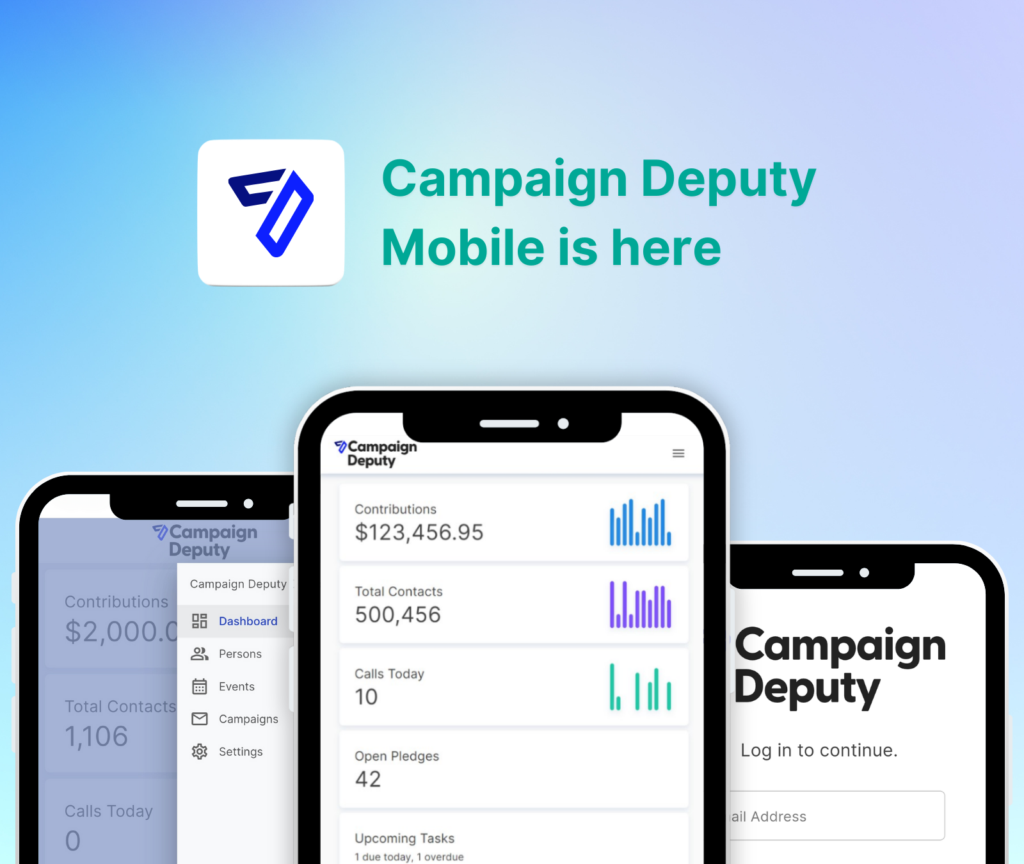
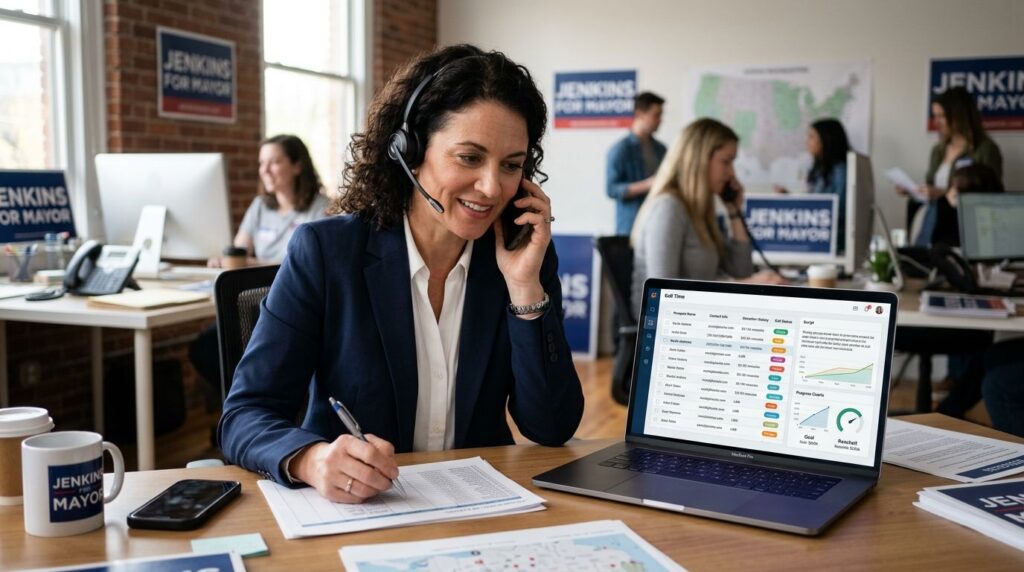
Call time software for mayoral candidates is fundraising CRM built to schedule, log, and follow up on every donor call a city race depends on, with the goal of hitting a fundraising target without the candidate losing entire afternoons to a spreadsheet. Mayoral campaigns work with a tighter donor universe than a statewide or congressional bid — a few hundred names instead of a few thousand — so the software has to make every single call count, not just automate volume.
- Call time software for mayoral candidates works best when it schedules blocks, tracks pledges, and reports fundraising totals in one place.
- Mayoral campaigns run on smaller donor lists than statewide races, so pledge follow-up matters more than call volume.
- Campaign Deputy logs call time blocks, quotas, and pledges together so a mayoral candidate doesn’t reconcile three tools before a filing deadline.
- Spreadsheets work for the first two weeks of a race and then break down once daily call volume passes roughly 50 dials.
Why call time software matters for mayoral candidates
A mayoral race lives on a compressed calendar. Candidates are often still working full-time, doing debates, and knocking doors, which leaves a narrow window for fundraising calls — usually early morning or evening blocks, not the multi-hour sessions a congressional campaign schedules. Call time software matters here because it turns a scattered set of donor names into a ranked, workable list, and it keeps a record of every pledge so nothing gets lost between a Tuesday night call session and a Thursday finance report.
City-level filing rules also move faster than people expect. Many jurisdictions require pre-election finance reports on tighter windows than state races, and a candidate who can't reconstruct which pledges converted to actual checks by the filing deadline ends up scrambling. Call time software for mayoral candidates that also feeds a fundraising CRM closes that gap instead of leaving it to memory.
Set up your donor list before you touch a script
The first step in any call time program is the list, and this is the one part of the process that costs nothing but time.
- Pull past local donor names from prior municipal races if they're public in your state.
- List everyone who has given to school board, city council, or county races you've worked or watched.
- Add personal contacts — family, colleagues, neighbors — sorted by realistic ask size.
- Cross-reference any first-time candidate checklist to avoid skipping low-dollar donors who compound over a race.
- Flag anyone who's already RSVP'd to a kickoff or house party as a warm call, not a cold one.
A list built this way, even in a spreadsheet, gets a mayoral candidate through the first two to three weeks of call time. Past that point, tracking pledges, callbacks, and notes by hand starts eating more time than it saves.
Set up call time blocks that fit a candidate's actual schedule
Mayoral candidates rarely get four uninterrupted hours for calls. The block has to match the day — 45 minutes before a day job starts, an hour after a debate prep session ends.
- Schedule blocks in 30-60 minute increments tied to specific windows in the candidate's real calendar, not an idealized one.
- Batch calls by list segment so a block covers similar donor types (past donors, cold prospects, event RSVPs) rather than mixing them.
- Build in a five-minute buffer between blocks for notes, because unlogged pledges get forgotten by the next session.
- Use software that lets a treasurer or staffer see how to set up call time blocks once and repeat it weekly instead of rebuilding the schedule from scratch.
This is where a dedicated platform starts to earn its keep. Campaign Deputy schedules recurring call time blocks against a live donor list, which means a mayoral candidate isn't manually re-sorting names every session — the software carries yesterday's progress into today's block.
Log every pledge the day it happens
A pledge that isn't logged the same day it's made has a real chance of disappearing before it converts to a check.
- Record pledge amount, method (check, card, recurring), and expected date in the same tool used to schedule the call.
- Note any conditions the donor attached — "after the primary," "if you make the runoff" — so follow-up timing is accurate.
- Assign a follow-up date automatically rather than relying on memory or a sticky note.
- Reconcile pledged-versus-received totals weekly, not just before a finance report is due.
Set a fundraising quota for every call block
A call time block without a quota is just a scheduled conversation, not a fundraising activity, and mayoral campaigns can't afford unmeasured time.
- Set a dollar quota per block based on the list segment being called that session.
- Track quota-to-actual in real time so a candidate knows mid-block whether to push harder or move to the next name.
- Adjust quotas weekly as the donor list narrows and average ask size shifts.
- Use a documented process for setting call time fundraising quotas so a treasurer isn't guessing at targets from a gut feel.
“A call time block without a quota is just a very expensive conversation.”
Recruit and onboard call time help early
Most mayoral campaigns run call time with one candidate and maybe one part-time staffer or volunteer, which means onboarding has to be fast.
- Recruit a treasurer, finance chair, or trusted volunteer who can pull reports without hand-holding.
- Give any volunteer a written script and a list of donor notes before their first session, not after.
- Set clear boundaries on who can log a pledge versus who just makes the call.
- Review the first week of logged data together to catch formatting or process mistakes early.
Review the numbers weekly, not just before a report is due
A weekly review catches problems while there's still time to fix them — a monthly one just documents the damage.
- Compare weekly pledged totals against the campaign's overall fundraising goal.
- Check pledge-to-cash conversion rate; a gap wider than 20-30% usually means follow-up calls are being skipped.
- Flag any donor who pledged twice without giving either time, a common sign of a scheduling error, not generosity.
- Confirm every logged pledge matches a bank deposit before the next required filing.
Comparing your options for mayoral call time
| Option | Best for | Key limitation | Verdict |
|---|---|---|---|
| Spreadsheet + phone | The first 2-3 weeks of any mayoral race | Breaks down once daily call volume passes roughly 50 dials; no automatic quota tracking | Hold |
| Generic business CRM (Salesforce, HubSpot) | Campaigns with an existing data-savvy staffer | Not built for pledge-to-cash workflows or compliance reporting; requires custom setup | Skip |
| Dedicated call time and fundraising CRM | Mayoral campaigns running daily call time with a treasurer or volunteer team | Still needs a real donor list to be worth the setup time | Buy |
Campaign Deputy falls into the third category: it schedules call time blocks, logs pledges, tracks quotas, and rolls the same donor data into finance reporting, which is the workflow a mayoral candidate actually needs in 2026 rather than three disconnected tools stitched together with copy-paste.
Common mistakes mayoral candidates make
- Calling from a personal cell with no log. The pledge exists only in the candidate's memory, and it's gone by the next debate prep session.
- Treating a city race like it doesn't need quotas. Smaller donor lists make quota discipline more important, not less — there's no volume to hide behind.
- Skipping follow-up because the candidate assumes the donor will just send the check. Pledges without a follow-up date convert at a noticeably lower rate.
- Reconciling pledges only right before a filing deadline. By then, a data gap from three weeks ago is a compliance problem instead of a five-minute fix.
- Recruiting call time help without giving them the donor notes. A volunteer cold-calling a warm donor wastes a relationship the campaign already built.
FAQ
What’s the best call time software for mayoral candidates in 2026?
A dedicated fundraising CRM that combines call time scheduling, pledge tracking, and finance reporting works best for mayoral candidates in 2026, since city races run on tight donor lists and fast filing windows. Campaign Deputy is built for this workflow specifically.
Is call time software worth it for a small city race?
Yes, once daily calls pass roughly 50 dials a week a spreadsheet stops tracking pledges reliably. Mayoral races often have smaller donor lists than statewide races, which makes losing track of even a few pledges costly.
How much call time should a mayoral candidate schedule per week?
Most mayoral campaigns schedule daily blocks of 30-90 minutes depending on the candidate’s outside job and campaign schedule. The exact number depends on the fundraising goal and how many weeks remain before election day.
Can call time software help with campaign finance reporting?
Yes, when the same platform logs pledges and donations it can feed directly into a finance report instead of requiring a separate reconciliation step. This matters most right before a filing deadline.
Do mayoral candidates need a treasurer to use call time software?
Not necessarily at the start, but a treasurer or dedicated volunteer becomes useful once call volume and pledge tracking grow past what one candidate can manage alone.
What’s the difference between call time software and a generic CRM?
A generic business CRM like Salesforce isn’t built for pledge-to-cash workflows or campaign finance compliance, so it requires custom setup. Dedicated political call time software handles both out of the box.
How do mayoral candidates set fundraising quotas for call time?
Quotas are typically set per call block based on the donor segment being called and the campaign’s overall fundraising goal for that week. Quotas should adjust as the donor list narrows.
One last thing
The mayoral candidates who raise the most aren't the ones who call the longest — they're the ones who log every pledge the same day and follow up before the donor forgets the conversation happened. That single habit, more than any software feature, is what separates a campaign that hits its fundraising goal from one that's still guessing at its totals two weeks before election day in 2026.
Related guides
- Best call time software for candidates and campaign staff
- How to recruit call time volunteers for a campaign