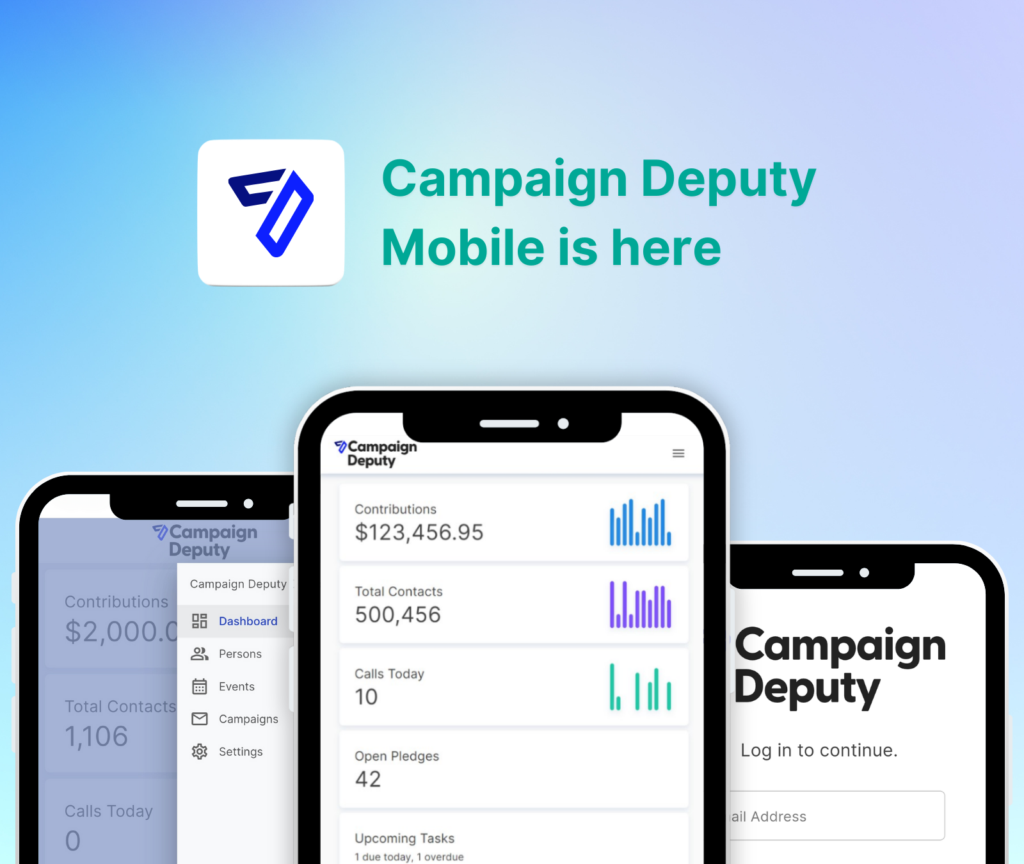

Texting platform for mayoral campaigns means SMS and peer-to-peer messaging software built to raise money and confirm event turnout for a citywide race on a compressed timeline, not a national voter-contact operation. Mayoral campaigns text smaller lists, work with tighter compliance margins because city races draw scrutiny fast, and need every reply routed back to a donor record instead of a spreadsheet nobody checks.
- A texting platform for mayoral campaigns should route replies straight into a donor CRM, not a standalone SMS inbox.
- Peer-to-peer texting beats blast SMS for mayoral races because reply rates matter more than raw volume.
- Text-to-donate links tied to a fundraising CRM close the gap between a text and a recorded gift in 2026.
- Skipping opt-in language and quiet-hours rules gets mayoral campaigns filtered by carriers within days.
- Campaign Deputy pairs texting with call time and email so a mayoral team works one donor list, not three.
Why texting matters for mayoral campaigns
A mayoral race runs on a shorter clock than a statewide campaign, usually a few months of active fundraising instead of a two-year cycle. Donors in a single city or county are easier to reach by text than by mail, and a well-timed text about a filing deadline or a kickoff event converts faster than an email sitting unread.
The stakes differ too. A mayoral file might hold a few thousand donor contacts, not tens of thousands, so every opt-out costs more relative to the list size. Mayoral campaigns cannot afford to burn a donor relationship on a poorly timed blast, which is why the platform choice matters more here than in a race with a bigger list to absorb mistakes.
Campaign Deputy's compliance-friendly texting guide covers the opt-in and quiet-hours rules every campaign needs before the first send in 2026, mayoral or otherwise.
Build a texting program that fits a mayoral race
Define what the texts are actually for
Most mayoral campaigns lump three different jobs into one texting plan, and that is what tanks reply rates. Separate them before you write a single message:
- Fundraising asks tied to a specific deadline: end of quarter, matching window, filing date
- Event logistics: RSVP confirmations, address reminders, day-of updates
- Thank-you and stewardship texts after a gift or a volunteer shift
Register your sender ID and lock in compliance
Carriers filter unregistered or poorly labeled political senders hard in 2026, and a mayoral campaign with a small list cannot survive getting throttled two weeks before a filing deadline.
- Register for A2P 10DLC with your platform before your first send, not after a complaint
- Include clear opt-in language on every web form and event sign-up sheet
- Add STOP and HELP instructions to the first message in any new thread
- Respect quiet hours for your city's timezone, no exceptions for a deadline
Segment the donor list before you text anyone
A mayoral list is small enough to segment by hand if you have to, but a platform makes it fast. Split by:
- Gift history: first-time givers versus repeat donors
- Event attendance: past kickoff or house party guests
- Volunteer status: call time volunteers versus donors only
- Geography, if your city spans multiple wards or precincts
Write messages that get replies, not opt-outs
A text that reads like a mass email gets reported as spam. Keep it conversational:
- Lead with the candidate's name and a specific ask or update, not a generic greeting
- Keep the message under 320 characters so it does not split into multiple texts
- Ask one question per text, never stack a donation ask and an event RSVP together
- Personalize with the donor's first name and last gift amount when the platform supports it
Set a cadence and stick to it
Mayoral donors on a small list notice over-texting faster than donors on a 50,000-name federal file. Cap sends at two to three per week during an active fundraising push, and drop to one per week outside a deadline window. That single rule prevents most of the list attrition local campaigns see in 2026.
Test on a small segment before you send citywide
Before a citywide blast, send the message to a 50-100 person test segment first.
- Check reply rate and opt-out rate on the test group
- Confirm links to donation forms and RSVP pages render correctly on mobile
- Adjust send time based on when test replies came in
Route every reply into your donor CRM
This is where most mayoral campaigns lose money: a donor replies yes to a text and that reply sits in a phone, never logged. A platform that connects texting to the CRM records the reply against the donor's profile automatically, so the next call time volunteer or email send already knows what happened. Campaign Deputy's best texting platform for political campaigns comparison breaks down which tools handle that handoff and which leave you exporting spreadsheets by hand.
Track opt-outs and reply rates weekly
A rising opt-out rate is an early warning that your cadence or tone is off, and mayoral campaigns catch it faster than bigger races because the list is small enough to watch closely.
- Pull opt-out rate by segment, not just campaign-wide
- Compare reply rate week over week, not just total sends
- Flag any single message with an opt-out rate above 2% and stop that message pattern
See how texting fits your fundraising CRM
Route texts, replies, and donor records into one system for 2026.
Comparing texting options for a mayoral campaign
| Option | Best for | Key limitation |
|---|---|---|
| Broadcast SMS blast tools | Simple one-way announcements to a large list | No two-way reply tracking, no CRM sync |
| Peer-to-peer texting software | Conversational asks that need real replies | Requires more staff time per message sent |
| Text-to-donate standalone tools | Quick one-off gift asks during an event | Donor data often stays siloed from the rest of the campaign |
| Integrated fundraising CRM texting (Campaign Deputy) | Mayoral campaigns that want texts, calls, and email in one donor record | Setup takes longer than a bare-bones blast tool |
Verdict: mayoral campaigns get the most out of peer-to-peer texting tied directly to the donor CRM, not a standalone SMS blast tool, because every reply needs to land somewhere a staffer or the candidate can act on it fast.
Campaign Deputy's peer-to-peer texting software and text-to-donate tools both feed replies into the same donor file, which matters more on a mayoral list where every contact is worth tracking.
Common mistakes mayoral campaigns make with texting
- Texting the whole list every time, regardless of who already gave or already RSVP'd, which spikes opt-outs on a list too small to absorb the loss.
- Skipping sender registration because it is just a local race, then getting messages filtered by carriers two weeks before a 2026 filing deadline.
- Running texting and call time as separate systems, so a donor who says no to a text still gets called the same week by a volunteer with outdated information.
- Sending fundraising asks and event logistics in one message, which muddies the ask and lowers response on both fronts.
- Never reviewing opt-out data, so a bad message pattern repeats for a month before anyone notices the list is shrinking.
FAQ
What is the best texting platform for mayoral campaigns in 2026?
The best option ties texting directly to your donor CRM so replies, opt-outs, and gifts land in one record. A standalone SMS blast tool works for simple announcements but loses the donor data a mayoral campaign needs to track.
Is peer-to-peer texting better than blast SMS for a mayoral race?
Yes, peer-to-peer texting gets higher reply rates because messages read as conversational rather than mass-sent. Blast SMS works for one-way updates but does not capture the two-way replies a smaller donor list depends on.
Do mayoral campaigns need to register for A2P 10DLC before texting?
Yes, unregistered senders get filtered by carriers, and a mayoral campaign with a small donor list cannot afford to lose visibility two weeks before a filing deadline. Register before the first send, not after a complaint.
How often should a mayoral campaign text its donor list?
Cap sends at two to three per week during an active fundraising push and drop to one per week outside a deadline. Mayoral donor lists are small enough that over-texting shows up in opt-out rates fast.
Can text-to-donate links work for a local mayoral race?
Yes, a text-to-donate link tied to a fundraising CRM records the contribution against the donor profile automatically. A standalone tool without CRM integration leaves that data siloed from the rest of the campaign.
What is the difference between texting donors and texting voters?
Donor texting focuses on fundraising asks, event RSVPs, and stewardship for people already engaged with the campaign. Voter texting is a separate compliance and volume challenge handled under get-out-the-vote texting rules.
How do I know if my texting cadence is too aggressive?
Watch the opt-out rate by segment weekly. Any single message pushing opt-outs above 2% signals the cadence or tone needs to change before the next send.
Should a mayoral campaign use one platform for texting and email?
Yes, running both from one donor record prevents duplicate asks and keeps replies visible to call time staff. Separate tools force manual exports that break down in the final weeks of a race.
One last thing
The mayoral campaigns that raise the most by text in 2026 are not the ones sending the most messages. They are the ones whose replies get logged against a donor record before the next ask goes out. Skip that step and the platform does not matter.
Related guides