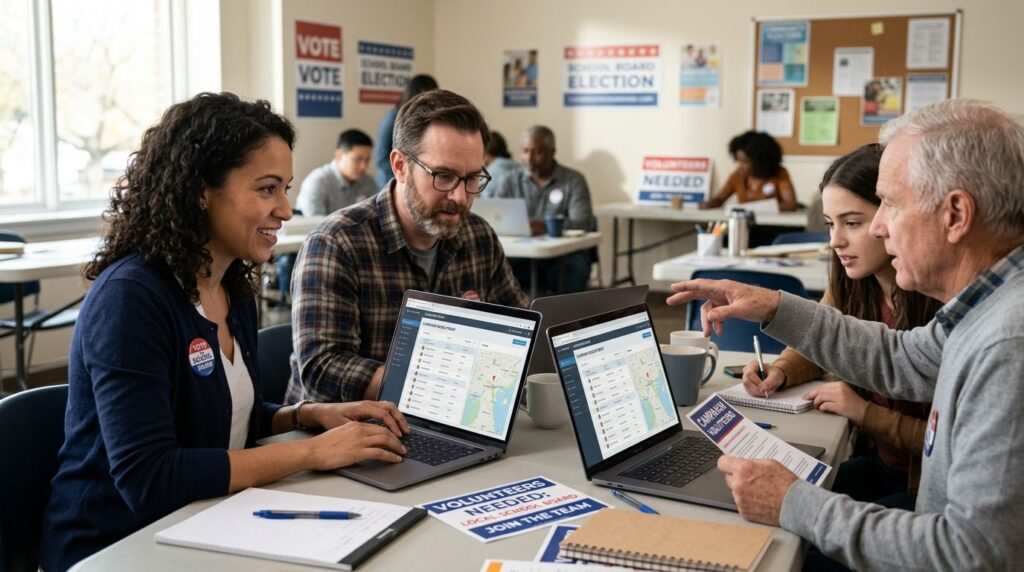
School board campaigns run on parents, not paid staff, and volunteer recruitment software for school board campaigns exists to turn that parent network into a working call list, canvass schedule, and text tree without losing anyone to a lost spreadsheet.
- Volunteer recruitment software for school board campaigns pays off once you pass roughly 15-20 active volunteers.
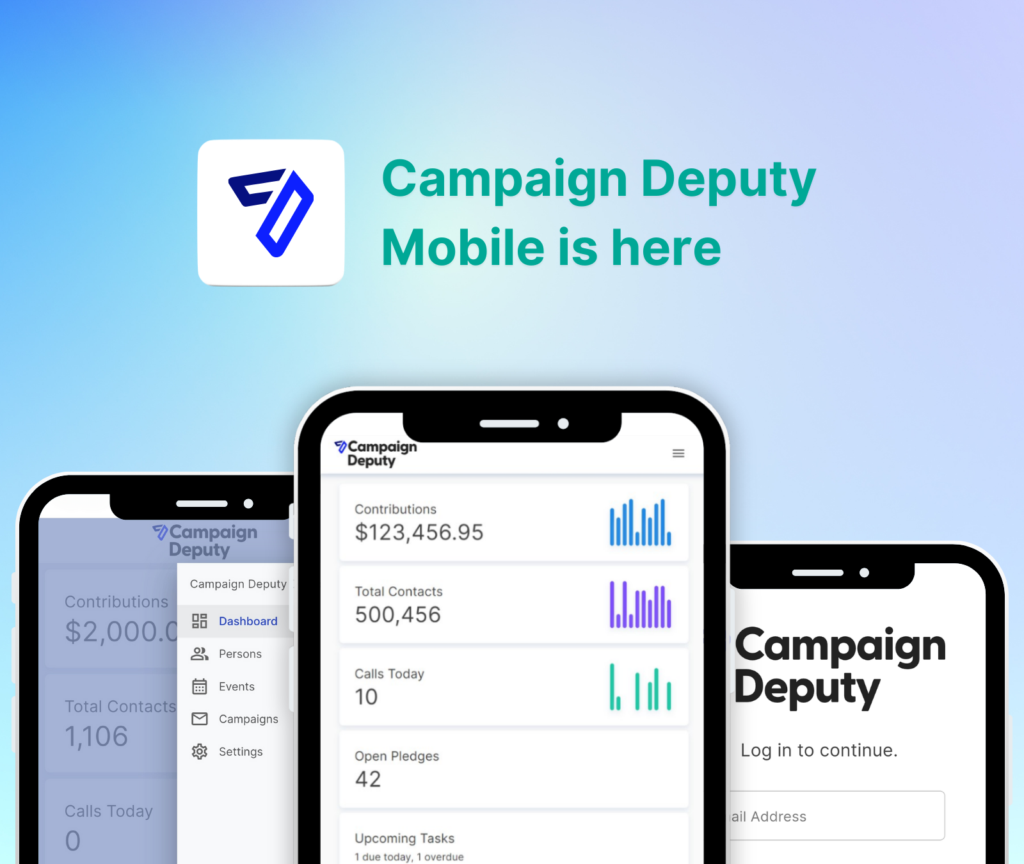
- Campaign Deputy centralizes volunteer contacts, call time blocks, and texting for down-ballot campaigns including school board races in 2026.
- PTA and school-event networks are the highest-yield recruiting channel for this segment; cold sign-up forms convert worse.
- Recognition after election day is the step most school board campaigns skip, and it’s why volunteer lists don’t carry to the next cycle.
Why volunteer recruitment matters more for school board races
School board campaigns rarely have a paid field director. The candidate, a spouse, and three or four parents from the PTA usually run the whole operation, which means every volunteer hour gets tracked by someone who is also knocking doors.
That is different from a state house or congressional race, where a field organizer owns the volunteer roster full time. In a school board campaign, the volunteer system has to run itself, or it doesn't run at all. If you're still working out how to run for school board in 2026, settle the filing calendar before you build the volunteer program. They run on the same clock.
The other constraint is scale. Most school board districts cover a few thousand registered voters, not a few hundred thousand. A volunteer program built for a congressional canvass, with precinct captains, shift leads, and tiered call sheets, is overkill. A volunteer program built for nothing is worse: names on a legal pad nobody follows up with.
“If your volunteer spreadsheet has more than 20 rows and no owner column, you’re already behind.”
Build a volunteer program school board campaigns can actually run
Build your volunteer contact list first
Before any software conversation, get names, phone numbers, and one line about how each person wants to help. This is the highest-leverage hour of the entire campaign.
- Pull contacts from the candidate's PTA, church, and coaching networks first
- Add a volunteer question to every yard sign request
- Collect names at school board meetings and candidate forums, not just online
- Split the list by stated interest: calls, doors, texting, event setup
- Re-ask everyone who said "maybe" once the campaign has a kickoff date
Doing this by hand is fine for the first 10 to 15 names. Past that, a shared spreadsheet starts losing people. Someone forgets to mark a callback, a shift double-books, a volunteer never hears back and quietly disappears.
Recruit through PTA networks and school events
School board volunteers come from a denser, narrower network than a general election campaign. PTA meetings, sports boosters, open houses, and church bulletin boards beat generic social posts for this segment.
- Have the candidate speak at one PTA meeting per school in the district
- Staff a table at back-to-school nights and open houses
- Recruit inside parent group chats, not just public pages
- Ask each current volunteer for two referrals; this segment runs on trust
- Put a short sign-up form on the campaign site instead of a paper clipboard
Screen and onboard volunteers fast
A parent who signs up Tuesday and hears nothing until the following week won't show up. Speed of first contact matters more here than in bigger races, because school board volunteers are often first-timers who need a nudge rather than a formal onboarding.
- Call or text every new volunteer within 48 hours of sign-up
- Send one clear first task, not a menu of five options
- Pair new volunteers with an experienced one for their first shift
- Confirm availability around school pickup and drop-off windows
- Track who has been contacted in one shared view, not four people's memory
This is where a dedicated system earns its keep. Volunteer coordination software for local campaign teams gives everyone the same view of who is onboarded, who is overdue for follow-up, and who has logged hours, without a group text standing in for a database.
Assign shifts around parent schedules
Most school board volunteers are parents working around school hours, practices, and their own jobs. Shift blocks that assume daytime availability empty out fast.
- Offer evening call blocks between 6 and 8 p.m.
- Schedule weekend canvass shifts around youth sports seasons
- Keep first shifts to 90 minutes or less
- Send a text reminder the night before and the morning of
- Let volunteers swap shifts without routing through the candidate
Track calls and canvassing hours in one place
Once volunteers start calling or knocking, the campaign needs to know what happened: who was reached, who needs follow-up, how many hours each person logged. Recruiting call time volunteers only pays off when the calls get recorded where the whole team can see them.
- Log every call outcome the same day, not from memory later
- Flag maybes and follow-ups so they don't get dropped
- Total volunteer hours weekly to spot burnout early
- Keep one record of contacted households instead of a list per volunteer
- Review logged hours before recognizing top volunteers publicly
Communicate by text and email on a fixed cadence
Volunteers who hear from the campaign once a month stop showing up. Volunteers who hear from it daily burn out. For a school board race in 2026, the right cadence is short, weekly, and specific.
- Send one weekly text with the exact ask for that week
- Use email for longer updates: endorsements, event recaps, fundraising totals
- Segment by task type so canvassers don't get call time asks
- Confirm shifts by text the day before, every time
- Thank volunteers publicly within 48 hours of a big push
Recognize volunteers so they come back next cycle
School board races repeat. The same volunteer pool often runs the next campaign, and the one after that. A campaign that thanks people well in 2026 starts 2028 with a warm list.
- Send a personal thank-you from the candidate, not a form email
- Base recognition on actual logged hours, not impressions
- Host a small post-election gathering, even an informal one
- Ask top volunteers to stay on an email list for the next cycle
- Give specific credit publicly: "reached 400 doors," not "helped a lot"
A campaign volunteer recognition program built on logged hours rather than guesswork is what turns a one-cycle volunteer into a three-cycle organizer.
Run your volunteer program in one place
Track sign-ups, call time, and texting for your school board campaign.
Comparing volunteer tracking options for school board campaigns
| Option | Best for | Key limitation |
|---|---|---|
| Shared spreadsheet plus group text | Campaigns under 10-15 volunteers | Breaks down once shifts, calls, and follow-ups overlap |
| Generic nonprofit CRM | Campaigns already running donor management on one platform | Not built for shift scheduling or call time tracking |
| Campaign Deputy | School board and other down-ballot campaigns tracking volunteers alongside fundraising | Someone on the team still has to own data entry and follow-up |
| Paper sign-up sheets | One-off recruiting at a single forum or event | No follow-up tracking, no shift assignment, easy to lose |
Verdict: a spreadsheet is fine until the volunteer list passes roughly 15-20 names. After that, a campaign CRM that keeps volunteer hours next to the same records you use for campaign finance reporting for school board candidates saves more time in 2026 than it costs to set up.
Common mistakes school board campaigns make
- Recruiting only online. School board volunteers come from in-person networks. A campaign that skips PTA meetings and school events in favor of a web form ends up with a shorter list.
- No follow-up system. A volunteer who signs up and hears nothing for two weeks does not show up on shift day. Speed of contact matters more here than in bigger races.
- Treating every volunteer the same. A parent who wants five calls a week and a retired teacher who wants to canvass every Saturday need different asks, not one generic form.
- Losing hours to memory. Without a shared log, nobody can say who made 50 calls and who made five, which makes recognition impossible and burnout invisible.
- No plan past election day. Campaigns that fail to capture volunteer hours and contact info start the next cycle from zero.
FAQ
What is the best volunteer recruitment software for school board campaigns?
For campaigns under 15 volunteers, a shared spreadsheet with one clear owner works fine. Past that, a campaign CRM like Campaign Deputy that keeps sign-ups, shift assignments, and call time in one place scales better in 2026 without adding staff.
How many volunteers does a school board campaign need?
It varies by district size, but most school board campaigns run effectively with 10 to 20 active volunteers covering calls, canvassing, and event support. Smaller districts manage with fewer when the candidate does much of the outreach personally.
Is a spreadsheet enough to manage school board campaign volunteers?
A spreadsheet works until the list passes roughly 15 to 20 names or the campaign starts tracking shifts and call time alongside contact info. Past that point, follow-ups get missed and hours go untracked.
How do school board campaigns recruit volunteers?
The highest-yield channels are PTA meetings, school events, and referrals from existing volunteers rather than cold social media posts. In-person asks convert better for this segment than online sign-up forms alone.
Should a school board campaign pay for volunteer management software?
It depends on volunteer count. Campaigns under 10 to 15 volunteers can run on free tools. Campaigns coordinating calls, canvassing, and texting across 20 or more volunteers usually save time with dedicated software.
How do you keep school board campaign volunteers engaged?
Fast follow-up after sign-up, one specific weekly ask, and public recognition tied to logged hours keep volunteers active. Campaigns that go quiet for weeks between asks lose volunteers to other priorities.
How is volunteer software for school board races different from bigger campaigns?
School board volunteer programs are smaller and run without paid field staff, so the tool has to be simple enough for a candidate or one coordinator to manage alongside fundraising and compliance work.
One last thing
The volunteers who show up for a school board race in 2026 are frequently the same people who run precinct operations for a city council or state legislative campaign in 2028. Track their hours now and the next campaign starts with a warm list instead of a cold one.
Related guides
- How to build a volunteer contact list for a campaign
- How to recruit precinct captains for a campaign