
County commissioner candidates use call time software to turn a folder of donor names into scheduled, tracked calls that raise money on a county-level budget and timeline. These races run smaller lists than a state legislative or congressional bid, the candidate is usually the only person dialing, and the filing deadlines and contribution limits vary by county and state in ways a generic sales CRM was never built to track. A tool made for how to run for county commissioner races has to work for one person with a day job, not a finance director managing five staffers.
- Call time software for county commissioner candidates works best when it schedules blocks, tracks call outcomes, and sets weekly quotas in one place.
- County races run on 200-800 donor contacts, not tens of thousands, so list quality matters more than list size in 2026.
- Campaign Deputy pairs call time tracking with compliance reporting, which matters for candidates filing county-specific finance reports.
- Spreadsheets work for the first 4-6 weeks of a race; they break down once volunteers start dialing alongside the candidate.
- Onboarding new call time staff in under a day is the real test of whether software fits a county-level campaign.
Why this matters
A county commissioner race typically raises money in the tens of thousands, not the millions, and the candidate is often the only fundraiser on staff for the first several months. That means every hour on the phone has to produce a result, and there's no finance director to catch a missed follow-up. Call time software exists to close that gap: it turns a list of names into a schedule, and a schedule into calls that actually get logged.
Without a system, most first-time county candidates default to a paper call sheet or a Google Sheet shared with one or two volunteers. That works until the list crosses roughly 150-200 names, at which point duplicate calls, missed pledges, and forgotten follow-ups start costing real dollars.
Why call time software matters for county commissioner candidates
County commissioner races have three constraints that make generic fundraising tools a poor fit. First, the donor universe is local and often overlaps with school board, city council, and county party lists — a tool that can't segment by geography wastes calling time on out-of-district names. Second, most candidates run this race part-time alongside a job, so call time has to happen in short, scheduled blocks rather than open-ended sessions. Third, county-level filing deadlines and contribution limits differ by jurisdiction, so a system that separates call time from compliance forces the candidate to do double entry.
Call time software built for down-ballot races solves this by keeping the call list, the schedule, and the donor record in one place instead of three. That's the difference between a candidate who dials for two hours and raises $800, and one who dials for the same two hours and raises $2,500 because every call was to a warm, qualified name.
Build your call list before you build your schedule
The software only works if the list feeding it is good. Start manual — this step costs nothing but time.
- Pull contacts from the candidate's phone, email, and LinkedIn network first; these convert at the highest rate
- Ask the county party committee for a list of past local donors who gave to similar races
- Cross-reference precinct captain contacts and past volunteer sign-up sheets
- Add anyone who's donated to a school board, city council, or county race in the last two cycles
- Exclude anyone outside the district — county commissioner seats are geographically bound, unlike statewide races
Set up call time blocks for a predictable schedule
Open-ended "call when you can" time rarely produces results for a candidate juggling a job and a campaign. Structured blocks do.
- Book 90-minute blocks, 3-4 times a week, at the same time each week so it becomes routine
- Group calls by list segment (past donors, warm intros, cold local names) so the pitch matches the relationship
- Track no-shows and reschedules the same way a sales team tracks a pipeline
- Build in a 10-minute buffer before each block to review notes on the next five names
- Use how to set up call time blocks for a political campaign as a starting template if this is the candidate's first cycle
Set call time fundraising quotas per session, not per race
A single $30,000 goal for the whole race tells a candidate nothing about whether today's session worked. Weekly and per-session quotas do.
- Set a dollar quota per call time block, not just per week or per month
- Set a dial-count quota separately from the dollar quota — both matter
- Review quota performance every Friday and adjust the following week's list
- Raise the quota gradually as the candidate's pitch improves, not in the first two weeks
- See how to set call time fundraising quotas for a breakdown by race size
Track every call outcome, not just the checks that clear
Most of a call time session ends in a "maybe" or a "call me back next month," and those outcomes are worth more than they look.
- Log every call as pledged, declined, no answer, or callback — four outcomes, no more
- Note the exact follow-up date the donor gave, not "soon"
- Flag donors who mention a max-out contribution limit so compliance has a heads-up
- Separate in-kind offers from cash pledges immediately; they're reported differently
- Review the callback list at the start of every new call time block before dialing new names
Recruit call time volunteers once the candidate hits a ceiling
A single candidate can only dial so many hours a week. Volunteers extend the list without extending the candidate's day.
- Recruit from the existing volunteer base first — people who already know the race convert callbacks faster
- Give volunteers a smaller, pre-qualified list; don't hand cold names to a first-time caller
- Pair volunteers with a script built from the candidate's actual pitch, not a generic template
- Track volunteer call outcomes the same way as the candidate's — same four categories
- Start with how to recruit call time volunteers for a campaign before adding more than two or three callers
Onboard new call time staff fast so shifts aren't wasted
A county race can't afford a week of training for every new caller. Onboarding has to fit into a single session.
- Walk a new caller through five real calls before their first solo block
- Give them a one-page reference for how to log an outcome, not a full manual
- Assign a smaller list segment for the first two weeks to build confidence
- Check in after the first solo block, not after the first week
- Use how to onboard new call time staff on a CRM as the checklist for this step
Comparing call time options for county commissioner races
| Option | Best for | Key limitation |
|---|---|---|
| Paper call sheets | Candidates testing the race before spending on software | Breaks down past roughly 150-200 names; no outcome history |
| Shared spreadsheet | A candidate and one volunteer for the first 4-6 weeks | No compliance tie-in; volunteers overwrite each other's notes |
| General-purpose CRM (Salesforce, HubSpot) | Campaigns already paying for one across other departments | Not built for call time blocks or fundraising quotas out of the box |
| Dedicated political call time software (Campaign Deputy) | Candidates running the full race cycle, from call time through compliance reporting | Requires setup time upfront to import the initial donor list |
Verdict: for a county commissioner candidate running past the first six weeks, dedicated call time software beats a spreadsheet the moment a second caller joins the effort.
See Campaign Deputy’s call time tools
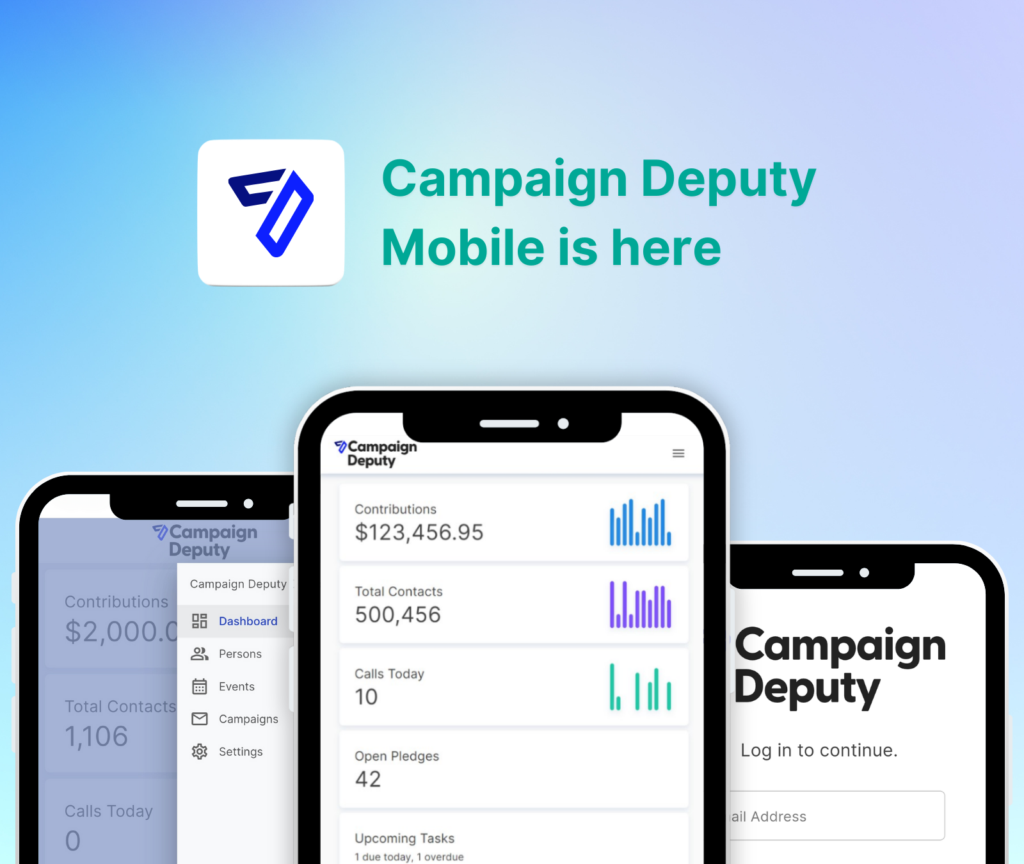
Schedule blocks, set quotas, and track every call outcome in one dashboard.
Common mistakes county commissioner candidates make
- Treating call time like voter phone banking. A donor call is a relationship conversation, not a script read at volume — county lists are too small to burn.
- Calling from a personal cell with no tracking. Every untracked "maybe" is a donor who never gets a follow-up call.
- Setting one big goal instead of weekly quotas. A $30,000 season goal tells a candidate nothing about whether Tuesday's block worked.
- Starting call time 60 days out. County races decided in a primary often need money moving by month two, not month five.
- Ignoring the county's specific filing deadlines. Contribution limits and report due dates vary by jurisdiction — that's separate from call time but it should live in the same system.
FAQ
What is call time software for county commissioner candidates?
It’s a scheduling and tracking system that turns a donor list into booked call blocks, logs each call’s outcome, and sets fundraising quotas for a candidate running a county-level race in 2026.
Is call time software worth it for a county-level race?
Yes, once the donor list passes roughly 150-200 names or a second caller joins the effort — below that, a spreadsheet can hold for the first several weeks.
How many calls should a county commissioner candidate make per week?
There’s no universal number, but most county candidates set a per-session dial quota alongside a dollar quota so both effort and results get tracked, not just checks that clear.
Can county commissioner candidates track call time in a spreadsheet instead?
Yes, for the first 4-6 weeks with one caller — spreadsheets break down once a volunteer joins or the list grows past a couple hundred names.
Does call time software integrate with campaign finance reporting?
Campaign Deputy ties call time tracking to donor records used in compliance reporting, which matters because county filing deadlines and contribution limits vary by jurisdiction.
How long does it take to onboard call time volunteers on new software?
A single call time block is usually enough if the volunteer walks through five real calls first and gets a smaller list segment for the first two weeks.
Is Campaign Deputy built for down-ballot races like county commissioner?
Yes, Campaign Deputy is built for candidates from first-time county races through congressional campaigns, with call time, email, texting, and compliance reporting in one platform.
One last thing
The single highest-leverage habit in call time for a county race isn't the software — it's ending every call with a scheduled next call.
“If a call time session doesn’t end with a scheduled next call, the follow-up already got lost.”
A candidate who books the next touch before hanging up will out-raise one who relies on memory, no matter which system logs the outcome.
Related guides
- Best call time software for candidates and campaign staff
- Call time software for first-time political candidates
- Call time tracking for congressional campaigns
- Fundraising CRM for city council candidates